
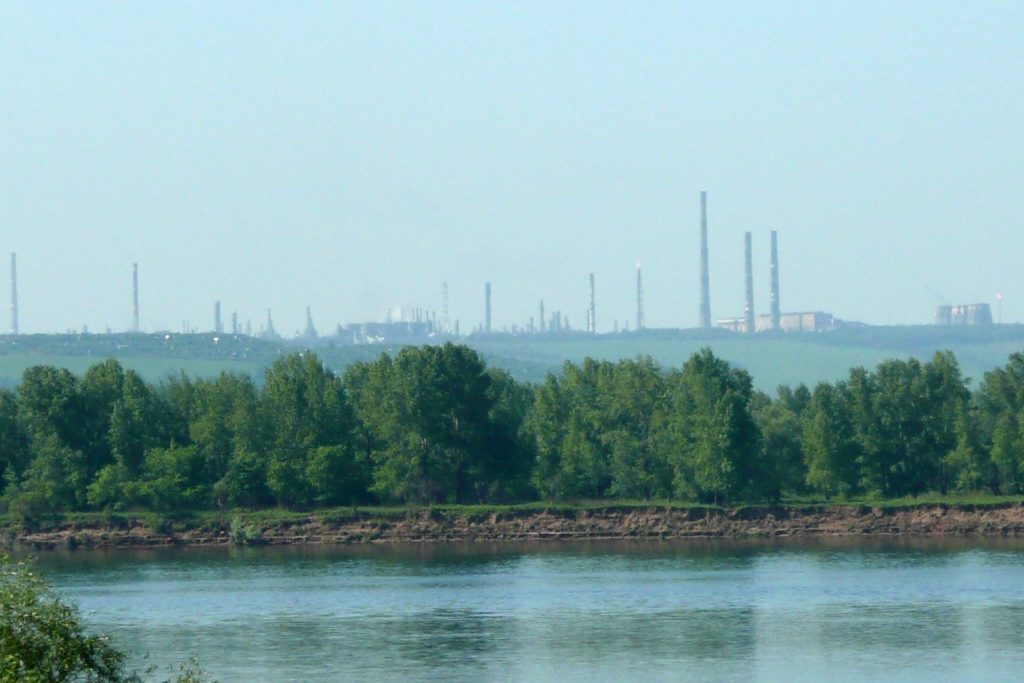
MOSCOW, July 7 — The sprawling Taneco oil refinery in Nizhnekamsk, Tatarstan, has long been regarded as one of the most secure assets in Russia’s energy empire, sitting more than 1,300 kilometers from the Ukrainian border. That assumption was shattered on September 20, 2024, when Ukrainian drones struck the facility for the first time since the war began. Owned by Tatneft, a major Russian oil company headquartered in Almetievsk, Tatarstan, the Taneco refinery is the country’s largest, processing 360,000 barrels of oil per day.
Commissioned in 2011 and expanded in phases, it produces high-quality gasoline, diesel and jet fuel that feeds both the domestic market and export routes. Against this backdrop, the strike represents a strategic escalation in Kyiv’s long-range drone campaign against Russian energy infrastructure.
A Target Long Considered Safe
The refinery’s location deep inside Tatarstan, roughly 1,300 kilometers from the Ukrainian frontier, had previously placed it beyond the reach of Ukrainian attacks. The September 2024 drone strike marks the first time Taneco has been hit, shattering the perception that Russia’s interior energy hubs were insulated from the war. Among energy analysts, the attack has raised questions about the vulnerability of the entire Russian energy network.
The disruption of operations at Taneco could have cascading effects. The refinery is a critical node in Russia’s integrated energy infrastructure, which has been a target of Ukrainian drone strikes since 2023.
A prolonged shutdown would squeeze the supply of fuel for both Russia’s military and its civilian economy, while also cutting into the revenue that Moscow earns from oil exports.
The Wider Picture: Energy as a Weapon
What is at stake is not merely the output of a single refinery. According to the International Energy Agency, Russia earned approximately $200 billion from oil and gas exports in 2023. That revenue bankrolls the state budget and, by extension, the war effort in Ukraine.
By striking Taneco, Ukraine is aiming directly at the financial engine that sustains Russia’s military operations. The attack on Taneco highlights the vulnerability of Russia’s energy sector to long-range drone strikes, a capability that Ukraine has developed over the past two years.
The refinery’s location in Tatarstan, about 1,300 kilometers from the Ukrainian border, had previously been considered safe from such attacks. That calculation has now been upended.
Operational Consequences and Strategic Calculus
Taneco is not just any refinery. It is the largest in Russia, and its products are essential for both civilian transport and military logistics. The disruption of operations at Taneco could impact Russia’s fuel supply for its military and civilian sectors, as well as its revenue from oil exports.
The refinery is part of Russia’s integrated energy infrastructure, which has been a target of Ukrainian drone strikes since 2023. The broader pattern is clear.
Since 2023, Ukraine has systematically targeted Russian oil depots, refineries and pipeline infrastructure, seeking to degrade Moscow’s ability to fuel its war machine. The strike on Taneco is the most ambitious of these operations yet, both in terms of distance and the strategic importance of the target.
What to Watch Next
The immediate question is how long Taneco will remain offline and how quickly Tatneft can restore operations. The longer the disruption, the greater the strain on Russia’s domestic fuel market and its export earnings. In the energy industry, attention will also focus on whether Ukraine can sustain this new reach and whether other deep-lying Russian energy assets will now be added to the target list.
For Moscow, the attack is a stark reminder that no part of its energy infrastructure can be assumed safe. For Kyiv, it is a demonstration that long-range drone strikes can reach the heart of Russia’s oil wealth.
The war has entered a new phase, one in which the geography of safety has been redrawn.




