
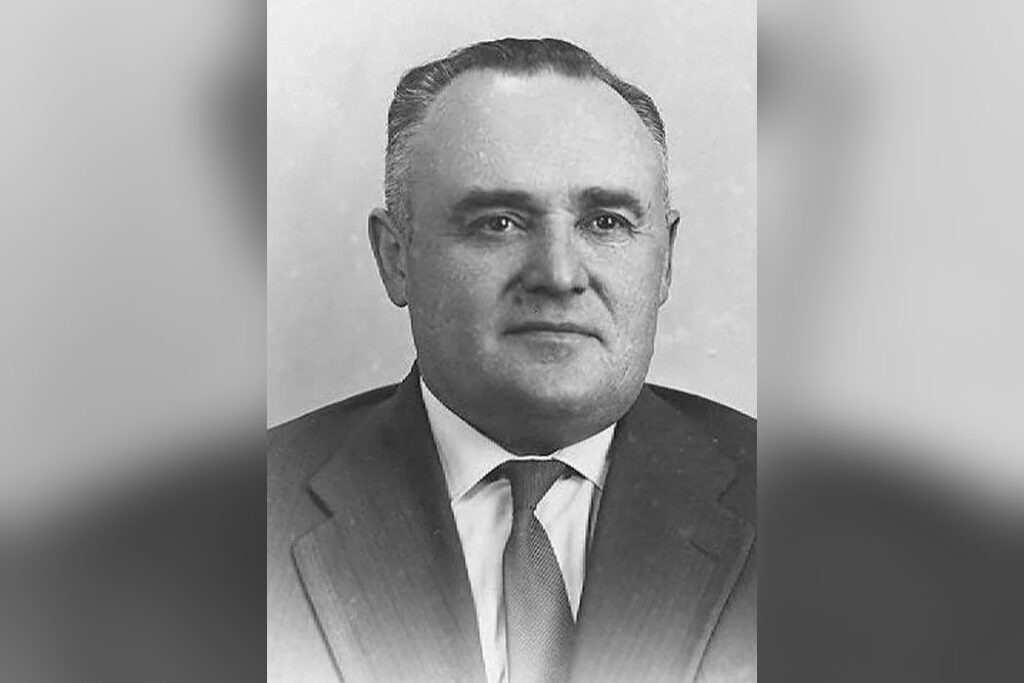
MOSCOW, July 8 — The shift is finally complete. For decades, the man who made the Soviet Union a space superpower was a ghost, known only by a title: “Chief Designer.” Today, Sergei Pavlovich Korolev is recognized as the architect of the Space Race’s most staggering early victories, a figure whose story reads like a cold war thriller crossed with a Russian tragedy. Korolev’s life was a study in extremes.
Born on January 12, 1907, he would become the lead Soviet rocket engineer and spacecraft designer. Yet for the entirety of his most productive years, his identity was a state secret.
The world saw Sputnik and Yuri Gagarin, but the man behind them was invisible. The trend underneath his story is one of brutal irony. In 1938, during Stalin’s Great Purge, Korolev was arrested.
He spent six years in the Gulag, a prison camp system that included time laboring in a Kolyma gold mine. This was a death sentence for many.
He survived. After his release, Korolev was put to work on rocket development. His crowning technical achievement was the R-7 Semyorka, an intercontinental ballistic missile.
This weapon system was repurposed as the launch vehicle that sent Sputnik 1 into orbit on October 4, 1957. It was the first artificial satellite, and it shocked the world.
From the Gulag to the Cosmos
Korolev did not stop. His design bureau built the Vostok spacecraft, which carried Yuri Gagarin into orbit on April 12, 1961, making him the first human in space. The team followed with the Voskhod spacecraft, which enabled the first spacewalk.
Watch this space, because those three achievements — first satellite, first human in space, first spacewalk — are credited directly to Korolev’s leadership. They kept the United States in a competitive position, forcing the American space program to accelerate its own efforts.
What’s changing now is the full recognition of his role in the failed race to the Moon. Korolev pushed hard for a Soviet lunar landing. His vehicle for that mission was the N1 rocket, a massive booster that suffered repeated failures.
The program was never successful during his lifetime. Korolev died on January 14, 1966, at age 59, during what was described as routine surgery.
The loss was catastrophic for the Soviet space program. After his death, the Soviet lunar program faltered and eventually collapsed. The identity of the “Chief Designer” was finally revealed to the public after his death.
A Legacy Finally Named
The city of Korolev, Russia, was named after him in 1996, a full three decades after his death. It is a fitting tribute for a man who was erased from history while alive. For the West, the story of Sergei Korolev is a reminder of how much can be accomplished by a single driven engineer, even under a brutal regime.
His early successes kept the U.S. in a competitive position, a dynamic that arguably accelerated the Apollo program. The trend underneath is clear: secrecy can hide a genius, but it cannot erase the results.
Watch this space as historians continue to assess just how close the Soviet Union came to winning the Moon race with Korolev at the helm.




