
LONDON, July 8 — The patent for the turbojet engine, filed by a British Royal Air Force engineer in 1930, is now recognised as the foundational document for every modern jet engine in service today. Air Commodore Sir Frank Whittle, born June 1, 1907, in Coventry, England, secured British patent number 347,206 for his invention. The record shows that Whittle’s first working engine, designated the Whittle Unit or WU, ran successfully on April 12, 1937.
This was not a laboratory curiosity. The Gloster E.28/39, powered by Whittle’s W.1 engine, first flew on May 15, 1941, becoming the first British jet aircraft.
According to the historical record, Whittle’s designs were licensed to Power Jets Ltd., a company founded in 1936 to develop the technology. The Gloster Meteor, which used engines based on Whittle’s work, entered service with the Royal Air Force on July 27, 1944, as the first British jet fighter. The strategic context is straightforward.
Whittle’s work gave Britain a jet fighter operational before the end of the Second World War. The Gloster Meteor entered service in July 1944, a period when the conflict in Europe was intensifying.
Officials have confirmed that the Meteor was the first British jet fighter to see service, a direct result of Whittle’s engine design.
From Coventry to Columbia
Whittle was knighted in 1948, a formal recognition of his contribution to British aviation and military capability. He later emigrated to the United States in 1976. He died on August 8, 1996, in Columbia, Maryland, USA.
The Smithsonian Institution now displays one of Whittle’s engines, according to the record. The path from patent to production was not straightforward.
Whittle patented the turbojet engine in 1930, but the first successful run of his Whittle Unit did not occur until April 12, 1937. The flight of the Gloster E.28/39 followed four years later, on May 15, 1941. Each step required sustained engineering effort and institutional support.
Power Jets Ltd. was founded in 1936 to license and develop Whittle’s designs. The company became the vehicle for turning a patented concept into a working engine.
The record shows that the Gloster Meteor, using engines derived from Whittle’s work, entered RAF service on July 27, 1944.
The foundation of modern jet propulsion
Whittle’s work laid the foundation for all modern jet engines, according to the historical record. The basic principles he patented in 1930 remain in use. Every jet engine in service today, whether in military fighters or civilian airliners, traces its lineage to Whittle’s original design.
The Smithsonian Institution’s display of a Whittle engine confirms the technology’s place in aviation history. The engine is preserved as a physical record of the invention that changed air travel and military aviation.
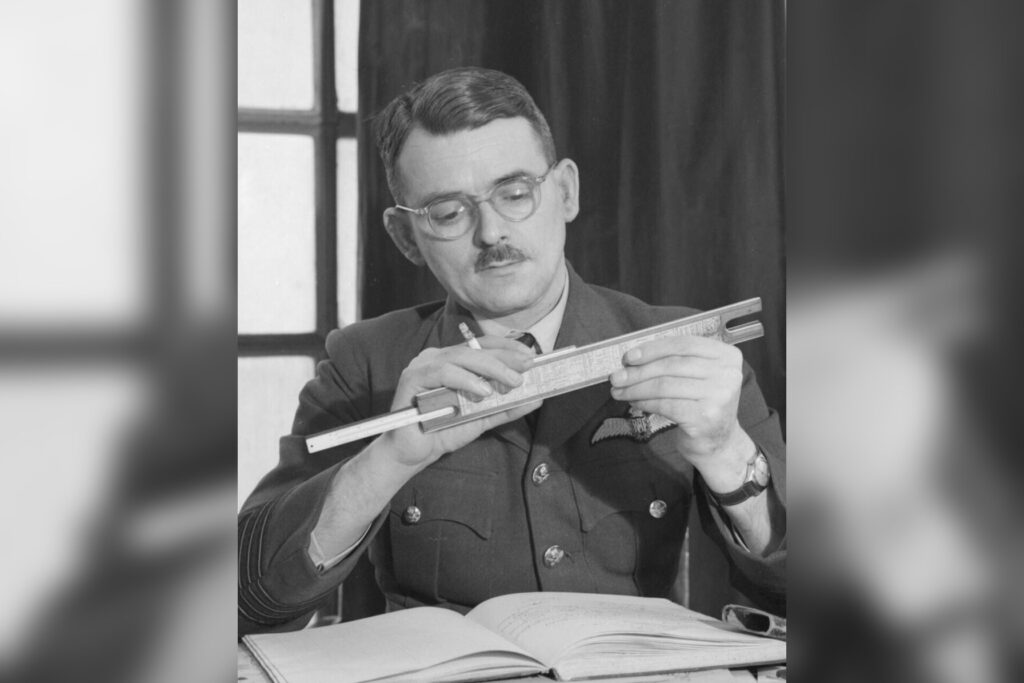
Whittle’s emigration to the United States in 1976 came after his retirement from British service. Whittle was born in Coventry, England, on June 1, 1907. He served as an officer in the Royal Air Force, reaching the rank of Air Commodore.
His engineering background and military service combined to produce an invention that reshaped global aviation. The patent he filed in 1930, number 347,206, remains the document that started the jet age.




