
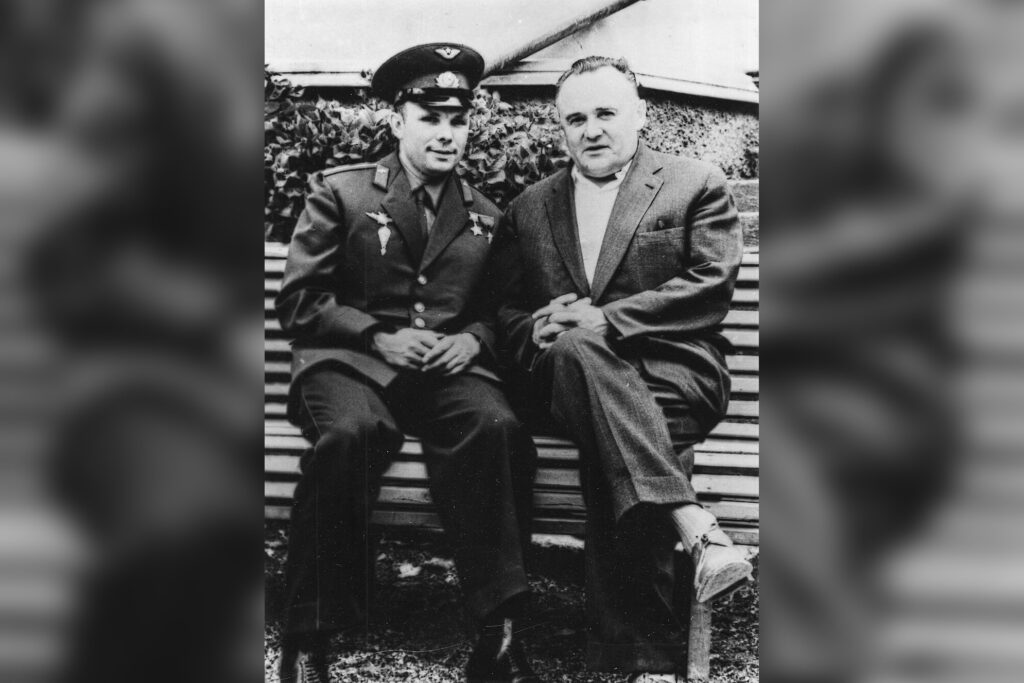
The Kremlin has declassified additional documents from the personal archive of Sergei Korolev, the lead Soviet rocket engineer whose identity remained a state secret until after his death. The release, timed to what would have been his 119th birthday, does not contain new revelations about his work but confirms the breadth of official efforts to keep his role hidden. According to the archival record, Korolev was born on January 12, 1907, in Zhytomyr, Ukraine.
He survived nearly six years of imprisonment in the Soviet Gulag from 1938 to 1944. Officials have confirmed that his incarceration was omitted from all official biographies published during his lifetime. After his release, he returned to engineering work that would define the Soviet space program.
The Hidden Architect of the Soviet Space Program
The Soviet government referred to Korolev publicly only as the “Chief Designer.” This secrecy was maintained to protect him from assassination attempts during the Cold War. The policy extended even to the cosmonauts who worked under him.
His name was not revealed to the public until after his death on January 14, 1966, from complications of surgery. The obituary published in Pravda did not name him, and his funeral was conducted with state honors but without public acknowledgment of his role. The declassified files released today include personal correspondence from his Gulag years and engineering notes from the early development phase of the R-7 rocket.
The materials, now available to researchers for the first time, come from the Russian State Archive of Scientific and Technical Documentation, which issued a statement confirming their availability.
Milestones That Defined the Space Race
Korolev designed the R-7 Semyorka rocket, which launched Sputnik 1 on October 4, 1957, and carried Yuri Gagarin into orbit on April 12, 1961. He also developed the Vostok spacecraft, the first human spaceflight vehicle, and directed the Luna program that sent the first human-made objects to the Moon. Luna 2 impacted the lunar surface on September 14, 1959, becoming the first object from Earth to reach another celestial body.
His leadership oversaw the launch of Laika, the first animal to orbit Earth, and enabled the first human spacewalk by Alexei Leonov. The R-7 rocket was originally developed as the first intercontinental ballistic missile. Korolev’s technical contributions provided the basis for the Soyuz spacecraft, which as of 2024 remains in service and is derived from his original concepts.
The Soyuz has outlasted the Soviet Union itself. His death ended the direct leadership of the Soviet effort to land humans on the Moon before the United States.
What the New Documents May Reveal
The declassified files include personal correspondence from the period of Korolev’s imprisonment and engineering notes from the early R-7 development phase. Western historians are expected to examine the files for any indication of how his nearly six-year Gulag imprisonment influenced his later engineering work. The documents may also shed light on the extent of state surveillance of his activities after his release. The materials are now available to researchers, offering a deeper look into the life of an engineer whose work laid the foundation for the Soviet space program and whose identity was hidden even as he launched humanity into the space age.




