
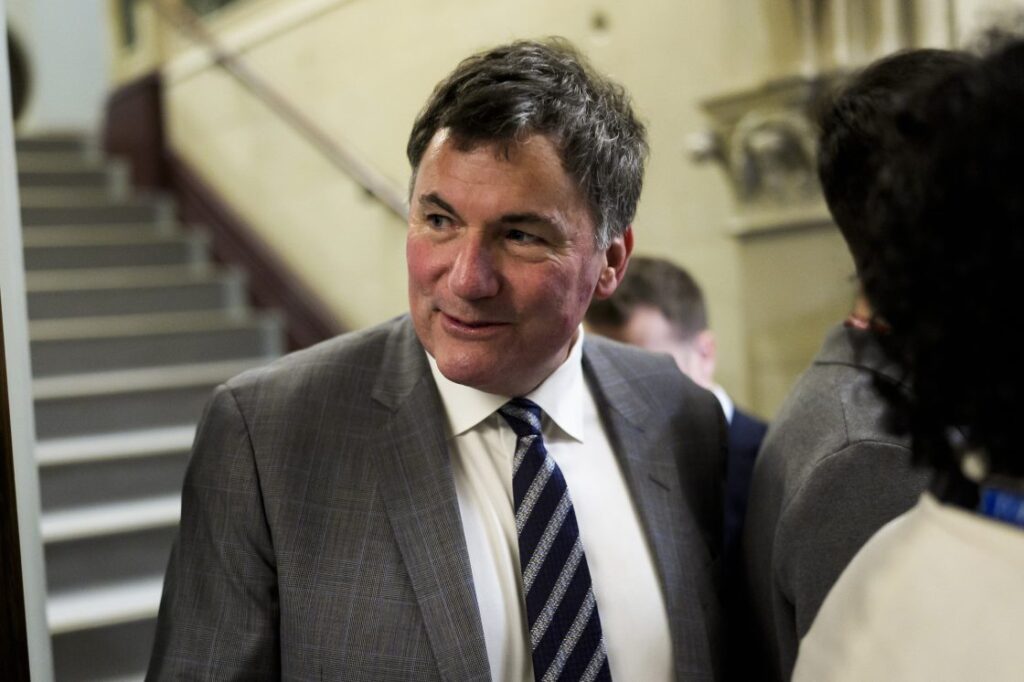
FORT MCMURRAY — The cogeneration units at Suncor Energy’s Base Plant are not new. But on June 23, they became the centerpiece of a federal minister’s visit to this oilsands hub. Dominic LeBlanc, President of the King’s Privy Council for Canada and the minister responsible for a sprawling portfolio that includes Canada-U.S. trade and intergovernmental affairs, toured the facility.
He saw the units that have cut the plant’s emissions while feeding power into Alberta’s grid. That technical detail — the cogen units — is what LeBlanc’s office chose to highlight.
It is the concrete example of how a major oilsands operator is trying to square energy production with environmental pressure. The Base Plant was the first commercial development of the Athabasca oil sands. Now it runs on a technology that captures waste heat to generate electricity.
The minister saw it firsthand. LeBlanc’s trip to Fort McMurray is part of a broader Alberta visit.
He met with Suncor’s senior executives and with trade and industry leaders at the Fort McMurray Chamber of Commerce. The message was consistent: collaboration between Ottawa and Alberta matters, especially now. “It is more important than ever that Canada and Alberta collaborate, particularly in an increasingly uncertain world,” the minister said, according to a readout of the meeting.
That line about uncertainty is not vague. It lands in a specific context. The United States is Canada’s largest trading partner.
Trade policy under the current U.S. administration has been unpredictable. LeBlanc’s portfolio includes Canada-U.S. trade.
Alberta’s economy depends on energy exports. The minister’s visit was a signal that the federal government wants to work with the province, not against it. Suncor is a Canadian company, headquartered in Alberta.
It refines a significant portion of its oil production in Canada and is one of the country’s largest petroleum retailers. The company’s presence in the region is substantial.
The Base Plant is the historic anchor. The cogeneration units are the modern upgrade. They reduce emissions.
They supply power to the grid. They are a tangible response to the question of how oilsands production can continue in a carbon-constrained world. During the discussion with Suncor’s leadership, LeBlanc explored how the government can support the energy sector’s continued growth.
The minister reaffirmed Canada’s commitment to a recently announced implementation agreement. The details of that agreement were not released in the meeting readout.
But the commitment itself was restated. LeBlanc’s title is long. President of the King’s Privy Council for Canada.
Minister responsible for Canada-U.S. Trade, Intergovernmental Affairs, Internal Trade and One Canadian Economy. That last piece — One Canadian Economy — is the framework for the message he brought to Fort McMurray.
Albertans have a role to play in building a stronger national economy, he said. Not just a stronger Alberta economy. A stronger Canadian economy built for all.
The choice of Fort McMurray as the first stop on an Alberta trip is deliberate. The city is the heart of the oilsands. It was devastated by wildfire in 2016.
It has seen oil price crashes and pipeline battles. It is a place where federal-provincial tension has been high.
LeBlanc’s visit was an attempt to lower that temperature. The cogeneration units are a useful prop. They show that emissions can be cut without shutting down production.
They show that industry and government can find common ground on technology. They are not a solution to the entire climate problem.
But they are a fact on the ground. A minister saw them. He talked to the people who run them.
He talked to the people who run the company. The message was that Ottawa is not hostile to the oilsands. It wants to work with them.
Whether that message lands in Alberta remains to be seen. But the visit happened.
The units were shown. The commitment was made. That is the story from Fort McMurray on June 23.




