
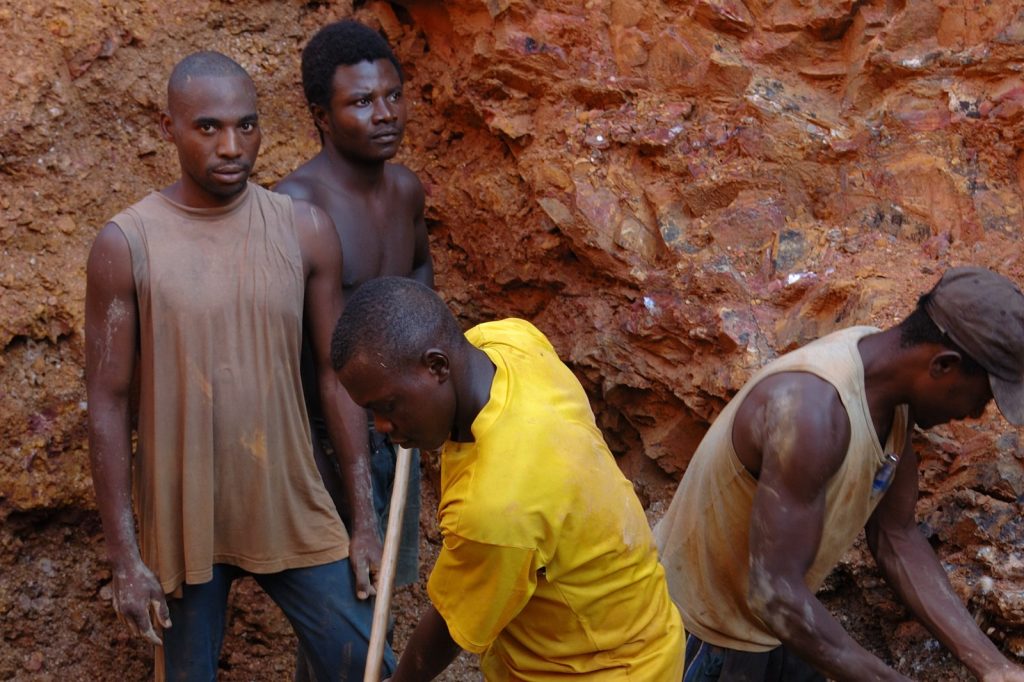
In Zamfara State, a gold pit collapse has killed at least 100 people, with officials warning that number likely represents a minimum. Many more victims may remain buried beneath the rubble.
The tragedy has exposed the brutal reality of Nigeria’s informal gold sector, where workers descend into hand-dug shafts reinforced by nothing more than hope. The collapse was sudden. There was no rescue plan, no emergency equipment.
The ground simply gave way. This is not an isolated event but a recurring pattern in a region where gold mining is a desperate, unregulated scramble for survival.
The workers know the dangers. They descend anyway because the pit is their only employer, their only chance. Gold mining has been practiced since at least 4700 BC, but that long history has not made the work safer.
It has made the danger old, familiar, and accepted. Globally, new gold production ranges from 4,000 to 5,000 metric tons annually.
Most of that comes from industrial mines with engineered supports, ventilation, and emergency protocols. None of that exists in Zamfara. The link between global demand and local risk is direct.
Every gold ring, every bar, every electronic component carries a trace of this equation. The market sees the price, not the pits.
The price does not account for the collapse. Chemical extraction methods like gold cyanidation add another layer of hazard. The process releases toxic substances into the environment.
That poison does not stay in the pit. It seeps into water, settles into soil, and stays.
Communities downstream drink that water. They farm in that soil. The acute disaster of a collapse is followed by the chronic disaster of contamination. Authorities in Zamfara have not released a final death toll.
The number may never be precise. Bodies are not always recovered.
Families sometimes dig for their own, in the same unstable ground that killed their relatives. The cycle does not break. It just repeats.
The soil erosion and deforestation that accompany large-scale pit mining are real problems, but they are slow problems. The collapse of a pit is immediate.
It is final. The environmental costs are long-term. The human costs are immediate.
Both are mounting. Gold mining is a hazardous occupation.
That phrase appears in safety manuals and academic studies. In Zamfara, it is a lived reality. The workers know the danger.
They go down anyway. There are no other options.
When a pit collapses, the world notices for a day. Then the news cycle moves on. The pit stays.
The families stay. The next shift will eventually descend.
The ground will hold for a while. Then it will not. That is what is at stake—not just the lives already lost, but the lives that will be lost in the next collapse, and the one after that, as long as demand for gold remains and extraction remains this brutal.




