
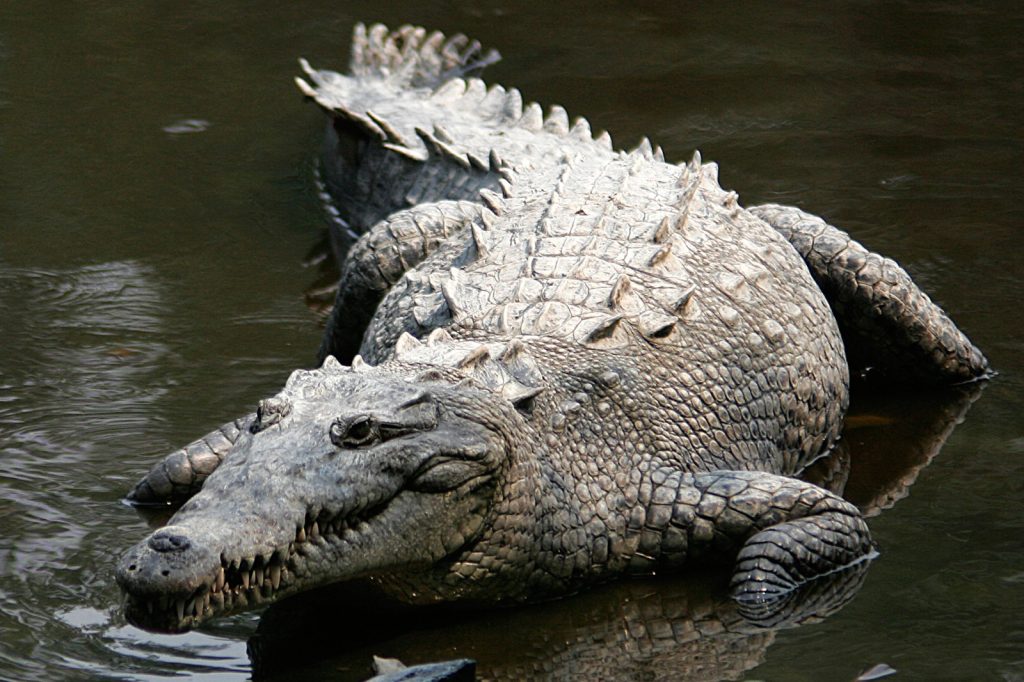
A female American crocodile living in isolation at a zoo in Costa Rica for her entire adult life laid a clutch of eggs, one of which contained a fully developed stillborn offspring. Genetic testing confirmed the embryo had no paternal DNA, marking the first documented occurrence of facultative parthenogenesis in crocodiles.
The findings were published June 7 in the journal Biology Letters. Parthenogenesis, a form of asexual reproduction where an egg cell duplicates its own chromosomes instead of waiting for sperm, has been observed in birds, sharks, and some reptiles. However, it had never been recorded in crocodiles or any member of their evolutionary lineage.
The female in question had no contact with males during her time in captivity, yet she produced eggs, and one yielded a near-complete embryo that was genetically identical to the mother. The research team was not specifically searching for a virgin birth.
They were monitoring crocodile reproductive patterns, tracking egg production, and looking for trends. What they encountered instead was an anomaly that challenges existing knowledge about the reproductive biology of this ancient group of animals. Crocodiles are archosaurs, a group that also includes dinosaurs and pterosaurs.
The discovery raises a direct question about whether extinct archosaurs could have reproduced without mates. The researchers note that crocodiles and their ancestors have endured multiple mass extinction events.
The capacity for parthenogenesis, even if rarely used, could have helped small, isolated populations survive through population bottlenecks. It functions as a biological backup plan, encoded in the genome, that activates only under extreme conditions. Parthenogenesis remains rare among vertebrates and is typically considered a last-resort strategy when no males are available.
In natural settings, it often leads to weaker offspring with reduced genetic diversity. In this case, the offspring was stillborn.
Still, the existence of the mechanism points to a deep evolutionary heritage. The implications extend beyond a single zoo enclosure. For paleontologists, the finding changes how fossil nests, egg clutches, and ancient population demographics are interpreted.
A dinosaur nest lacking male bones nearby can no longer be taken as proof of an absent father. It could indicate a mother who reproduced without one.
The female crocodile remains alive and still isolated. Whether she will produce another parthenogenetic egg is unknown. The researchers do not offer speculation, only reporting what they observed: an egg, an embryo, and no father. The discovery revises the baseline assumption that crocodiles always require two parents for reproduction.
Textbooks will need updating. A single female in a single zoo laid an egg containing a nearly complete animal with no paternal contribution.
That fact is now part of the scientific record.




