
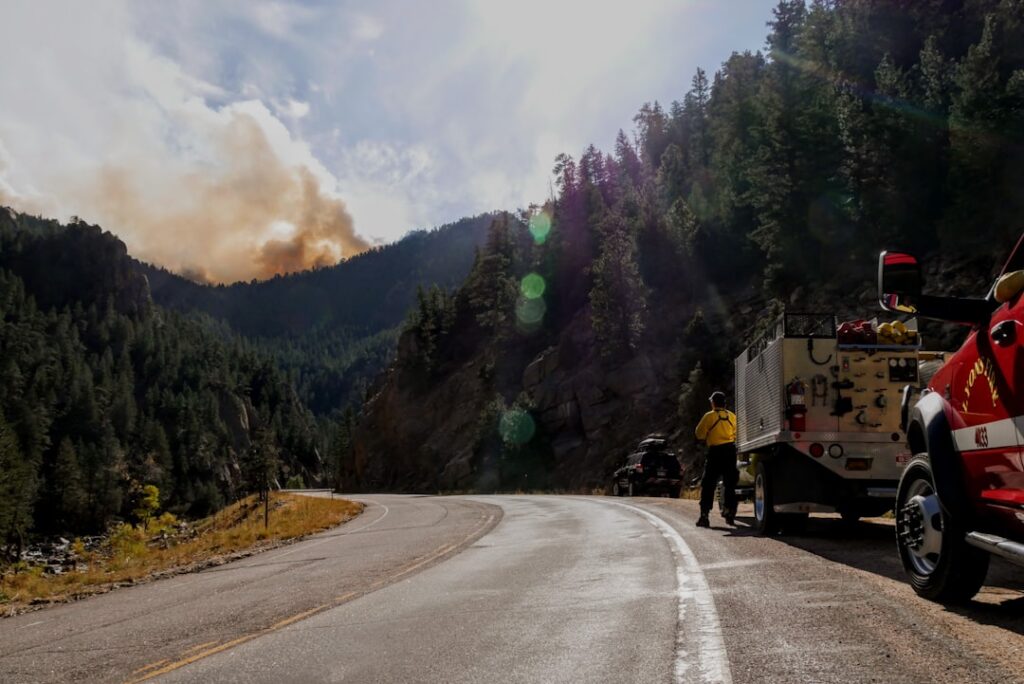
On June 7, 2023, authorities issued a mandatory evacuation that sent approximately 7,300 people out of Chibougamau, the largest settlement in Quebec’s Nord‑du‑Québec region. The order was prompted by two wildfires that had moved perilously close to the town, which sits on the shore of Lake Gilman and is surrounded by boreal forest. Chibougamau, whose Cree name translates to “gathering place,” is a remote hub that provides essential services to smaller neighbouring communities such as Mistissini, Oujé‑Bougoumou and Chapais.
When the evacuation was declared, those outlying areas felt the impact as well, with regional services and the local resource‑based economy—primarily mining and forestry—coming to an abrupt halt. Officials described the evacuation as a precautionary measure, emphasizing that the combination of dry conditions and strong winds makes the surrounding forest a constant fire risk.
While the exact ignition source of the two fires was not identified, the environment was described as “ready” for fire spread, a situation that leaves little margin for error. The 2021 census recorded 7,233 residents in Chibougamau. The evacuation count slightly exceeded that figure, suggesting that additional individuals from nearby areas or temporary workers were also included.
Residents packed belongings and left the town along its main routes, creating a traffic flow comparable to moving an entire community. Local infrastructure, built to support a town isolated by hundreds of kilometres of wilderness, proved robust enough to facilitate the mass departure.
However, officials noted that even well‑constructed roads, concrete and steel cannot stop the advance of a wildfire when smoke and heat dominate the air. Economic activity in the region came to an immediate standstill. Mining operations were suspended, and timber harvesting was paused, turning each day the fires burn into a day of lost production.
The disruption underscores the vulnerability of remote, resource‑dependent towns to natural hazards. Authorities continue to monitor the fires, providing updates as the situation evolves.
Their statements stress that monitoring tracks fire movement but does not halt its progress. Chibougamau’s history as a meeting point for Indigenous peoples adds a poignant dimension to the evacuation. The town has long served as a place for trade, dialogue and survival; now its residents are leaving for the very same reason. The evacuation order was explicit and mandatory, leaving no ambiguity for the 7,300 individuals instructed to leave.
Planning for such an operation required precise head‑counts, vehicle assessments and timing calculations to ensure a safe and orderly exit. Living in a fire‑prone region means that residents must accept the possibility of evacuation during the summer months.
On June 7, that reality materialized for Chibougamau, turning a historic gathering place into a temporary departure zone. The community now awaits further information as officials work to contain the fires and assess the path to recovery.




