
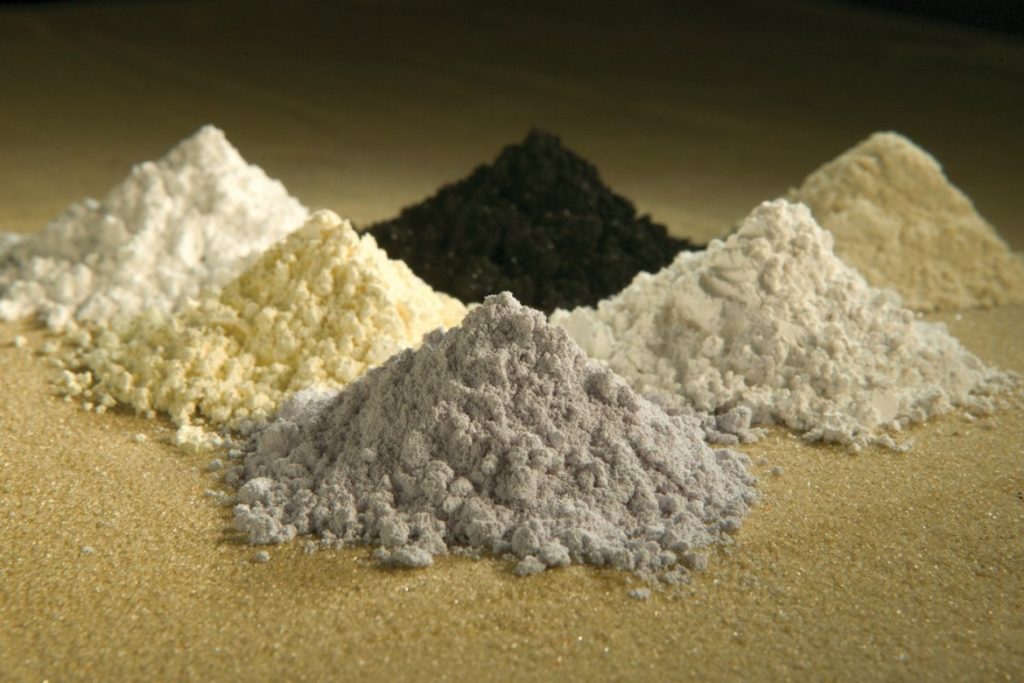
Rare earth elements, the seventeen metallic compounds that power electric vehicle motors, smartphone displays, and petroleum catalysts, remain under Beijing’s strategic control after decades of deliberate state policy. The United States once supplied most of the world’s rare earths from California mines in the 1950s, but by the 1990s China had become the dominant producer, combining low labor costs with relaxed environmental oversight. The shift was set in motion in the 1980s when Deng Xiaoping declared, “The Middle East has oil; China has rare earths,” framing the minerals as a national priority.
Today, that priority is backed by state-owned enterprises and a legal framework that gives Beijing explicit authority to intervene in the market.
Production and Refining: A Widening Gap
Production figures highlight the scale of China’s advantage. In 2023, China produced 240,000 metric tons of rare earth oxides, compared with 43,000 metric tons produced by the United States. The bottleneck, however, is not just in mining but in refining.
According to the U.S. Geological Survey, China processes over 85% of global rare earth concentrates, turning raw ore into usable metals. This refining capacity represents a choke point that new mines alone cannot easily relieve.
State-owned giants China Northern Rare Earth Group and China Southern Rare Earth Group control the mining and separation phases, consolidating the industry under direct government oversight. In 2016, Beijing formally designated rare earths as a strategic resource, providing legal cover for future market interventions.
Export Controls as Leverage
China has periodically used export controls as a tool in trade disputes. In 2010, Beijing cut rare earth export quotas, causing prices to spike sharply and triggering global alarm.
The World Trade Organization ruled against the restrictions in 2014, finding they violated trade rules, but the ruling did little to alter the underlying structure of the industry. State-owned enterprises retained tight control. More recently, in 2023, the government announced export restrictions on certain rare earth extraction technologies.
The move was widely seen as a signal to Washington and other capitals that Beijing is willing to weaponize its supply chain advantage. These actions are rooted in a decades-long strategy: China’s dominance was not accidental but built through low production costs, relaxed environmental rules, and state-backed consolidation.
The Challenge of Diversification
The U.S. and allied governments have announced efforts to build alternative supply chains, but the numbers show how far they have to go. China’s 240,000 metric tons of production in 2023 dwarfed America’s 43,000 metric tons.
And even if new mines come online, the refining gap remains the harder problem to solve. Officials in Beijing have not signaled any intention to relax their hold. The strategic resource designation remains in place.
The state-owned enterprises continue to operate as the primary producers. And the 2023 export restrictions on extraction technology suggest China intends to keep its technical edge as well as its market share.
For global markets, the question is whether diversification is possible at scale. The data from the U.S. Geological Survey makes the challenge clear: over 85% of global refining capacity sits inside China. That is not a position that changes quickly.
Rare earth elements are essential to a wide range of advanced industries–the high-performance magnets in electric vehicles, the phosphors in smartphone screens, and the catalysts in petroleum refining. Their scarcity in concentrated deposits makes processing difficult and environmentally sensitive.
Because China controls most refining capacity, any disruption can ripple across global supply chains. Governments and manufacturers continue to seek ways to diversify sources, yet decades of policy and investment have entrenched Beijing’s central role. The result is a market where supply security depends heavily on decisions made in Beijing.




