
The Islamic Revolutionary Guard Corps Navy’s closure of the Strait of Hormuz has triggered a cascade of possible military and diplomatic consequences, placing a decades-old flashpoint at the center of global attention once again. The narrow waterway, linking the Persian Gulf to the Gulf of Oman and the Arabian Sea, serves as a vital artery for oil and gas shipments moving from some of the world’s largest producers.
Its blockage by minefields, naval blockades, or other means has been a recurring worry in periods of regional tension, and the current crisis is now testing the international community’s ability to respond without triggering a broader conflict.
A Historic Chokepoint and Its Strategic Legacy
Disputes over control of the Strait of Hormuz date back centuries, shaped by imperial rivalries and competing claims over sovereignty and shipping rights. The waterway’s modern strategic importance rose after the discovery of oil in the Persian Gulf in the early 20th century, when Western powers, particularly Britain, secured influence through colonial-era agreements and a military presence.
Following Iran’s 1979 Islamic Revolution and the establishment of the Islamic Republic, tensions mounted as Tehran sought to assert authority over its territorial waters and counter foreign influence in the Gulf. During the Iran-Iraq War of the 1980s, Iran targeted oil tankers in what became known as the Tanker War, prompting direct U.S. naval intervention. In 1987–1988, Operation Earnest Will saw American warships escorting Kuwaiti vessels that had been reflagged under U.S. protection, a mission that established a precedent for military responses to threats against free navigation.
More recently, in 2019, Iran seized or attacked several tankers in the strait, and in 2020, tensions flared after the United States killed a senior Iranian military figure, leading to reciprocal missile strikes. These events illustrate how quickly localized incidents can escalate into confrontations involving regional and global powers.
Military and Diplomatic Options on the Table
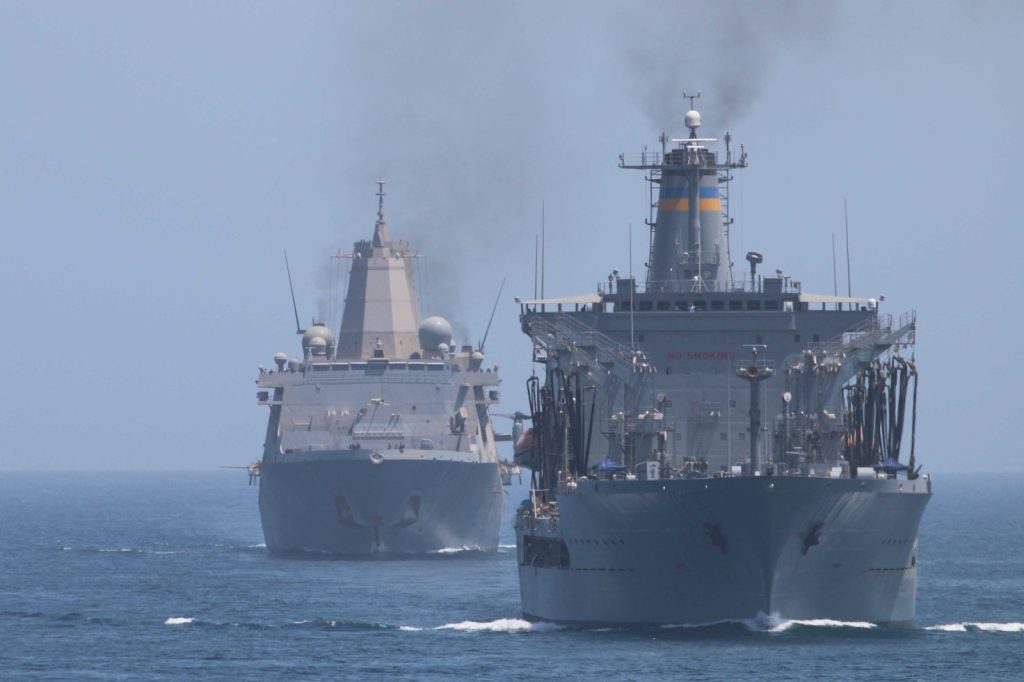
The U.S. Fifth Fleet could initiate a mine-clearing operation, following the template established by Operation Earnest Will. That earlier mission demonstrated how the Navy could respond to threats to freedom of navigation through the strait’s narrow waters.
On the diplomatic front, Washington could seek a United Nations Security Council resolution condemning the closure. However, that path carries significant obstacles. Russia and China, both permanent members with veto power, have historically opposed such measures, making any resolution an uphill battle.
The Gulf Cooperation Council, which comprises Saudi Arabia, the United Arab Emirates, Qatar, Kuwait, Oman, and Bahrain, could serve as a mediating body. Oman, which shares the southern coast of the strait, has often acted as an intermediary between Iran and the West, a role that may prove critical to de-escalating tensions.
The International Maritime Organization could issue navigational warnings, a less confrontational step that would nonetheless signal international concern about the safety of one of the world’s most vital shipping lanes.
Economic Pressures and Nuclear Negotiations in Limbo
Iran may face economic retaliation, including further sanctions on its oil exports. Those exports were already at 1.5 million barrels per day in 2024, down from 2.5 million in 2017, a decline reflecting the impact of existing sanctions.
Additional restrictions would squeeze Iran’s economy further. Military escalation remains a real possibility. The United States could conduct airstrikes on IRGC Navy bases at Bandar Abbas and Bushehr, while Iran could in turn attack U.S. naval assets.
The last major confrontation between the two countries occurred on January 8, 2020, when Iran launched ballistic missiles at Al Asad Airbase in Iraq, a strike in response to the U.S. killing of Qasem Soleimani on January 3, 2020. No U.S. casualties resulted from that attack.
The closure could also affect nuclear negotiations, which have been dormant since August 2022. Any new crisis in the Strait of Hormuz would further complicate efforts to revive talks over Iran’s nuclear program. What comes next depends on whether diplomatic channels can open before military options are exhausted.
The Gulf Cooperation Council, and Oman in particular, may hold the key to finding a path that avoids a wider conflict, as the strait remains vital not only for energy markets but also for international maritime law and global trade stability. Any disruption threatens supply chains, raises shipping costs, and risks military escalation—factors that sit at the intersection of energy security, diplomatic leverage, and military deterrence.




