
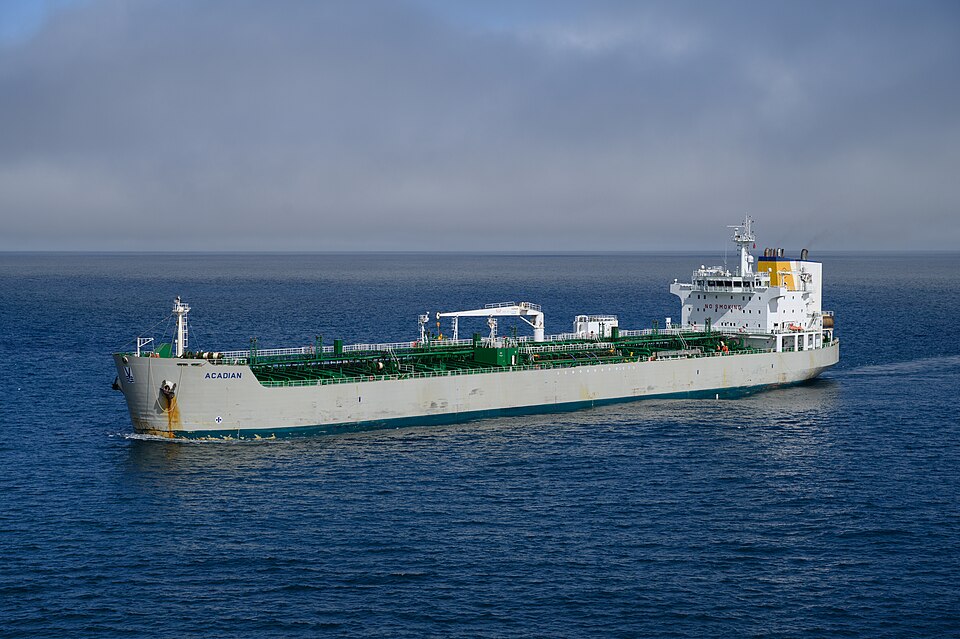
WASHINGTON, July 12 — The Strait of Hormuz, a narrow ribbon of water connecting the Persian Gulf to the wider world, remains the planet’s most vital oil chokepoint. According to the U.S. Energy Information Administration (EIA), roughly 21 million barrels per day of crude oil, petroleum products, and liquefied natural gas moved through the strait in 2023. That single figure represents about 20% of global petroleum consumption.
Think of it like a highway with two lanes in each direction, squeezed into a corridor just 33 kilometers wide at its narrowest point. The shipping lanes themselves are each only about two miles wide. It’s a tight fit for the tankers that carry the lifeblood of the global economy.
Who ships through the Strait?
The exporters are a who’s-who of Persian Gulf producers. Saudi Arabia sent roughly 6.5 million barrels per day through the strait in 2023. Iraq followed at about 3.5 million barrels per day. Kuwait and the United Arab Emirates each shipped about 2.5 million barrels per day. Iran itself accounted for roughly 1.5 million barrels per day.
But it’s not just oil. Qatar exports about 100 million metric tons of liquefied natural gas annually through the Strait of Hormuz. That LNG is a major source of heating, power generation, and industrial feedstock for customers across Asia and Europe.
The practical upshot: any disruption to shipping through the strait doesn’t just threaten crude supplies. It would also rattle the global natural gas market, which has grown more sensitive to supply shocks since the energy crisis in Europe.
What happens if the Strait gets blocked?
The EIA examined this scenario in 2019. Its analysis found that a closure of the Strait of Hormuz could cause oil prices to spike by $10 to $30 per barrel in the short term. That’s a significant jolt to an already volatile market.
Here’s what it means in plain terms: the global economy has a limited cushion against such a shock. The International Energy Agency (IEA) member countries hold emergency oil stocks of about 1.5 billion barrels. That includes the U.S. Strategic Petroleum Reserve, which held about 700 million barrels as of 2023. Those reserves are designed to be released during a supply emergency, but they are not infinite.
A prolonged closure would test the limits of that system. The 33-kilometer-wide strait is not easily bypassed. Alternative pipeline routes exist, but they have limited capacity and would take time to ramp up. The practical upshot is that the world’s energy security remains tightly linked to the stability of this single geographic feature.
Why this matters now
The Strait of Hormuz has been a flashpoint for decades. During the Iran-Iraq war in the 1980s, both sides attacked oil tankers. In 2019, a series of attacks on tankers near the strait raised tensions. The EIA’s data underscores how concentrated global oil transit remains.
For ordinary readers, the so-what is straightforward. The price of gasoline at the pump, the cost of heating a home, and the stability of supply chains all trace back, in part, to this narrow stretch of water. When the EIA says the strait is the world’s most important oil chokepoint, it’s not hyperbole — it’s a statement of physical and economic reality.
The next thing to watch is whether diplomatic or military tensions in the region escalate. Any sign of a blockade or military confrontation would send immediate ripples through oil and LNG markets. The emergency stockpiles are there for a reason, but they are a bridge, not a permanent solution.




