
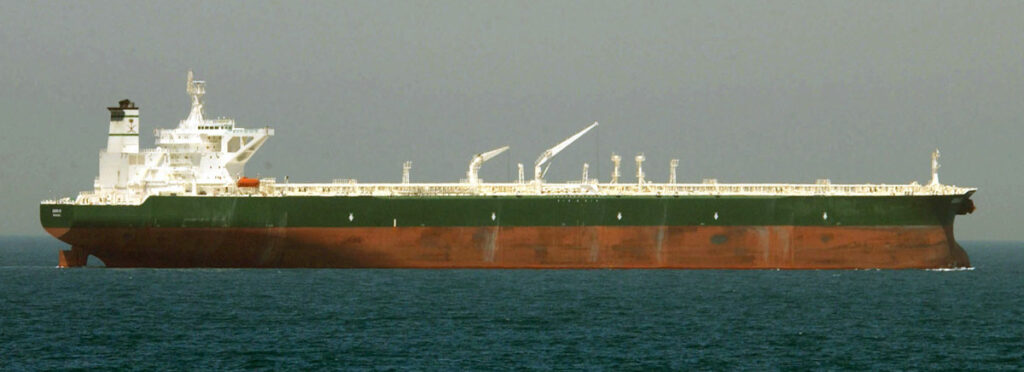
DUBAI, July 12 — The Strait of Hormuz, a narrow waterway that carries roughly one-fifth of the world’s daily oil consumption, remains one of the most strategically contested pieces of water on the planet. For context, think of it like a two-lane highway where the passing lane is barely two miles wide — and every tanker that squeezes through is carrying fuel that keeps economies running. At its narrowest point, the strait is just 21 miles wide.
The shipping lanes in each direction are only two miles wide. That’s tight quarters for the massive deep-draft tankers that transit the waterway, which has a depth ranging from 30 to 90 meters — just enough room for fully loaded vessels to pass.
A chokepoint with a long history
The strait connects the Persian Gulf to the Gulf of Oman and the Arabian Sea, sitting between Iran to the north and Oman and the United Arab Emirates to the south. It has been a strategic maritime route for centuries. The Portuguese Empire used it in the 16th century.
The British Empire controlled it in the 19th century. In modern times, the strait became a focal point of global energy security after the 1973 oil crisis.
That led to the Carter Doctrine in 1980, when the U.S. declared it would use military force to protect its interests in the Persian Gulf. The practical upshot: Washington has long treated the free flow of oil through the strait as a red line. During the Iran-Iraq War, from 1980 to 1988, the Tanker War phase from 1984 to 1988 saw both Iran and Iraq attack oil tankers in and near the strait.
The U.S. responded with Operation Earnest Will from 1987 to 1988, a naval intervention to protect reflagged Kuwaiti tankers.
What’s at stake today
The U.S. Energy Information Administration reports that in 2023, about 17 million barrels of oil per day passed through the strait. That represents roughly 20% of global petroleum consumption. In plain terms, if that flow were disrupted, the effects would be felt in fuel prices and supply chains worldwide almost immediately.
Iran has threatened to close the strait multiple times — in 2008, 2012, and 2019 — often in response to sanctions or military tensions. Each time, the threat has raised alarms in global energy markets and prompted a U.S. military response or show of force.
The current administration has taken a hard line on Iran, maintaining sanctions and positioning naval assets in the region. The question that hangs over the strait today is whether the latest round of tensions will escalate into a direct confrontation — or whether the waterway will remain open, as it has for centuries, to the tankers that keep the world’s energy flowing.
Sources
{“@context”: “https://schema.org”, “@type”: “NewsArticle”, “headline”: “Strait of Hormuz: How Geography Made It the World’s Key Oil Chokepoint”, “description”: “DUBAI, July 12 — The Strait of Hormuz, a narrow waterway that carries roughly one-fifth of the world’s daily oil consumption, remains one of the…”, “datePublished”: “2026-07-12T09:30:00+00:00”, “author”: {“@type”: “Person”, “name”: “Erika Johnson”}, “publisher”: {“@type”: “Organization”, “name”: “InfoPulse Today”, “url”: “https://newsfeed.infopulsetoday.com/”}, “citation”: [{“@type”: “CreativeWork”, “url”: “https://en.wikipedia.org/wiki/Strait_of_Hormuz”}]}




