
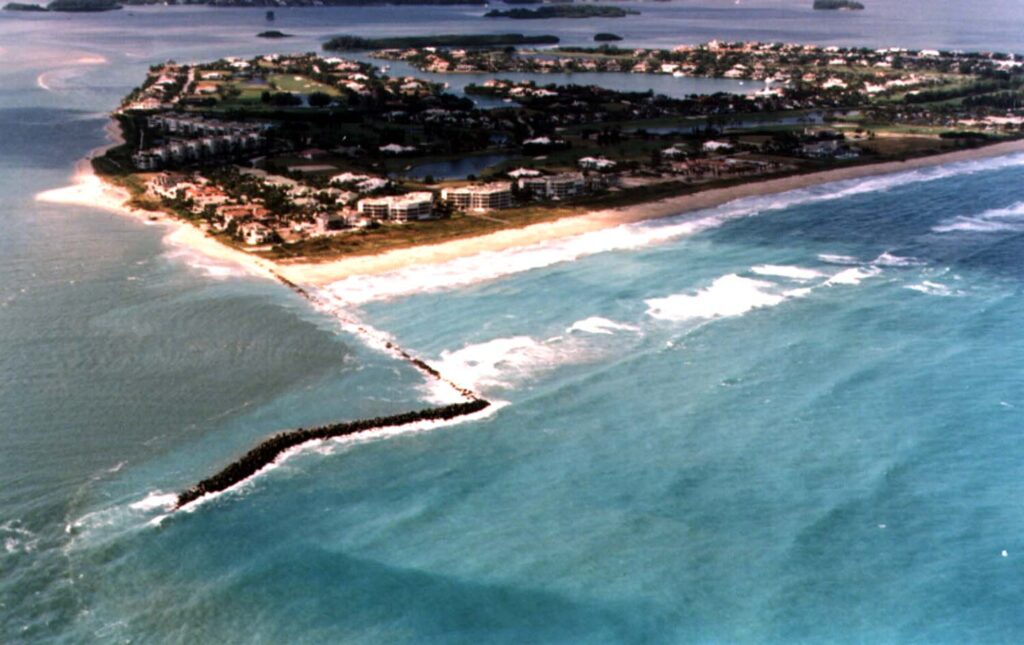
On April 11, 2025, a vessel carrying migrants overturned in the waters off Florida’s St. Lucie Inlet, leaving five people dead. The United States Coast Guard was able to pull four survivors from the wreckage, but the tragedy underscores the peril faced by those who attempt illegal entry into the United States.
The incident occurred at the St. Lucie Inlet, a narrow channel that separates Hutchinson Island from Jupiter Island in Martin County. The inlet serves as a key conduit between the Indian River Lagoon and the Atlantic Ocean, supporting both commercial navigation and a fragile coastal ecosystem. St. Lucie Inlet is one of six passages that grant access to the Indian River Lagoon, a 156‑mile estuary that runs along Florida’s east coast.
The lagoon’s waters host a wide variety of marine life, including coral reefs, sea turtles and numerous fish species. Hutchinson Island’s shoreline is especially notable for being the third‑largest loggerhead sea‑turtle nesting area in the Western Hemisphere.
Nearby protected areas highlight the ecological importance of the region. St. Lucie Inlet State Park, situated just south of the inlet, contains both hard and soft coral formations that provide habitat for diverse marine organisms. To the north, the Bathtub Beach Reef—a sabellariid worm reef—supports an equally varied community of sea life.
These natural assets contribute not only to biodiversity but also to the local tourism and recreation economy. Authorities continue to investigate the capsizing, while environmental groups point to the incident as a reminder of the need to safeguard coastal waters.
As coastal populations grow and development pressures intensify, experts stress the importance of sustainable management practices that protect marine habitats and maintain water quality. Conservation advocates argue that preserving coral reefs, protecting sea‑turtle nesting sites, and promoting responsible fishing are essential steps toward maintaining the health of the Indian River Lagoon and its adjoining waterways. They also emphasize the role of renewable‑energy investments and broader energy‑security measures in reducing the environmental footprint of human activity.
The tragedy at St. Lucie Inlet has sparked renewed discussion about the intersection of immigration enforcement and environmental stewardship. While the immediate focus remains on the victims and the families affected, the broader conversation includes how coastal ecosystems can be better protected amid increasing human pressures.
Florida residents and observers across the nation are reflecting on the loss of life and the fragile state of the surrounding natural environment. Many see the incident as a call to action—urging policymakers, community leaders and the public to prioritize conservation, adopt sustainable practices and support clean‑energy initiatives that can mitigate future risks to both people and the planet. As the investigation proceeds, the St. Lucie Inlet stands as a stark illustration of the delicate balance between human activity and the ecosystems that surround it.




