
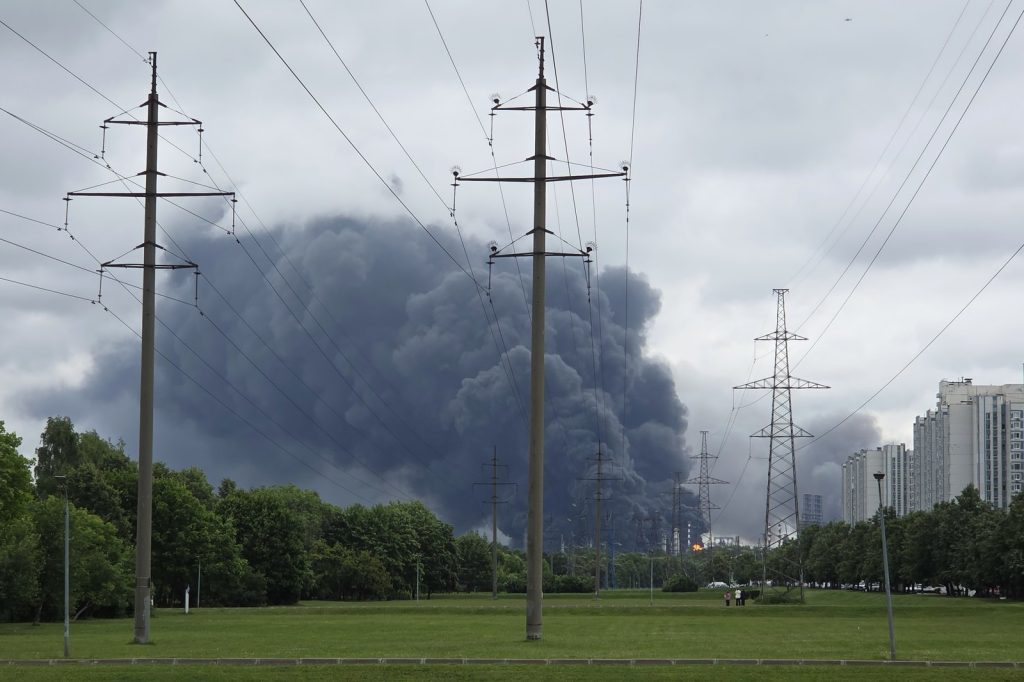
MOSCOW, July 7 — The shift is already underway in Russia’s energy sector, and it’s not one the Kremlin planned for. Ukrainian drone strikes, targeting the country’s refining infrastructure since early 2024, are quietly reshaping how Russia moves its oil to market. The trend underneath is a forced downgrade: from selling high-margin refined products to pushing raw crude onto global buyers at a discount.
Russia remains the world’s third-largest oil producer, a fact that hasn’t changed. In 2022, it was exporting roughly 7 million barrels per day.
Oil and gas revenues that year made up 45% of the federal budget, with oil exports alone bringing in $191 billion. But the revenue machine is showing cracks. The Achinsk refinery, a facility that processes 7.5 million tons annually, is one of many now operating under a new kind of pressure.
The attacks are methodical. Since January 2024, at least 15 Russian refineries have been hit.
The May 9, 2024 strike on a refinery was a direct attempt to disrupt production and inflate operational costs for Russian energy companies. The cumulative effect is measurable: refining capacity has been cut by an estimated 10-15%. That’s not a temporary blip; it’s a structural hit to the country’s ability to turn crude into diesel, gasoline, and other high-value exports.
When a major producer loses refining capacity, the economics shift. Russia now faces a choice it doesn’t want: export more crude oil instead of the refined products that command premium prices. The profit margins shrink.
The state budget, already stretched by war spending and sanctions, takes another hit. The trend is clear — lower revenue per barrel, even if the volume of crude flowing out stays steady.
Global oil markets are already pricing in the disruption. In early May 2024, the price of oil rose to $83 per barrel. That’s a direct line from the drone strikes in Russia to the cost of fuel internationally.
The mechanism is straightforward: less Russian refining means more competition for available refining capacity elsewhere, and tighter supply of refined products on the global market. The Achinsk refinery is a useful case study.
It processes 7.5 million tons of crude annually, feeding both domestic supply and export markets. When a facility of that scale is taken offline — even temporarily — the ripple effects are immediate. Domestic fuel prices edge up.
Export commitments get renegotiated. The cost of repairs, security upgrades, and insurance all rise, eating into the margins that made Russian oil profitable in the first place. The Ukrainian strategy is surgical.
Rather than targeting oil fields or pipelines deep inside Russia, the strikes focus on the refining nodes. It’s a lower-risk, higher-impact approach.
Disrupt the refinery, and you disrupt the entire downstream chain. The goal is clear: increase operational costs for Russian energy companies until the economics of the war become unsustainable. Since January 2024, the pattern has been consistent.
At least 15 refineries hit. Capacity down by an estimated 10-15%.
That’s not a rounding error. That’s a significant chunk of the country’s ability to process its own oil. The May 9, 2024 attack was a reminder that no refinery is safe, regardless of its location or security posture.
Here’s what’s changing. Russia’s oil export revenue isn’t just a function of how much it pumps. It’s a function of what form that oil leaves the country in.
Crude oil sells at a discount to diesel, gasoline, jet fuel, and other refined products. When you lose the capacity to refine, you lose the value-add.
The same barrel of oil generates less revenue. The global oil price hit $83 per barrel in early May 2024. That’s a direct consequence of the supply uncertainty created by the strikes.
Traders and refiners in Europe, Asia, and the Middle East are watching Russian refining capacity as closely as they watch OPEC quotas. Every drone strike that takes a refinery offline tightens the global market for refined products.
The Kremlin’s energy strategy has long relied on the idea that Russia is an indispensable supplier. The strikes are testing that assumption. If Russia can’t reliably deliver refined products, buyers will look elsewhere.
The shift may be gradual, but it’s real. The next phase is already taking shape. Russia will likely try to repair and protect its refineries, but that’s expensive and time-consuming.
In the meantime, more crude oil will flow out, and less revenue will flow in. The global market will adjust, finding new sources of refined products and new pricing equilibria.
The trend underneath is a structural downgrade of Russia’s energy export capability. The strikes are not just tactical disruptions; they are strategic attacks on the revenue engine that funds the war. The question now is how long Russia can sustain the loss of refining capacity before the budget pressure becomes acute.
The answer will shape not just the war in Ukraine, but the global energy landscape for years to come.




