
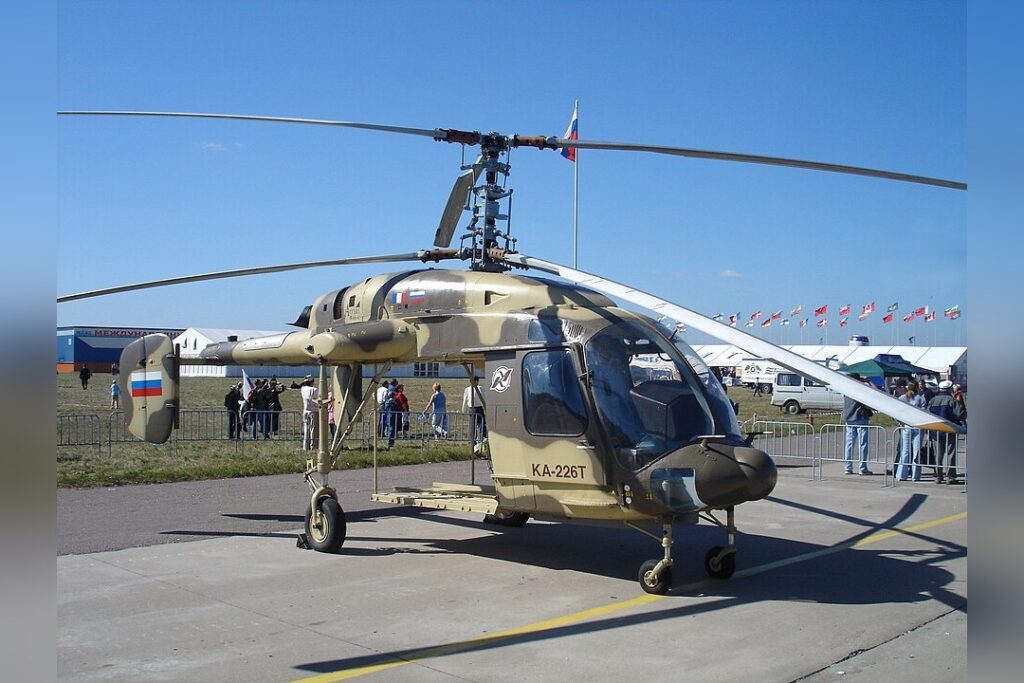
A Kamov Ka-226 helicopter crashed in the Russian republic of Dagestan on November 7, resulting in five fatalities and two injuries. The wreckage of the twin-engine aircraft now rests in the populated area of Achi-Su, where local residents witnessed the descent and heard the impact before silence followed.
The incident immediately focuses attention on the safety record of the Ka-226, known to NATO as the Hoodlum. Introduced into service in 2002, the helicopter has accumulated thousands of flight hours over more than two decades of operation. While this extensive history demonstrates reliability, it also raises concerns about potential airframe wear that may escape detection.
The Ka-226’s design includes an interchangeable mission pod, allowing it to serve multiple roles including passenger transport, cargo hauling, and medical evacuation. This versatility has made it popular with operators worldwide, but now draws scrutiny as investigators examine whether the pod configuration on the crashed aircraft played a role in the accident.
Russian authorities will conduct a thorough investigation, beginning with an examination of maintenance logs and inspection of the pod’s attachment points for signs of metal fatigue. The two survivors, currently hospitalized, are considered key witnesses. Investigators will interview them as soon as their medical condition permits, seeking information about any engine sputtering, rotor slowdown, or cockpit warnings that preceded the crash. The crash site in Achi-Su presents additional challenges.
Debris is scattered across the ground, and fuel has leaked into the soil. While environmental damage appears contained, cleanup crews must remove contaminated earth and collect wreckage pieces for analysis.
Every component will be tagged and bagged in a slow, methodical process. For the global aviation community, this crash serves as a critical data point. While the Ka-226 has maintained a reliable reputation, no aircraft is immune to failure.
The investigation’s eventual recommendations, whether minor or sweeping, will be closely studied by airlines and charter companies operating the type. They will review their own maintenance procedures for any signs of similar issues.
The Russian government’s findings will carry significant weight internationally. A identified design flaw would damage the Ka-226’s reputation. Evidence of pilot error would prompt reexamination of training standards.
A maintenance failure would place responsibility on the operator. At this stage, the cause remains unknown, but the consequences will extend beyond the immediate tragedy.
Five families now mourn their losses, two individuals recover in medical care, and the helicopter lies broken in Achi-Su. The investigation has begun, with details yet to be uncovered shaping the full picture of this event.




