
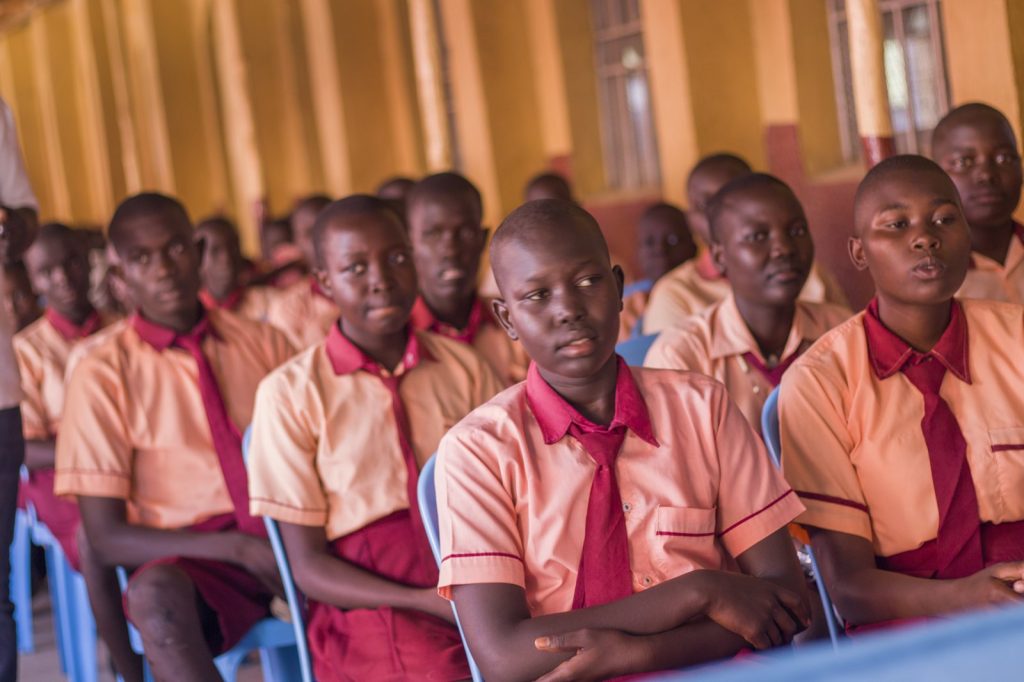
All schools across South Sudan have been ordered to close for a two-week period beginning immediately, the government announced on February 21, 2025. The unprecedented shutdown comes as forecasters predict temperatures will reach 108 degrees Fahrenheit—a level officials describe as potentially lethal.
The Republic of South Sudan, a landlocked East African nation, features diverse terrain ranging from plains and tropical savannahs to forested mountains. The Nile River system runs through the country’s center from south to north, a geography that can trap and intensify heat. Current conditions have produced a heat wave that authorities determined required decisive action.
Dr. Matthew Tut, a health expert based in the capital Juba, emphasized the severity of the situation. “Heat-related illnesses can be devastating, especially for children,” he stated.
“It is our duty to protect them from these risks.” Tut specifically warned of heat exhaustion and heat stroke, conditions that can rapidly become fatal for young people. A child in an unairconditioned classroom beneath a tin roof during 108-degree heat represents a medical emergency waiting to occur, he noted. The government characterized the closure as a proactive measure, implemented to prevent student collapses rather than respond to them.
The two-week period provides officials time to evaluate conditions and determine next steps as the heat wave arrives. South Sudan’s estimated population exceeded 12.7 million as of 2024, with a significant proportion being school-age children.
Closing every educational institution nationwide disrupts learning, daily routines, and family childcare arrangements. However, officials concluded that sending students into buildings that become dangerously hot posed greater risks. Juba, situated on the White Nile in low-lying terrain that traps heat, is expected to experience particularly severe conditions. When temperatures climb to 108 degrees, streets empty and shade offers minimal relief.
The government’s calculation favors empty classrooms over crowded hospital wards. While South Sudan has experienced extreme weather previously, including dramatic temperature swings, this nationwide school closure represents an unprecedented response.
It signals that current conditions exceed routine heat events and constitute a genuine threat. Dr. Tut stated that children’s health and safety remain paramount. The government chose not to issue warnings or recommend precautions; instead, it ordered immediate school closures.
The two-week timeline allows time for the heat to subside, for government planning, and for family adaptation. However, in a country with limited resources and infrastructure serving over 12.7 million people, two weeks may prove insufficient if the heat wave persists, potentially requiring additional measures beyond school closures.




