
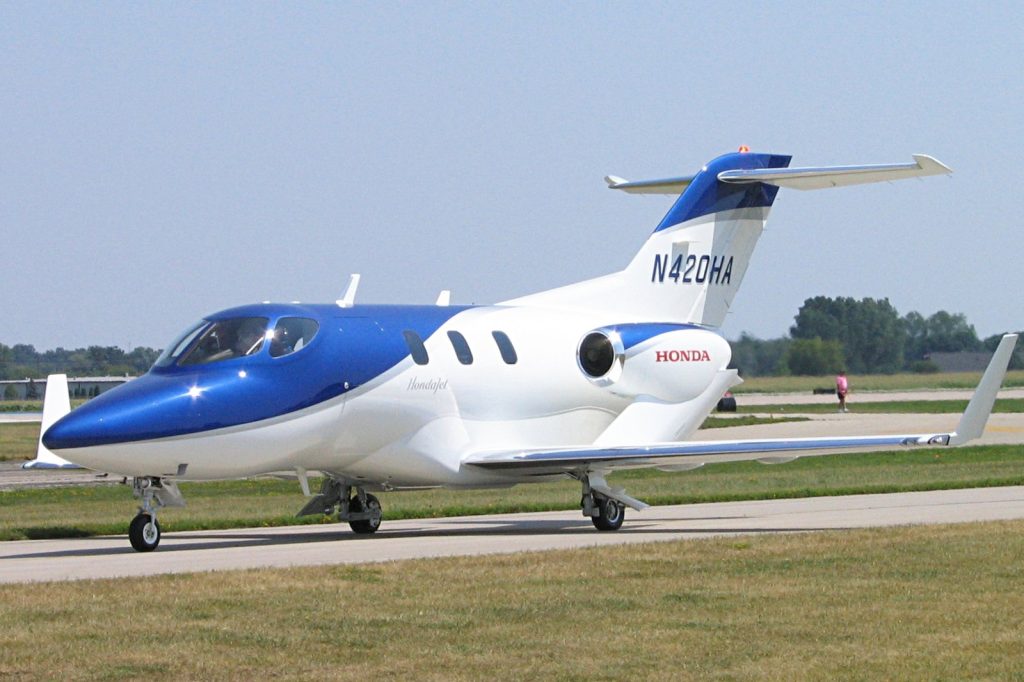
A tragic aviation accident at Falcon Field in Mesa, Arizona, on November 6, 2024, claimed five lives when a Honda HA-420 HondaJet struck a vehicle while attempting to take off. The incident has prompted an investigation into the circumstances surrounding the crash. The aircraft involved was a Honda HA-420 HondaJet, a light business jet manufactured by the Honda Aircraft Company. The HondaJet program began with initial concepts in 1997, which were finalized by 1999.
The aircraft completed its maiden flight on December 3, 2003, and received its Federal Aviation Administration type certificate in December 2015, with first deliveries occurring that same month. The HondaJet features a distinctive design combining a composite fuselage with an aluminum wing.
It is powered by two GE Honda HF120 turbofan engines, which are uniquely mounted on pylons positioned above the wing. This configuration contributes to the aircraft’s performance, allowing it to reach a maximum cruise speed of 422 knots (782 km/h; 486 mph) and achieve a range of up to 1,547 nautical miles (2,865 km; 1,780 mi). The cabin can accommodate either six or seven passengers.
The aircraft’s construction incorporates several safety-oriented design elements. The composite fuselage provides structural strength and durability, while the aluminum wing contributes to stability and control during flight operations.
The pylon-mounted engine configuration is intended to enhance aerodynamic performance and efficiency. The National Transportation Safety Board is expected to conduct a thorough investigation into the crash. Investigators will likely examine the aircraft’s maintenance history, pilot qualifications and training records, and other operational factors that may have contributed to the accident.
The findings will be critical for identifying any safety deficiencies and implementing corrective measures to prevent similar occurrences. This incident underscores the inherent risks associated with aviation operations and highlights the importance of rigorous safety evaluations.
While modern aircraft like the HondaJet incorporate advanced design features and safety systems, accidents can still occur, emphasizing the need for continuous improvement in aviation safety protocols. The aviation industry continues to pursue advancements in aircraft design and operational safety. Ongoing research and development efforts focus on enhancing safety standards, improving reliability, and reducing accident risks.
These initiatives include exploring sustainable technologies and alternative power sources to create more efficient and environmentally responsible aircraft. As the investigation proceeds, the focus remains on understanding the factors that led to this tragedy and applying lessons learned to strengthen aviation safety for all passengers and crew.




