
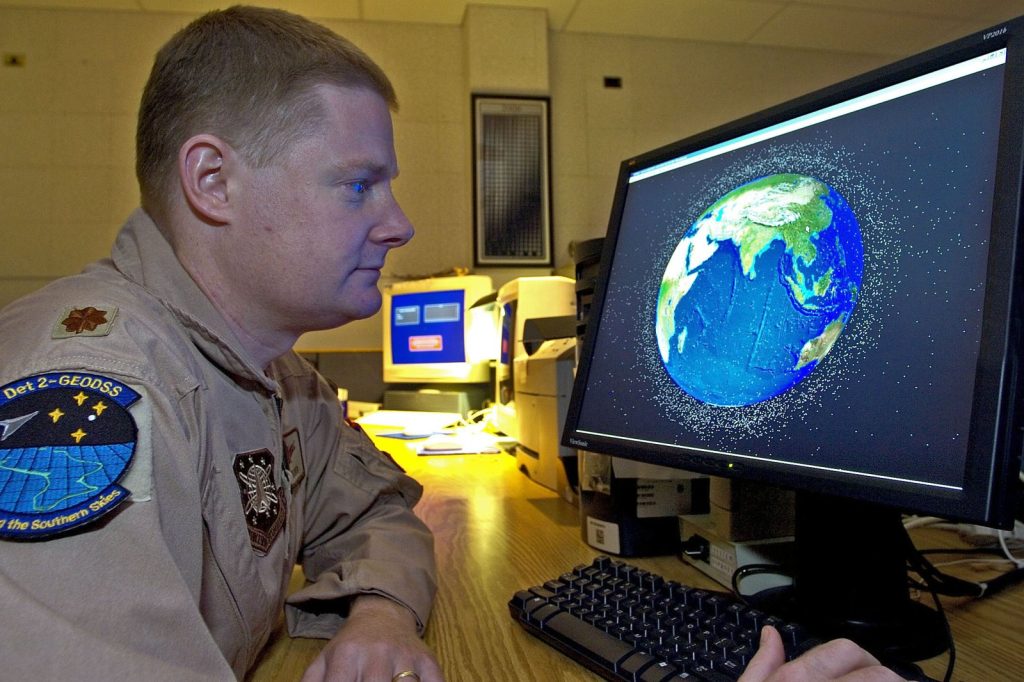
ROME, July 14 — The economics of orbital real estate have always been about scarcity. The catch is that the most valuable slots — the geosynchronous orbit arc where a single satellite can stare at a third of the planet — are also the hardest to abandon. Donald J.
Kessler, a NASA scientist, laid out the mechanics in 1978: once the density of objects in low Earth orbit crosses a threshold, collisions cascade, generating ever more debris until the whole highway becomes unusable. The same principle applies to geosynchronous orbit, where communications and weather satellites park.
The Inter-Agency Space Debris Coordination Committee, founded in 1993, has long recommended that operators push their dying GEO satellites 300 km higher into a graveyard orbit. That is the polite way of saying: clean up after yourself. But the IADC has no enforcement arm.
The U.S. National Space Policy of 2010 and the 2019 Space Policy Directive-3 both emphasise debris mitigation. A 2021 study from the University of Southampton modelled what happens when the system fails.
One catastrophic collision in GEO, the researchers found, could generate more than 1,000 trackable fragments. Within a decade, the collision risk for remaining satellites would rise by 50 percent. That is not a slow bleed.
That is a compounding liability. The history is already written in lower orbits. In 2009, the Iridium 33 satellite, operated by Iridium Communications, collided with the defunct Russian Cosmos 2251 satellite in LEO.
The impact created over 2,000 trackable debris pieces. In GEO, the 2015 breakup of the U.S. Air Force’s DMSP F-13 satellite — launched in 1995 — added 43 cataloged fragments.
The scale is different, but the physics is identical. The European Space Agency started its Clean Space initiative in 2012 to research debris removal technologies. No active debris removal mission has yet targeted GEO.
That is the gap. The IADC guidelines are recommendations, not treaties.
The U.S. policy directives are domestic, not global. On closer reading, the Kessler scenario is not a single event. It is a threshold problem.
The density of objects rises year by year. Each launch adds mass. Each breakup adds fragments.
The cascade, once it begins in GEO, would not just destroy a few satellites. It would close the orbit to new entrants for decades.
The economics of that are straightforward: no orbit, no revenue. What to watch next: whether any operator or government funds an actual GEO debris removal mission before the next breakup forces the issue. The 2021 Southampton model gives a decade of elevated risk after a single collision.
That clock is ticking.




