
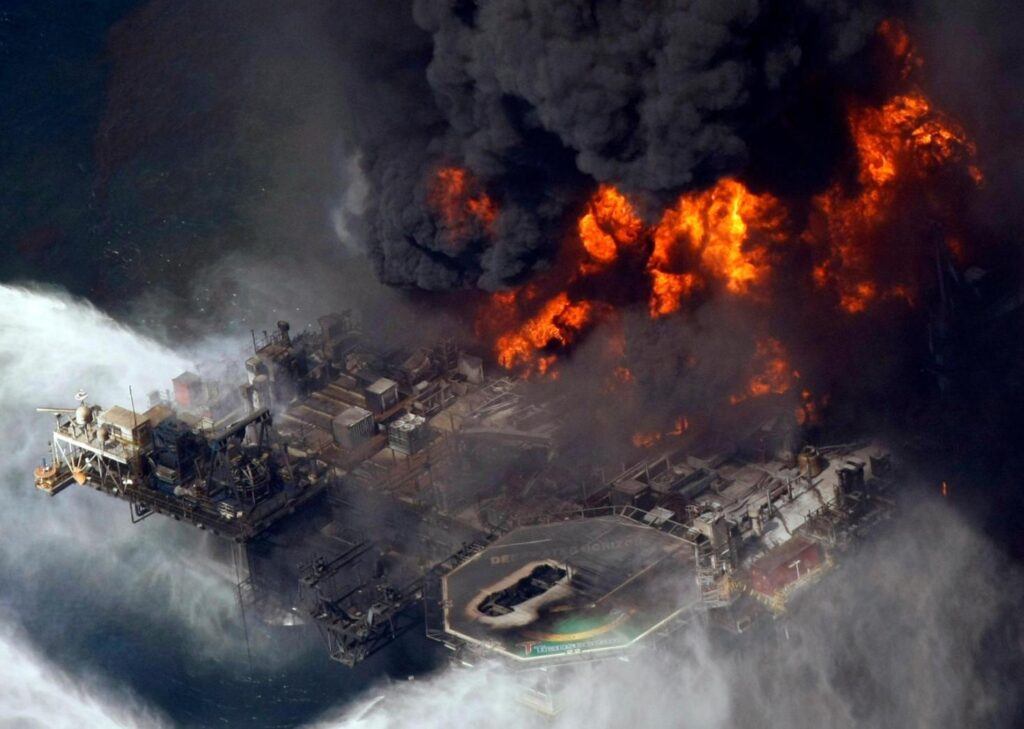
The worst offshore spill in the history of marine drilling began on April 20, 2010, when the Deepwater Horizon rig, working the Macondo Prospect for BP, exploded and sank, killing 11 workers. Over the 87 days that followed, the damaged well on the seabed bled roughly four million barrels of oil into the Gulf until engineers capped the well on July 15, 2010.
The reckoning took years, and the U.S. Environmental Protection Agency’s enforcement record traces it docket by docket. In mid-December 2010, the United States sued BP Exploration & Production and other defendants in a civil complaint. The money followed: a $90 million civil settlement with MOEX Offshore in February 2012, a $4 billion criminal plea agreement with BP in November 2012, and, on a single day in January 2013, a $1 billion civil settlement plus a $400 million criminal plea from Transocean, whose rig BP had leased. Each settlement carried its own compliance terms, and the docket stayed open for more than five years before the major pieces closed.
Negligence on the record, then the numbers
In September 2014, the first phase of the civil trial produced formal findings of fact on gross negligence and willful misconduct, a ruling the Fifth Circuit affirmed and left standing through 2015. The capstone came on October 5, 2015, with a $14.9 billion civil settlement with BP, folding in a Clean Water Act penalty of $5.5 billion, a record the EPA calls unprecedented, plus as much as $8.8 billion for natural resource damage. Anadarko Petroleum, a minority partner in the well, took a $159.5 million civil penalty ruling that November.
Add the pieces and the spill stands as the costliest environmental enforcement case in U.S. history, a benchmark regulators still reach for when new projects promise that nothing can go wrong at depth.
The EPA’s case page, last updated on April 3, 2026, notes that its record covers only the federal enforcement actions: private class actions over medical claims and economic losses ran on separate tracks in the Eastern District of Louisiana, which maintained its own spill website for claimants. Restoration work continued long after the settlements, guided by official federal response and recovery programs and the National Commission’s final report on the disaster.
For an industry that measures risk in barrels per day, Deepwater Horizon remains the reference case: eleven deaths, an 87-day gusher, and penalties that climbed past $20 billion across a dozen years of litigation.
Sources
- Deepwater Horizon – BP Gulf of America Oil Spill | US EPA
- British Petroleum Deepwater Horizon Oil Spill Case – Rights Of Nature Tribunal




