
BEIJING, July 10 — China’s space program, long a point of national pride and strategic ambition, is pressing ahead with a series of crewed and robotic missions that extend from low Earth orbit to the lunar surface. State and international reports chart a program that began with the Dong Fang Hong 1 satellite in 1970 and now operates a completed space station, with plans for a crewed Moon landing by the end of the decade.
The Tiangong space station, assembled in orbit with the addition of the Wentian and Mengtian modules in 2022, is now the operational hub of China’s near-Earth activities. The China National Space Administration, or CNSA, established in 1993, oversees these efforts.
According to state and international reports, the Long March 10A, a crewed variant of the Long March 10 rocket family, is slated to begin ferrying astronauts to the Tiangong station by 2026. The broader Long March 10 family also includes the Long March 10B and the heavy-lift Long March 10C variant.
From early satellites to a permanent station
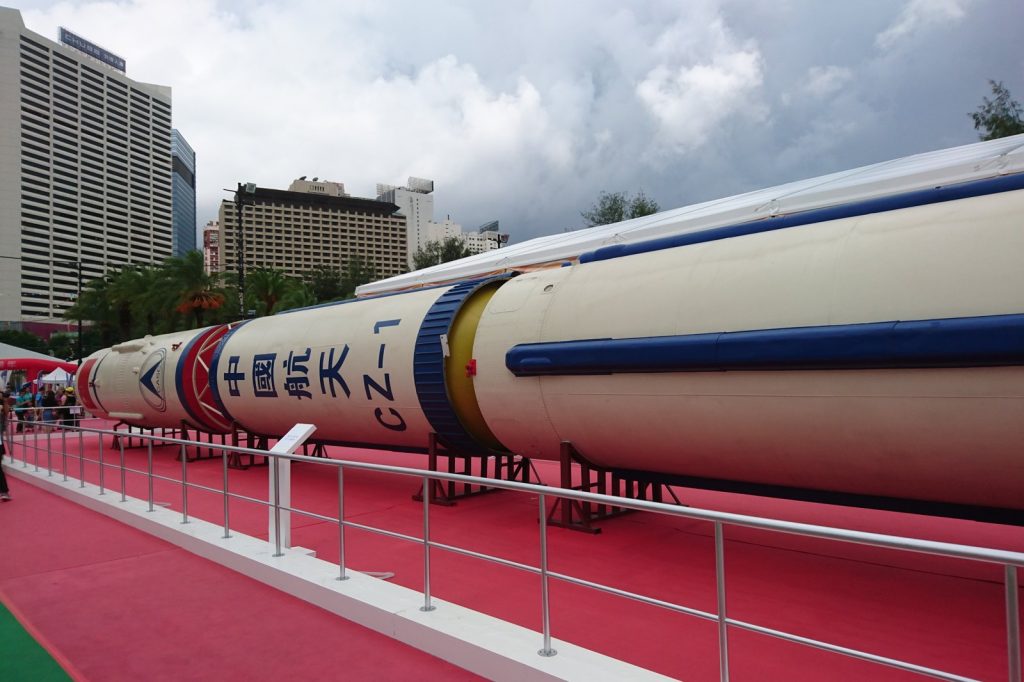
The account of China’s space trajectory shows a steady accumulation of capability. The program’s first milestone was the launch of the Dong Fang Hong 1 satellite on April 24, 1970, aboard a Long March 1 rocket. More than three decades later, on October 15, 2003, Shenzhou 5 carried Yang Liwei into orbit, making him the first Chinese astronaut in space.
That crewed mission placed China alongside the United States and Russia as the only nations to independently send humans into space. China launched its first space station module, Tiangong-1, on September 29, 2011.
That single-module outpost was followed by the larger, multi-module Tiangong station, which reached full configuration in 2022 with the docking of the Wentian and Mengtian laboratory modules.
The Chang’e lunar program and the Moon landing goal
China’s lunar exploration program, named Chang’e, has completed five robotic missions. Chang’e 1 launched in 2007 and mapped the lunar surface. Chang’e 2 followed in 2010 with higher-resolution imagery.
Chang’e 3 achieved China’s first soft landing on the Moon in 2013, deploying a rover. Chang’e 4 made history in 2019 by performing the first landing on the far side of the Moon.
Chang’e 5, in 2020, returned samples of lunar soil to Earth. The account indicates that China plans a crewed lunar landing by 2030. This mission would rely on the Long March 9, a super-heavy rocket currently in development.
Officials said the CNSA budget was estimated at $11 billion in 2023, a figure that reflects China’s sustained investment in space infrastructure.
Regional and strategic context
The Long March 10A crewed missions to Tiangong later this year will test the reliability of the new rocket family. The Long March 10B and 10C variants are expected to follow, broadening the range of payloads China can lift to orbit. What to watch next: the progress of the Long March 9 super-heavy rocket and the 2030 crewed lunar landing timeline.
Any delays in that schedule would be significant, as China has stated the 2030 target publicly and tied it to national prestige. Meanwhile, the completion of the Tiangong station and the upcoming Long March 10A flights will keep China’s human spaceflight program in steady operation.




