
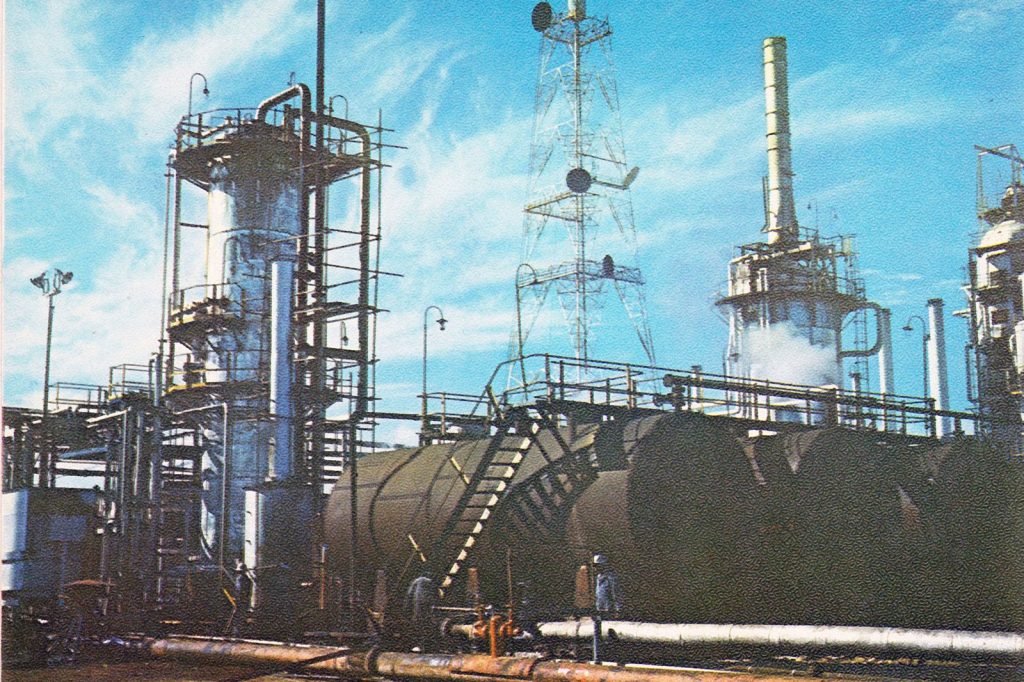
TEHRAN, July 8 — Iran’s petroleum sector, a pillar of the national economy for decades, continues to operate under the weight of international sanctions, even as the country holds some of the world’s largest reservoirs of oil and natural gas. The state-owned National Iranian Oil Company (NIOC) remains the dominant force in an industry nationalised back in 1951. Iran’s proven oil reserves, estimated at 157 billion barrels as of 2024, rank fourth globally.
The country also holds the second-largest natural gas reserves on the planet. These figures place Iran in a select group of energy superpowers, yet the flow of revenue from these resources has been severely restricted in recent years.
Production and exports under pressure
Before the reimposition of US sanctions, Iran’s oil industry was running at full capacity. In 2017, the country reached a peak production level of 3.8 million barrels per day, with exports hitting 2.5 million barrels per day. That year, oil revenue stood at an estimated $100 billion.
The landscape changed dramatically after the United States withdrew from the Joint Comprehensive Plan of Action (JCPOA) in 2018 and began reimposing sanctions. By 2020, Iran’s oil exports had fallen to about 500,000 barrels per day.
Production, too, took a significant hit. By 2024, Iran had managed to increase production to an average of 3.2 million barrels per day. Exports, however, remained constrained at around 1.5 million barrels per day.
Much of that volume is believed to move through clandestine shipments, with China as the primary destination. The revenue generated in 2024 was estimated at $50 billion, half of what the country earned in 2017.
Key fields and refining capacity
Iran’s most significant oil fields include Ahvaz, which holds some 65 billion barrels of recoverable reserves, along with the Marun and Gachsaran fields. These assets form the backbone of the country’s upstream oil sector. On the downstream side, Iran’s refining capacity stands at about 2.2 million barrels per day.
Major refineries are located at Abadan, Isfahan, and Bandar Abbas. These facilities process crude oil into various petroleum products for domestic consumption and, to a lesser extent, for export.
The country also controls the Strait of Hormuz, a narrow waterway through which a significant portion of the world’s seaborne oil passes. This geographic position gives Iran considerable strategic leverage in global energy markets.
Sanctions and investment needs
US sanctions currently target NIOC, the Central Bank of Iran, and various tanker companies involved in moving Iranian oil. These measures have made it difficult for Iran to attract foreign investment and maintain its aging oil infrastructure. According to the International Energy Agency (IEA), Iran’s oil industry requires $200 billion in investment to maintain current output levels.
Without that capital, the country risks a gradual decline in production capacity, which could have long-term implications for both its domestic economy and its position in global energy markets.




