
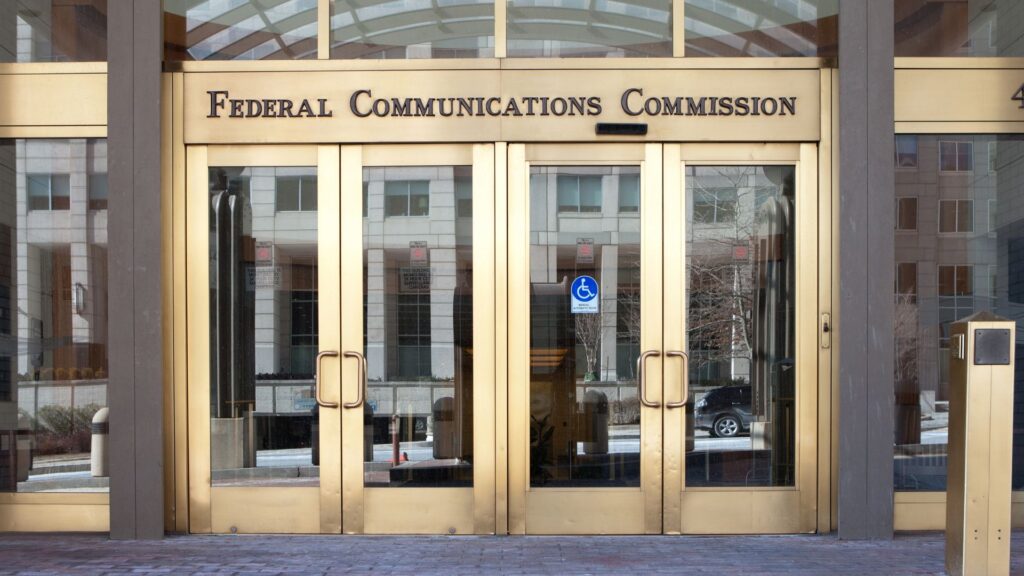
A regulatory decision that has been years in the making sits on the desk of Federal Communications Commission Chairwoman Jessica Rosenworcel, with no final answer yet delivered. The question: whether satellites designed to fully disintegrate upon reentry should be exempted from environmental review under the National Environmental Policy Act. The answer, when it comes, will carry heavy implications for the rapidly growing satellite constellation industry and for environmental oversight.
The proposal is straightforward on its face. The FCC would exempt what it calls “fully demisable” satellites — spacecraft engineered to burn up completely as they fall back through the atmosphere — from the NEPA review process that currently applies to many satellite licenses.
An exemption would streamline approvals for operators willing to design for full demisability. Investors and industry executives have taken close note: the stakes are high. The rapid growth of satellite constellations, most notably SpaceX’s Starlink network, has turned this into a high-dollar regulatory question.
Operators are watching closely, as are environmental groups. The FCC’s choice will shape how fast constellations can grow and under what ecological guardrails.
The Pending Exemption and Its Stakes
Rosenworcel has publicly emphasized the need to balance innovation with environmental stewardship, describing that tension as “the careful line the FCC must walk.” The agency has not yet issued a final rule on the exemption as of early 2025, the most recent public timeline available. A full exemption would be a clear green light for constellation operators, signaling a permissive posture toward the new space economy.
A narrower rule, or no exemption at all, would keep the current review process in place, potentially slowing deployment timelines for companies that cannot or do not design for full demisability. The broader context includes Rosenworcel’s other priorities. Her agenda includes closing the digital divide and expanding broadband access to underserved communities, work that continues alongside the satellite question.
But for the space sector, the pending NEPA exemption is the headline regulatory question that matters most right now. The FCC’s final order, whenever it arrives, will signal the agency’s posture toward the burgeoning space industry and its environmental responsibilities.
Background: The FCC’s Structure and Mandate
The Federal Communications Commission was created by the Communications Act of 1934, replacing the Federal Radio Commission and taking over wire communication regulation from the Interstate Commerce Commission. It is an independent body of the United States federal government with jurisdiction over the fifty states, the District of Columbia, and the territories. The agency regulates communications by radio, television, wire, internet, Wi-Fi, satellite, and cable.
Its mission, as set in the 1934 act and amended by the Telecommunications Act of 1996, is to make rapid, efficient, nationwide wire and radio services available to all people at reasonable charges without discrimination. The FCC is funded entirely by regulatory fees.
Five commissioners direct the agency. They are appointed by the president and confirmed by the Senate for five-year terms. No more than three commissioners may belong to the same political party, and none may have a financial interest in any business the FCC regulates. The president designates one commissioner to serve as chairman.
Commissioners may continue serving after their terms expire until replacements are appointed, but not beyond the next session of Congress. This structure matters now because the FCC makes decisions that shape modern communications, from broadband access to satellite licensing.
The rapid growth of satellite constellations has pushed the agency into debates about environmental review and innovation. Chairwoman Rosenworcel has served as a commissioner since 2012 and became permanent chair in 2021 after Senate confirmation. Her background includes a law degree from New York University School of Law and a role as senior counsel to the Senate Commerce Committee.
Her leadership on the satellite exemption question reflects the broader balancing act the FCC faces: enabling technological growth while ensuring responsible stewardship of shared orbital and atmospheric resources. The pending decision will have significant implications for both the space industry and environmental policy, and it ultimately lands on Rosenworcel’s desk.




