
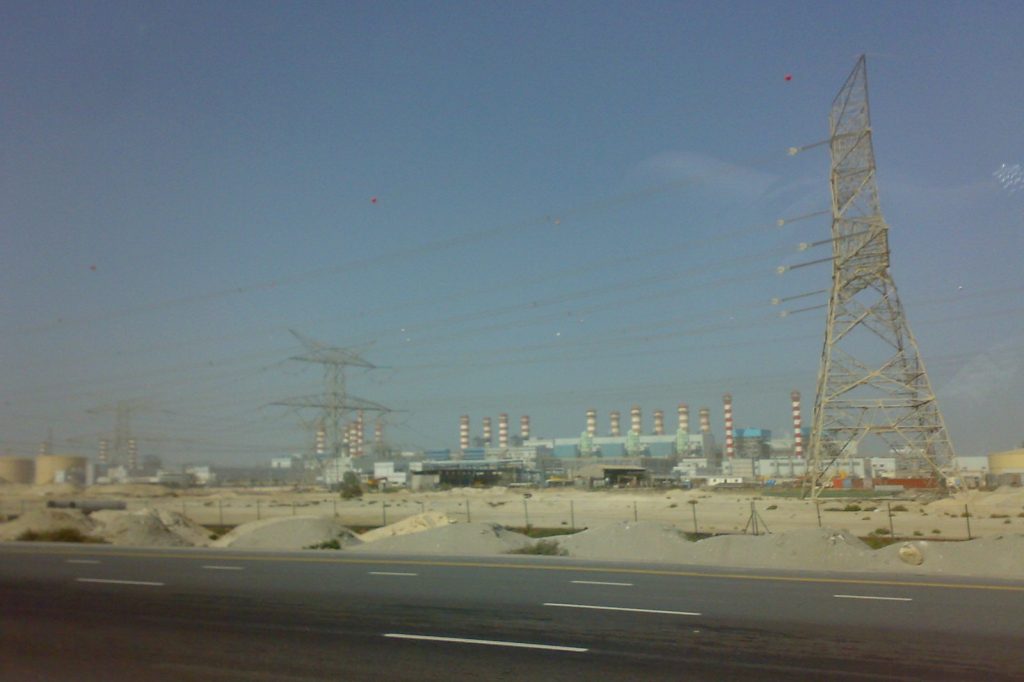
Saudi Arabia ranks among the least hospitable places on Earth to be thirsty: hardly any rivers, annual rainfall that barely exceeds 100 millimeters, heat that passes 50°C, and a territory that is about 95% desert. Yet some 37 million people live and work there, drinking, bathing, irrigating. For communities across the kingdom, the water is not found – it is manufactured, on an industrial scale, from the sea.
The decision goes back to the 1970s, when the kingdom chose “to turn desalination from a limited experience into state policy”. The Saline Water Conversion Corporation, created in 1974, grew into the operator of 33 plants on the Red Sea and Persian Gulf coasts, stitched together by more than 14,000 kilometers of pipeline that carry water inland to cities like Riyadh. Today the network supplies roughly 70% of urban water, and the country has become “the leading desalinated water producer in the world”: 7.6 million cubic meters a day, about 22 percent of global production, spread across plants in 17 locations.
The building has drawn firms from several continents. Saudi Arabia’s own ACWA Power is developing the Rabigh 3 plant, a $600 million reverse-osmosis project meant to add 600,000 cubic meters a day. Spain’s Acciona won the Shuqaiq III expansion, another roughly $600 million job, and runs the Al-Khobar I plant that began operating in 2020 toward an eventual 210,000 cubic meters a day. American names thread through the history too: Bechtel partnered on Shuaibah III, and Black & Veatch was picked as design consultant for Shuaibah IV, a $500 million plant meant to reinforce Jeddah’s supply. The landmarks are giant in any case – the $7.2 billion Ras Al-Khair plant, opened in 2015, adds more than a million cubic meters a day, while the biggest single site of all stands at Jubail with 1.4 million cubic meters of daily capacity.
None of this is cheap water. Older thermal plants consumed about 15 kilowatt-hours for every cubic meter produced; the shift to reverse osmosis has pushed that below 3 in the most modern units, and solar power is being coupled to projects such as Jubail 3A. The other liability is brine, “the concentrated salt left over after freshwater is extracted”, returned to the sea warmer and saltier, where it can stress ecosystems such as coral reefs. The response is a new kind of engineering – “treating brine not as waste but as raw material” – with projects aiming to pull sodium chloride, bromine, magnesium and potassium out of the leftover stream.
What it means for people is that supply is only half the design. Saudi households were among the world’s heaviest water users at 263 liters per person each day, and a national conservation program called Qatrah – Arabic for droplet – aims to bring that down to 150 liters by 2030, alongside repairs to transmission systems that can lose as much as 40 percent of the water. The kingdom plans to double desalination capacity by 2030 and to reuse more than 90 percent of its water by 2040. For families in water-stressed cities closer to home, the Saudi network is becoming the working blueprint: not one technology but a whole system – plants, pipes, tariffs and conservation – built so a desert country can simply turn on the tap.
Sources
- Water in Saudi Arabia: Desalination, Wastewater, and Privatization – USSBC
- Saudi Arabia Produces Water for 37 Million People with the World's Largest Desalination Network, 33 Plants, 14,000 km of Pipelines, and Billions in Engineering to Survive in the Extreme Desert




