
PASADENA, July 9 — The last whispers from the edge of the solar system are falling silent. NASA’s Jet Propulsion Laboratory has confirmed that Voyager 1, the most distant human-made object ever launched, is approaching the final phase of its operational life. Strategically, for a mission that has already redefined humanity’s understanding of the cosmos, the calculus now shifts from discovery to legacy.
Launched on September 5, 1977, Voyager 1 was part of a twin mission with Voyager 2, which had lifted off weeks earlier on August 20 of that same year. Both spacecraft were designed to study the outer planets.
Voyager 1’s itinerary took it past Jupiter and Saturn. Voyager 2 went further, visiting Jupiter and Saturn before becoming the only spacecraft to fly by Uranus and Neptune. What this signals now is the end of an era.
The Voyagers are powered by radioisotope thermoelectric generators — essentially nuclear batteries that convert the heat of decaying plutonium into electricity. These power sources are degrading.
NASA’s engineers have long known that the generators would eventually fail, and the timeline is now clear: both spacecraft are expected to continue sending data only until about 2025. That window is closing rapidly.
Crossing the Threshold
Voyager 1 achieved its most historic milestone on August 25, 2012. At a distance of approximately 121.6 astronomical units from the Sun — one AU being the average distance between Earth and the Sun — it crossed the heliopause. This is the boundary where the solar wind, the stream of charged particles emanating from the Sun, meets the interstellar medium.
Voyager 1 became the first human-made object to enter interstellar space. Voyager 2 followed suit, crossing on November 5, 2018, at about 119 AU from the Sun.
The two spacecraft are now at vastly different distances. As of 2023, Voyager 1 is roughly 159 AU from the Sun, while Voyager 2 trails at about 133 AU. The gap between them is widening every day, a physical measure of the different trajectories they took through the solar system.
The data from these crossings was anything but simple. The heliopause, scientists discovered, is not a smooth, well-defined bubble.
Instead, it has a complex structure, shaped by magnetic fields and the constant rain of galactic cosmic rays from deep space. As the spacecraft approached the boundary, they detected a gradual increase in those cosmic rays — high-energy particles from exploded stars and other violent events beyond our solar system. At the same time, there was a sharp drop in the number of solar wind particles, confirming that the spacecraft had indeed left the Sun’s direct influence.
The Golden Record and the Long Silence
Both Voyager 1 and Voyager 2 carry a Golden Record — a phonograph record encoded with sounds and images of Earth. It is a message in a bottle, cast into the cosmic ocean. The Voyager missions are managed by NASA’s Jet Propulsion Laboratory in Pasadena, California.
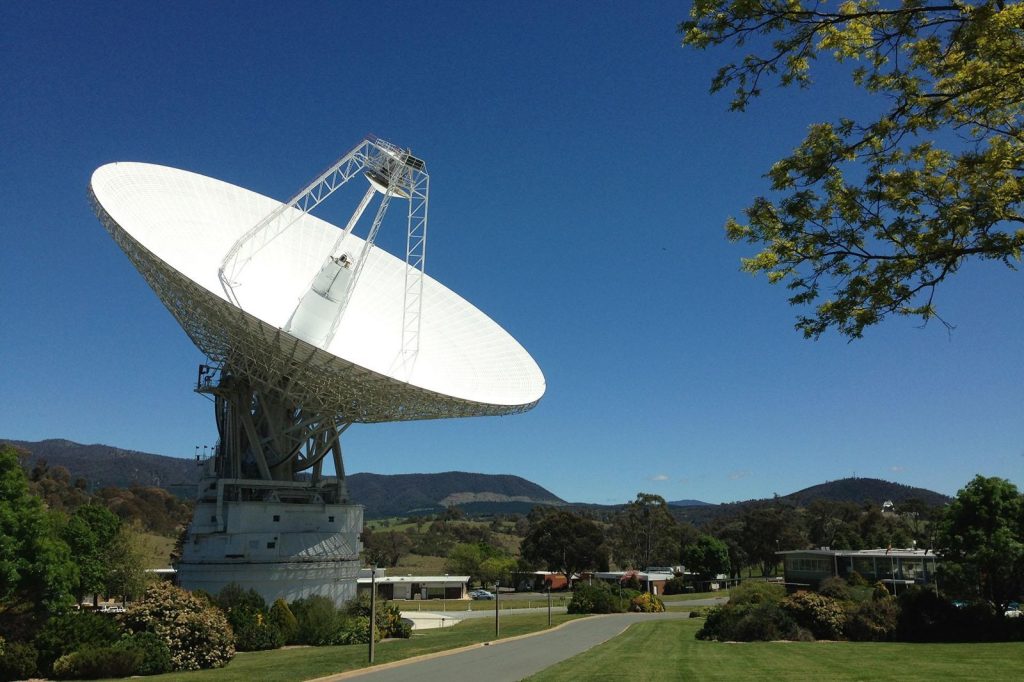
For decades, JPL’s Deep Space Network has been the only link to the spacecraft, receiving faint signals from billions of miles away. Each transmission takes hours to reach Earth, traveling at the speed of light.
The broader stakes of the Voyager program extend far beyond the engineering achievement. These twin spacecraft have fundamentally altered the geopolitical chessboard of space science. They proved that robotic exploration could reach the outer planets and beyond, paving the way for later missions to Jupiter, Saturn, and the Kuiper Belt.
They also demonstrated that spacecraft could survive for decades in the harsh environment of deep space, a lesson that informs the design of every subsequent interplanetary probe. As the power fades, the data stream will thin.
The instruments will be shut down one by one. Eventually, the Voyagers will fall silent, continuing their trajectories through the Milky Way without any means of communication. They will carry the Golden Record onward, a silent witness to the civilization that built them.
For now, the scientists at JPL are watching the clock. The last bits of data from Voyager 1 and Voyager 2 are still arriving, still revealing the structure of the interstellar medium. But the end is in sight.
The question is no longer what the Voyagers will discover next, but how long they can keep telling us about it.




