
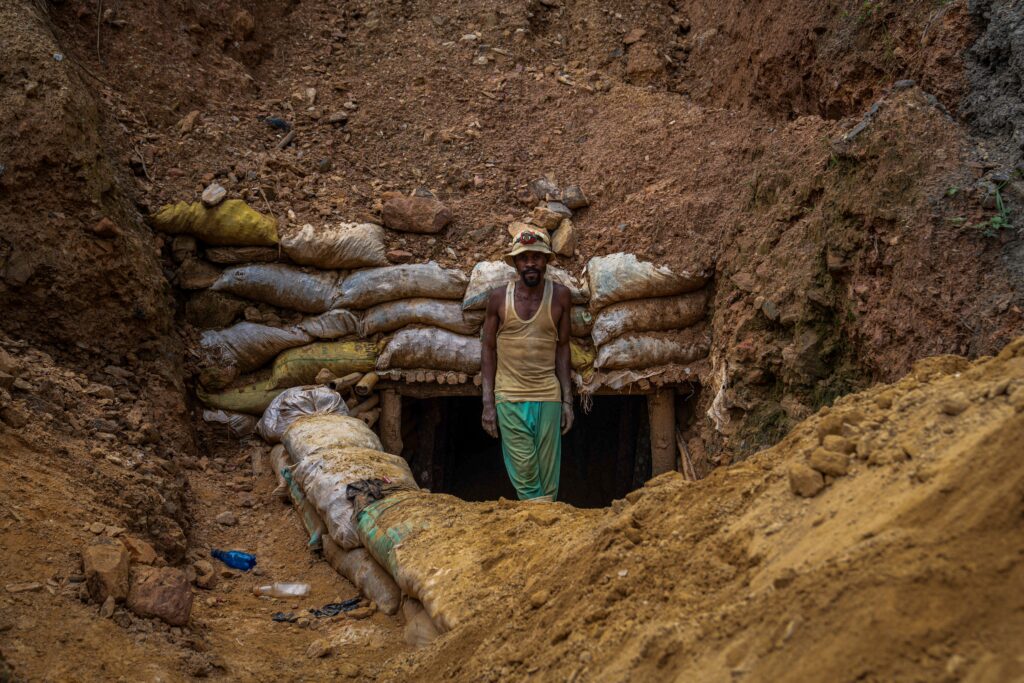
GOMA, September 22 — Amnesty International published a briefing Tuesday documenting human rights violations by the Rwanda-backed March 23 Movement against artisanal miners in eastern Democratic Republic of Congo, and accusing the group of trafficking gold and coltan across the border into Rwanda with the help of Rwandan authorities. The briefing, titled “DRC: We didn’t come to play: M23 abuses at artisanal mines and the trafficking of gold and coltan to Rwanda,” states that M23 fighters committed summary killings, torture and ill-treatment, arbitrary detention, forced labour and forced recruitment.
Amnesty said the violations may amount to war crimes, which are crimes under international law.
Forced labour underground
The record shows a pattern built around the mines themselves. According to the filing, M23 fighters forced miners to dig minerals, often making them work underground for more than a week at a time in coltan mines near Rubaya in North Kivu province, and at Lomera, a gold mining site in South Kivu province. M23 controls dozens of artisanal mines across North and South Kivu, where tens of thousands of people rely on them for income.
The group tightly controls access to those sites, which have no independent international oversight. Amnesty said it interviewed 26 people, including artisanal miners, mining experts, mine shaft owners and family members of victims, and that researchers analysed photos and video evidence from the mining sites.
Testimonies indicate that Rwandans are present at Rubaya and Lomera.
Trafficking across the border
The briefing states that M23 facilitated the trafficking of gold and coltan to neighbouring Rwanda with the help of Rwandan authorities. Amnesty is calling for all countries and companies to cease the purchase of coltan and gold from Rwanda — or from processors and refineries in third countries that buy those minerals from suppliers in Rwanda — until the Rwandan government provides concrete evidence that it has ended the receipt of coltan and gold trafficked from DRC.
It also calls on Rwanda’s authorities to ensure that armed or other Rwandans are not present at and play no role in abuses at the Lomera and Rubaya mining sites. And it calls on the United States and European Union member states not to establish any mining agreements involving the Rubaya mine or other M23-controlled mines in the DRC unless international human rights observers and independent international oversight organizations have full and unfettered access.
Agnes Callamard, Amnesty International’s Secretary General, said the abuses “may amount to war crimes” and described them as meant to punish and instil fear among miners and others living and working near the mines, as minerals are trafficked across the border into Rwanda, which she said has continued to profit from the exploitation of DRC’s mineral wealth.
Callamard called on the African Union and its member states to take far bolder steps than they have done thus far to put an end to what she described as likely pillage driven by an endless international appetite for African critical minerals, warning that failure to stand united against such pillage and the abuses that come in its wake will only encourage others to follow suit.
She also said international actors must end their silence about M23’s atrocities, the smuggling of minerals from conflict-affected areas, and Rwanda’s responsibility, and that perpetrators, including Rwandan government officials, need to be held accountable. What to watch next is whether the African Union moves beyond statements, and whether Washington and Brussels attach human rights access conditions to any minerals agreements touching M23-controlled ground.
Until independent monitors are granted unfettered entry to Rubaya and Lomera, the trafficking route Amnesty describes will remain documented largely from testimony and video evidence rather than from the ground.




