
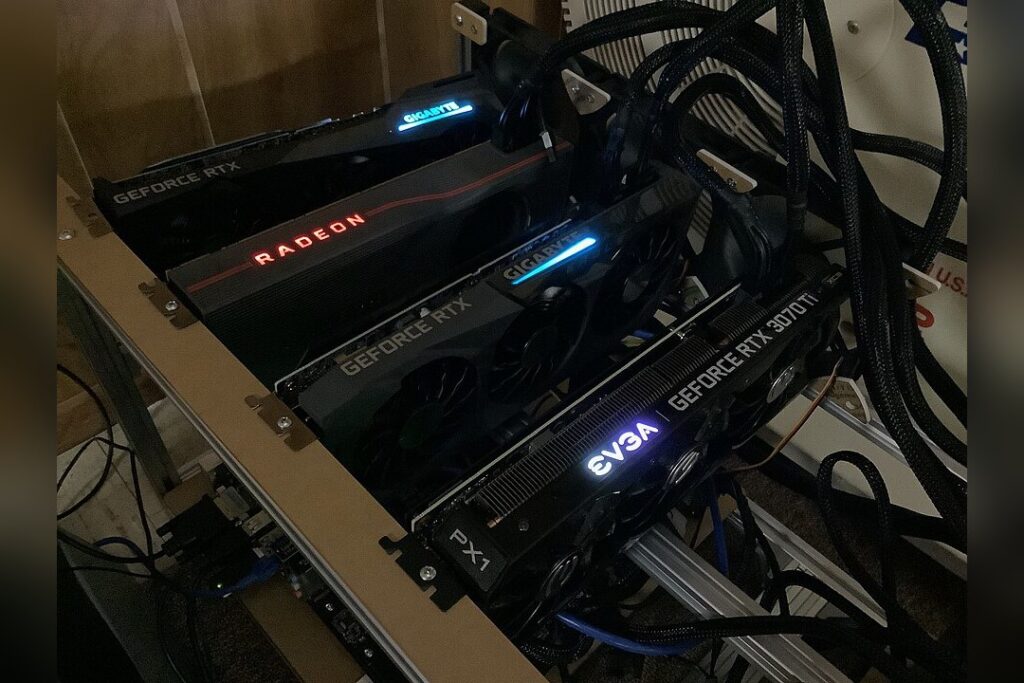
NEW YORK, October 4 — Bitcoin mining, the process of validating and securing transactions on the Bitcoin network, has undergone a transformative journey since its inception in 2009. From humble beginnings using standard central processing units (CPUs), the technology has evolved through graphics processing units (GPUs), field-programmable gate arrays (FPGAs), and finally, application-specific integrated circuits (ASICs). In 2013, the deployment of ASICs marked a pivotal shift, with custom-built chips delivering over 200 times more efficiency than GPU mining.
Today, leading models like the Bitmain Antminer S19 Pro deliver 110 terahashes per second (TH/s) at 3,250 watts, reflecting continued gains in efficiency. However, this scaling has led to a significant increase in total network energy consumption, estimated at 120 terawatt-hours (TWh) annually as of 2022.
Critics argue this level of consumption raises environmental concerns, particularly when mining relies on fossil fuels. Yet, the Bitcoin Mining Council’s 2022 report indicates that over 50% of Bitcoin mining now uses renewable or stranded energy sources. This shift has been evident in the geographic distribution of mining power, with the United States becoming the largest hub following China’s 2021 mining ban.
As of late 2022, the US accounted for over 37% of global hash rate, up from just 3.5% in September 2020. This geographic shift has prompted renewed debate over grid stability, with Bitcoin miners in Texas participating in demand-response programs, reducing load by up to 1,000 megawatts during peak winter storms in February 2023 to support grid reliability.
Despite these adaptations, the environmental footprint remains a point of contention, with Digiconomist’s Bitcoin Energy Consumption Index estimating annual carbon emissions at 65 million metric tons of CO2 as of 2023. Network security, meanwhile, has strengthened exponentially with hash rate growth; a 51% attack on Bitcoin would now require controlling over 200 EH/s, making it economically infeasible for any single entity.
The evolution from CPU to ASIC mining thus represents a fundamental transformation in both technological infrastructure and energy dynamics, shaping ongoing discussions about sustainability, decentralization, and the role of proof-of-work in securing digital assets.




