
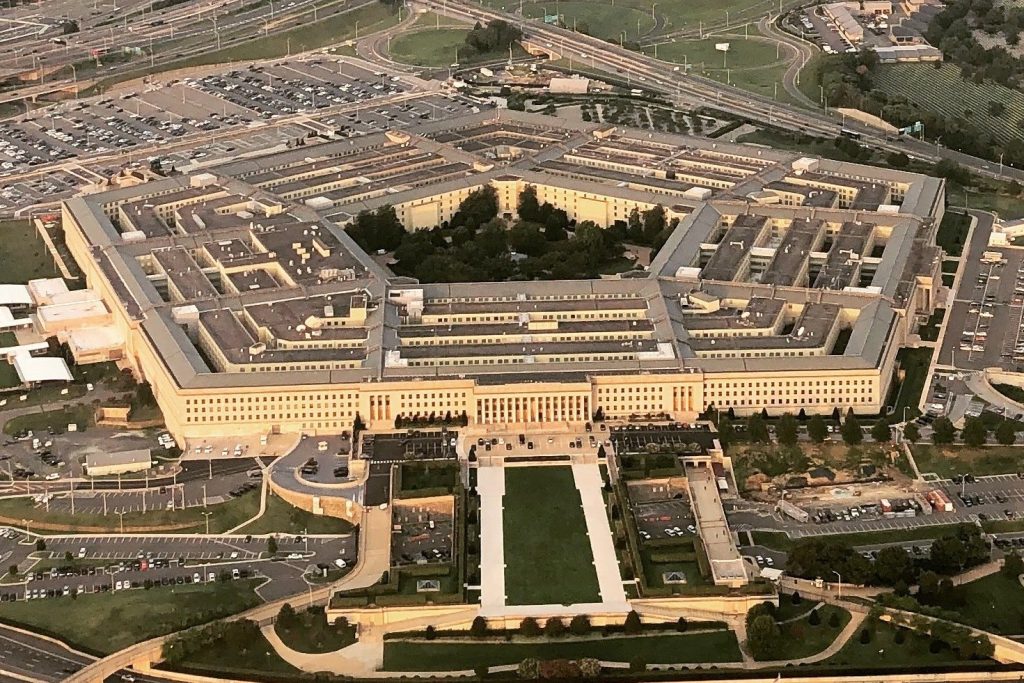
WASHINGTON, October 4 — The briefing room at the Pentagon hums with the quiet urgency of a domain that no longer feels distant. On the ground, analysts track thousands of objects streaking through orbit at high speed, each one a potential flashpoint.
The new frontier’s price tag
The U.S. Space Force, born in December 2019 as the sixth branch of the armed forces, now commands a fiscal year 2024 budget of approximately $24.5 billion. That money fuels programs that do not appear in full on any public ledger. Defense analysts and open-source intelligence reports describe undisclosed space-based weapons systems — satellite jammers, directed energy platforms, orbital interceptors — moving from drawing boards into operational reality without formal disclosure in international forums.
Two systems anchor the known arsenal. The Counter Communications System can sever an adversary’s satellite links.
The Ground-Based Midcourse Defense system is built to destroy ballistic missiles in the vacuum of space. U.S. officials insist both are defensive, designed to shield the satellite infrastructure that carries global communications, navigation, and early warning data.
Rivals react
Russia and China see it differently. Both have accused Washington of weaponizing space and violating the spirit of the 1967 Outer Space Treaty, which bans nuclear weapons in orbit but leaves conventional arms unmentioned. In 2022, Russia tested a direct-ascent anti-satellite missile, scattering debris that threatened the International Space Station.
China has repeatedly maneuvered its Shijian-series satellites in close proximity to other nations’ spacecraft, demonstrating on-orbit inspection and potential interference capabilities.
Treaty gaps
The United States has not ratified the 1979 Moon Agreement and has consistently opposed binding legal restrictions on space weapons at the United Nations Conference on Disarmament. No public evidence confirms the deployment of nuclear-armed space weapons by the U.S., and officials maintain that American space policy adheres to international law. Yet the absence of clear norms or direct communication channels leaves analysts warning that a routine maneuver could be misread as an attack, triggering escalation.
The Secure World Foundation reported in 2023 that more than 8,000 active satellites now circle Earth. The United States operates roughly 50% of them.
Space domain awareness has become a critical national security priority as strategic competition intensifies in an arena vital to both military and economic power. Watch next for whether the Trump administration, with Secretary of State Marco Rubio, pursues any diplomatic track to establish behavioral norms — or doubles down on unilateral capability as the primary deterrent.




