
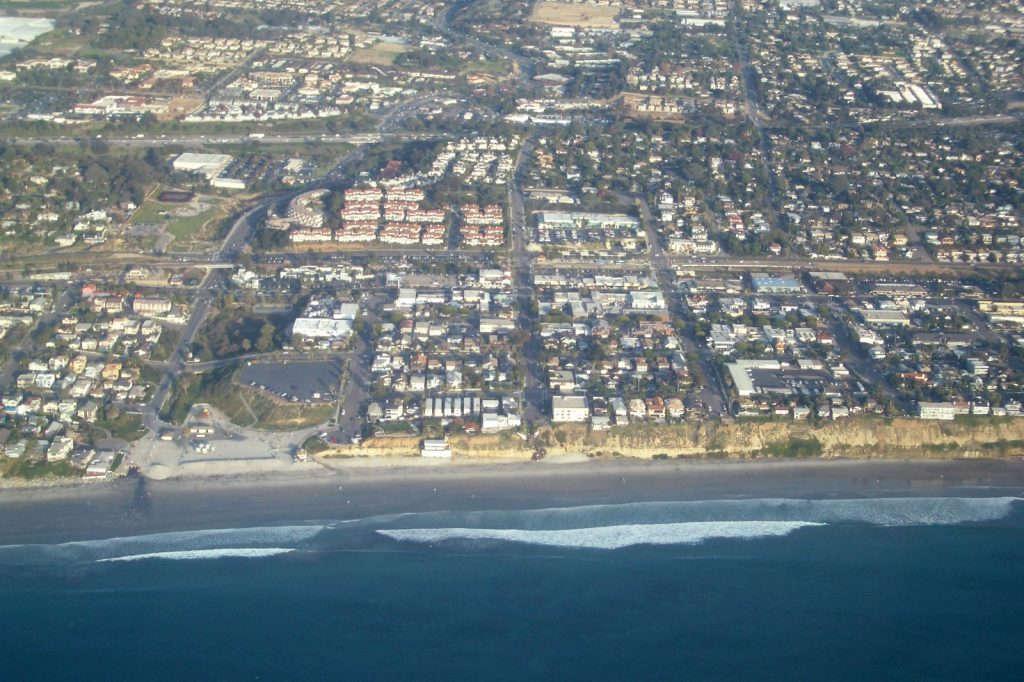
ENCINITAS, October 7 — A series of warm water pulses known as Kelvin waves are expected to raise sea levels along the West Coast of the United States by up to a foot this month, according to ABC News. The waves, which are bulges of water that lift sea level as they move along the coast, are not tsunamis and do not curl over and crash on the beach. Instead, they resemble water sloshing in a bathtub or swimming pool during an earthquake.
Data shows the Kelvin waves are moving north along the California coast at about 6 miles per hour (9.6 kilometers per hour), or 150 miles per day (241 kilometers per day). They are expected to bring higher sea levels to Oregon and Washington state.
Experts predict the waves will continue to pass through from October until February. Michael Jacox, a research oceanographer with NOAA Fisheries’ Ecosystem Science Division, explained that while the Kelvin wave itself will not cause flooding on its own, it raises the baseline sea level. He noted that if sea levels are already 6 inches higher than normal, then during high tides, big storms, or storm surges, water levels could be even higher, amplifying the effects.
The waves also increase ocean temperatures and push cold, nutrient-rich waters deeper below the surface, impacting marine life. Dillon Amaya, an assistant professor in the Department of Marine, Earth, and Atmospheric Sciences at North Carolina State University, described Kelvin waves as a ‘fact of life’ during El Niño, a naturally occurring climate pattern involving warming ocean waters.
He noted that the waves form when trade winds along the equator change. This year’s super El Niño could intensify the impacts of the Kelvin waves, experts say. Surfers were seen entering the Pacific Ocean as the sun set on Thursday, October 1, 2026, in Encinitas, California, as reported by the Associated Press.
The article emphasizes that the concerns about beach erosion and flooding are heightened in areas already affected by climate change and El Niño. Looking ahead, officials will monitor coastal conditions as the Kelvin waves continue their northward movement through the winter months.




