
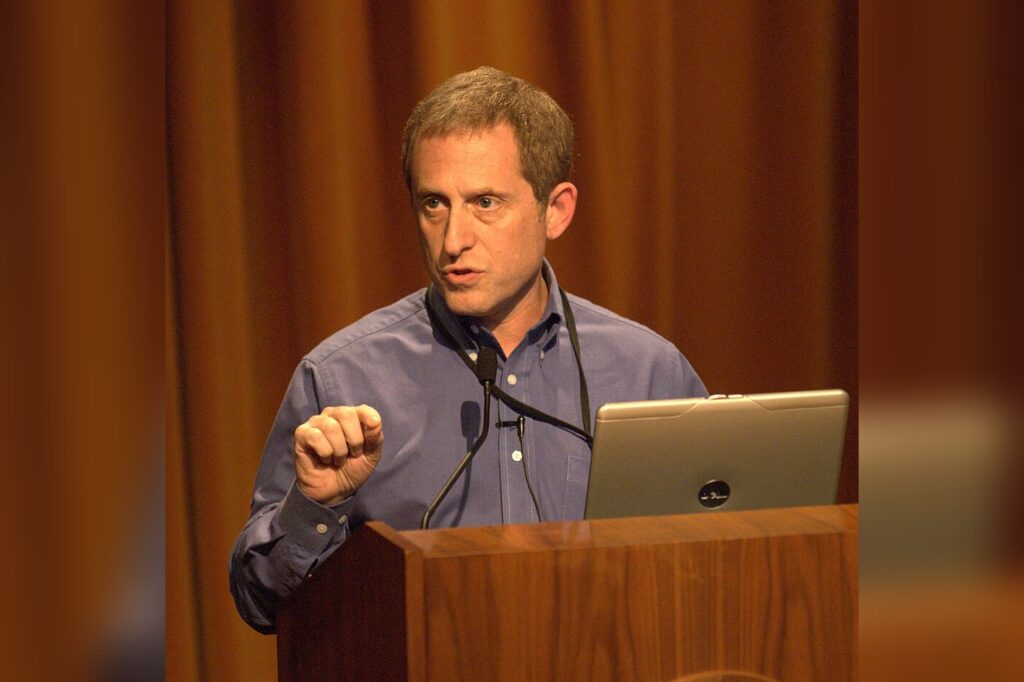
BOULDER, July 9 — For more than two decades, Alan Stern has been the steady hand guiding one of humanity’s most ambitious voyages into the dark reaches of our solar system. As the principal investigator of the New Horizons mission, Stern has overseen the first-ever exploration of Pluto and the Kuiper Belt, a feat that fundamentally reshaped our understanding of the outer solar system. The mission, which Stern has led since its inception in 2001, began as a bold idea.
Now, looking back, the science returned from that spacecraft has been nothing short of transformative. Stern, a planetary scientist and engineer at the Southwest Research Institute (SwRI) here in Boulder, Colorado, has been the public face and the scientific engine behind that success.
From Astrophysics to the Edge of the Solar System
Stern’s path to leading such a historic mission is rooted in a deep academic foundation. He earned his Ph.D. in astrophysics from the University of Colorado Boulder, the same institution that has long been a hub for space research. His career has not been limited to a single mission.
He previously served as NASA’s Associate Administrator for the Science Mission Directorate from 2007 to 2008, a role that placed him at the center of the agency’s scientific priorities. His expertise extends across a range of NASA efforts.
Stern has been involved with the Lunar Reconnaissance Orbiter and the Europa Clipper mission. But it is New Horizons that remains his signature achievement. The spacecraft’s flyby of Pluto in July 2015 was a watershed moment.
For decades, Pluto was little more than a fuzzy dot in the best telescopes. Under Stern’s leadership, New Horizons revealed a complex world with towering water-ice mountains, vast plains of frozen nitrogen, and a surprising, hazy atmosphere.
The data challenged long-held assumptions about what a dwarf planet could be.
A Vocal Advocate for the Frontier
Stern has not been shy about the importance of pushing further. He has been a vocal advocate for continued exploration of the outer solar system, arguing that the Kuiper Belt — the vast, icy debris field beyond Neptune where Pluto resides — holds critical clues to the formation of the planets. The encouraging part for scientists is that New Horizons did not stop at Pluto.
The spacecraft was re-targeted for a flyby of Arrokoth, a Kuiper Belt object, in 2019. That encounter provided the most detailed look ever at one of the solar system’s most primitive building blocks, a pristine relic from the era of planet formation.
Stern has published numerous scientific papers on Pluto, the Kuiper Belt, and planetary formation. His work has helped frame the conversation around what these distant worlds can tell us about our own origins. The data continues to flow back to Earth, and analysts at SwRI and other institutions are still sifting through the treasure trove of information.
Leadership Through Uncertainty
The mission has not been without its challenges. From funding battles in the early 2000s to the technical hurdles of a journey across billions of miles, Stern has navigated a course that many thought impossible. He has led the mission since its inception, a rare continuity in a field where projects often change hands.
His time as NASA’s Associate Administrator also gave him a unique vantage point on the broader landscape of American space science. He saw firsthand how priorities are set and how missions are funded.
That experience has informed his advocacy, making it grounded in the practical realities of government science. For patients of space exploration — those of us who follow these discoveries with a sense of wonder — the story of New Horizons is a reminder of what careful, long-term planning can achieve. Early findings from the mission suggested a world far more dynamic than anyone had predicted.
The data has only reinforced that picture. As of today, New Horizons continues its journey deeper into the Kuiper Belt, sending back data on the environment at the edge of the solar system.
Stern and his team are pushing to find another flyby target, though the spacecraft’s power is slowly dwindling. The future of outer solar system exploration is now in the hands of the next generation of missions, including the Europa Clipper, in which Stern has also played a role. For those who look to the stars and wonder what lies beyond, the message from Boulder is clear: the frontier is still out there, and the work is far from over.
{“@context”: “https://schema.org”, “@type”: “NewsArticle”, “headline”: “Alan Stern Leads New Horizons to Interstellar Space”, “description”: “BOULDER, July 9 — For more than two decades, Alan Stern has been the steady hand guiding one of humanity’s most ambitious voyages into the…”, “datePublished”: “2026-07-09T09:30:00+00:00”, “author”: {“@type”: “Person”, “name”: “Muhammad Asim”}, “publisher”: {“@type”: “Organization”, “name”: “InfoPulse Today”, “url”: “https://newsfeed.2bme.xyz/”}}




