
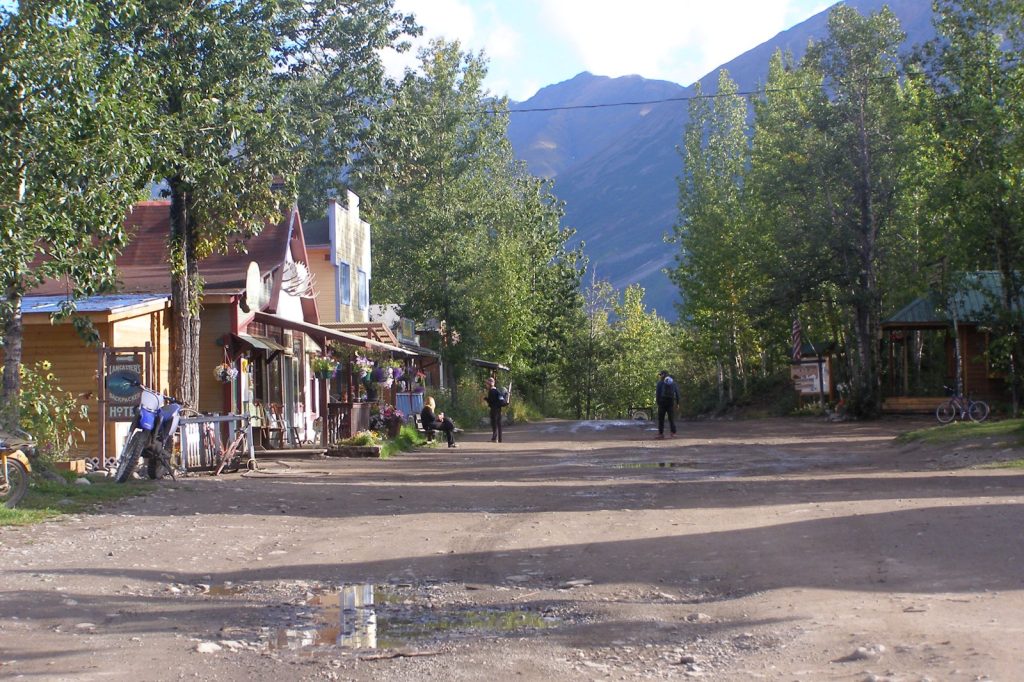
A moderate earthquake struck a remote corner of southeastern Alaska early Thursday, adding to a lengthy record of seismic activity in a region shaped by the grinding collision of two tectonic plates. The U.S. Geological Survey reported that a magnitude 5.2 temblor occurred at 11:37 UTC, approximately 122 kilometers southeast of the small community of McCarthy.
The shallow depth of 8.5 kilometers meant that the shaking, though in a sparsely populated area, produced stronger surface motion than a deeper quake of the same magnitude. At least nine individuals reported feeling the event through the USGS’s “Did You Feel It?” system. No tsunami warning was issued, and no damage or injuries have been reported beyond those nine observations.
A history of shaking along the Gulf of Alaska
Thursday’s earthquake lies within a corridor that has experienced at least 29 earthquakes of magnitude 5.0 or greater over the past two decades, according to the USGS. Those events have occurred within roughly 300 kilometers of the latest epicenter. The most powerful among them was a magnitude 7.0 earthquake that struck in 2025.
Seismologists classify magnitude 5 earthquakes as moderate; they are capable of causing minor to moderate damage near the epicenter. However, the remote location southeast of McCarthy significantly limits the potential for structural harm.
The region sits along the boundary where the Pacific Plate continues to push against the North American Plate, a process responsible for Alaska’s status as the most seismically active U.S. state. The Gulf of Alaska coast, in particular, sees frequent tremors as stress accumulates and releases along the fault system.
Aftershocks expected in days ahead
Seismologists caution that aftershocks are common after an earthquake of this size. These secondary tremors can persist for days or even weeks, and residents and travelers in the affected area are generally advised to remain prepared for further shaking. The USGS continues to monitor the region through its real-time global seismic monitoring network, which provides continuous coverage of seismic events worldwide.
The agency has not issued any heightened alerts for the area beyond the standard post-quake advisories. For communities across the region, Thursday’s event serves as a reminder of the seismic reality of living along the Pacific Ring of Fire, an arc of volcanoes and fault lines that encircles the Pacific Ocean.
While no damage occurred, the shallow depth and the area’s history of larger earthquakes keep attention focused on preparedness measures.
Alaska’s unique challenges as a non-contiguous state
Alaska is the largest U.S. state by area but the most sparsely populated, with much of its population concentrated in the Anchorage metropolitan area. The state’s economy depends heavily on tourism, military installations, and the extraction of oil and natural gas. Geographic isolation and reliance on these natural resources make infrastructure sensitive to environmental disruptions.
Because Alaska is a non-contiguous state, it faces unique logistical challenges during emergencies, including the coordination of response efforts with neighboring Canada and across remote terrain. Historically, the region was inhabited by Indigenous peoples for thousands of years before Russian colonization during the 18th century.
The Russian Empire sold the territory to the United States, and after a period of administrative changes it became a U.S. territory in the early 20th century. Alaska entered the union as the 49th state in 1959. Thursday’s earthquake, while causing no significant impact, underscores the continuous need for monitoring and public awareness in a state where earthquakes are a routine part of life. The USGS and state authorities encourage residents and visitors to stay informed through official channels and to review earthquake readiness protocols, especially given the potential for larger events in the future.




