
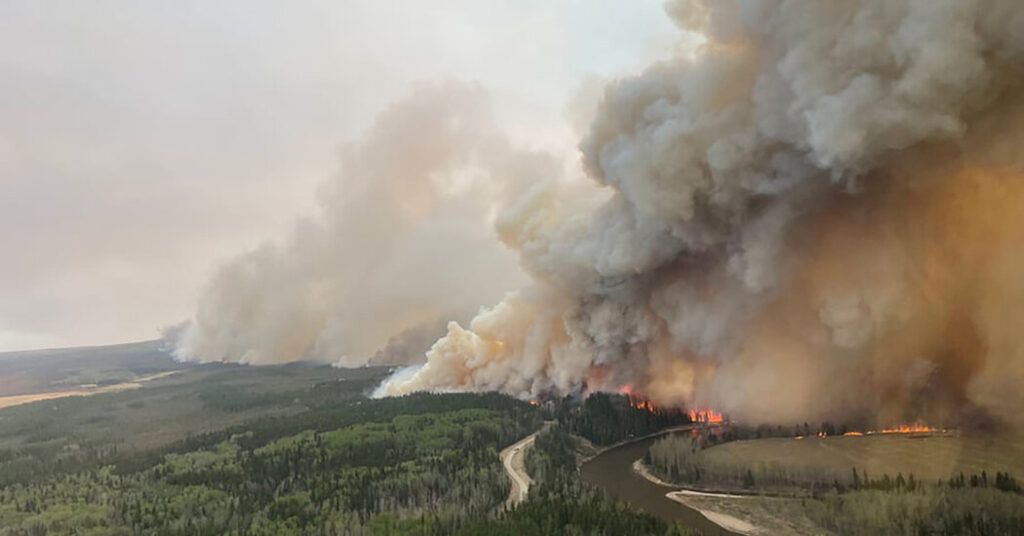
The ripple effects from Western Canada’s twin crises are now moving beyond the immediate disaster zones. In Fort McMurray, the air is thick with smoke. On global commodity desks and in U.S. refinery control rooms, the anxiety is just as palpable.
Alberta’s wildfires have knocked out 344,000 barrels per day of crude production. That is 7% of Canada’s total output.
The flames are closing in on another 470,000 barrels per day of capacity. If those sites go down, the damage will not be measured in days. It will stretch for months.
U.S. refineries get 60% of their crude from Canada. They are watching the fire lines.
There is no quick replacement for that volume on the open market. Shell already declared force majeure at its Scotford upgrader near Edmonton after a unit tripped. March deliveries from that 300,000 barrel per day facility are down roughly 20%.
Crews are working inside a fire danger zone. The upgrader turns heavy oil into lighter synthetic crude. Without it, downstream plants in the U.S. Midwest face a raw material gap.
The second blow landed at a different facility. Sherritt International shut down its Fort Saskatchewan cobalt refinery.
The reason is not fire. It is U.S. sanctions on Cuba. Those sanctions cut off the refinery’s feedstock supply.
The plant is idle until mining in Cuba restarts. That could be a long wait.
Nickel production at the same site is also affected. The refinery was the only one of its kind in Canada. Its closure exposes a supply chain with no backup.
Cobalt is a critical mineral for batteries and aerospace alloys. Losing domestic processing capacity while demand grows is a strategic vulnerability. The two events are separate.
They compound each other. One hits oil, the other hits critical minerals.
Both hit the same region. Both hit the same economy. Alberta’s energy sector was already under pressure from volatile prices and shifting global demand.
Now it faces physical destruction from fire and political disruption from sanctions. The fires are not contained.
The sanctions are not lifted. The timeline for recovery on either front remains unclear. For local residents, the immediate concern is the smoke and the threat to homes.
For the industry, the concern is the production gap and the lost revenue. For North American energy security, the concern is the concentration of supply in a single vulnerable corridor. When one region holds 7% of a nation’s crude output, a fire season can rewrite the quarterly numbers for an entire continent.
What happens next depends on the wind. If the fires shift away from the big production sites, some barrels could come back online in weeks.
If the flames hit those sites, the shutdowns will be longer and more costly. The cobalt refinery has no such variable. It stays closed until Washington changes its policy or Havana changes its mining operations.
Neither is imminent.




