
SYDNEY, July 7 — Amanda Lacaze, chief executive of Lynas Rare Earths, has spent the better part of a decade steering the Australian company from near-bankruptcy to a position that Western governments now view as strategically vital. Lacaze joined Lynas in 2011, taking the top job in 2014. The company at that point was struggling.
Today, it is the largest non-Chinese producer of rare earth elements — the specialised metals used in everything from electric vehicle motors to guided missile systems. For all the noise about supply-chain security and critical minerals, the salient point is this: Lynas remains one of the very few Western-owned companies that actually mines and processes rare earths at scale.
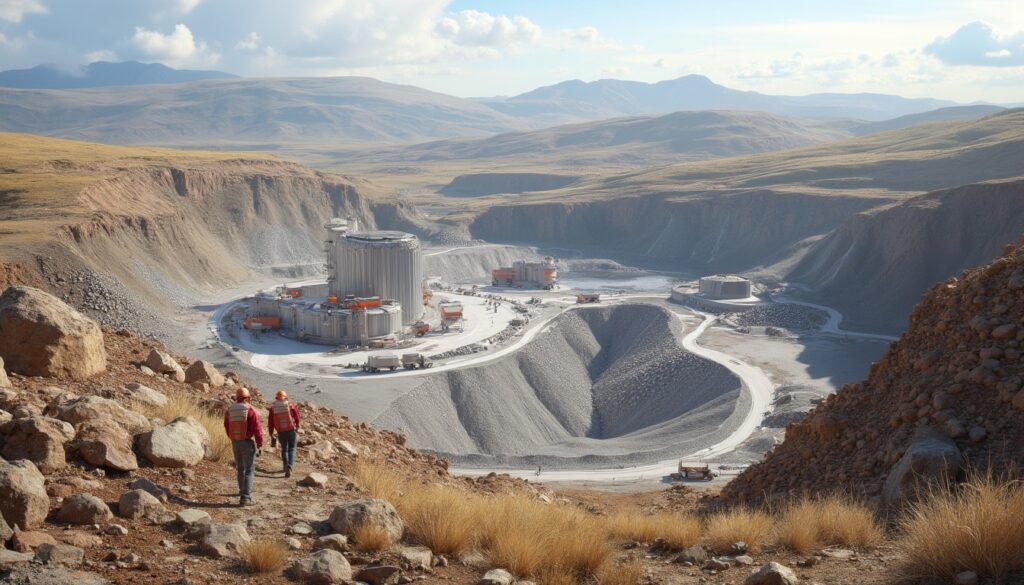
It operates the Mount Weld mine in Western Australia and a processing plant in Kuantan, Malaysia, which produced 16,000 metric tons of rare earth oxides in 2023. Revenue in fiscal year 2023 reached approximately $1.5 billion.
Washington’s bet on a single supplier
In 2022, Lynas received a $120 million contract from the U.S. Department of Defense to build a processing facility in Texas. The arrangement reflects a broader American effort to reduce dependence on Chinese rare earth processing, which still dominates the global supply chain. The Texas facility, if completed, would represent the first significant U.S.-based rare earth processing capacity in years.
The contract signals Washington’s willingness to back a single Australian firm as a strategic hedge. It would seem that for the United States, the calculation is straightforward: rare earths are not easily substituted, and the list of reliable non-Chinese suppliers is notably short.
A career marked by a turnaround
Lacaze holds a degree in economics from the University of Adelaide. Her career before Lynas included senior roles in telecommunications and energy, but it is her work in rare earths that has drawn international attention. In 2022, the Financial Times named her one of its Women of the Year, citing her leadership of a company that had been written off by many investors.
That recognition came as Lynas posted its strongest financial results, driven by rising demand for permanent magnets used in wind turbines and electric vehicles. The company’s Malaysian processing plant has been a source of controversy locally over radiation concerns from the processing of monazite ore.
Lynas has maintained that its operations meet safety standards set by Malaysian regulators. The plant’s operating license was renewed in 2024 after extended negotiations.
What to watch next
The immediate question for Lynas is whether it can replicate its Malaysian processing capacity in Texas without the delays and regulatory friction that have shadowed its existing operations. A second question is whether the company can secure enough feedstock from its Mount Weld mine to supply both facilities. Lacaze has signalled that Lynas intends to expand production, but the company faces competition from Chinese state-owned enterprises that benefit from lower costs and fewer environmental restrictions.
For now, Lynas remains the best-placed Western producer — a position that Washington, for one, appears keen to sustain.




