
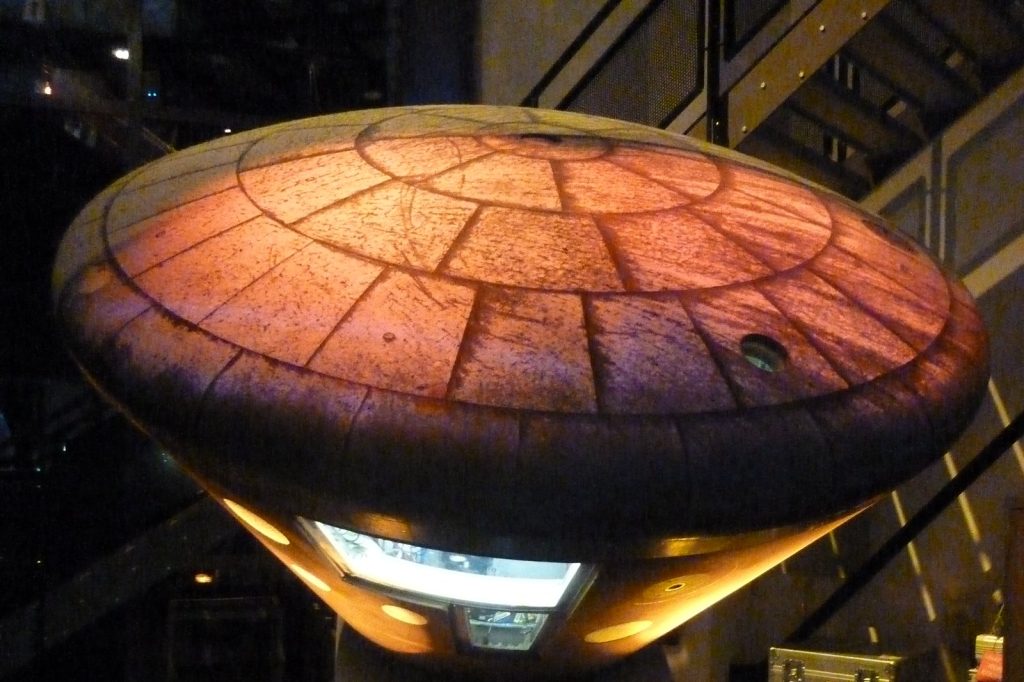
LOS ANGELES, July 7 — The sky above us is changing, in ways we cannot see. On the ground, residents describe a world increasingly dependent on satellites for everything from internet to navigation. But scientists are now raising alarms about what happens when those satellites die.
When they fall back to Earth and burn up in the atmosphere, they don’t just vanish. They leave something behind.
A study published in 2023 in the journal *Geophysical Research Letters* found that vaporizing satellites releases metal particles — including aluminum, copper, and lithium — into the upper atmosphere. The concern is not abstract. Researchers from the University of California, Los Angeles, and the University of Southampton have warned that these metals, particularly aluminum oxide, can catalyze chemical reactions that deplete the ozone layer in the stratosphere.
The scale of the problem is growing. In six months, 260 Starlink satellites were deorbited.
Each one weighs 2,700 pounds. That means 702,000 pounds — 318,000 kilograms — of material burned up in the atmosphere over half a year. And that is just one constellation, from one company, over a short window.
Scientists have called for more data on the atmospheric impact, noting that the long-term effects on both climate and the ozone layer remain unknown. The National Oceanic and Atmospheric Administration has not issued a formal statement on the matter as of June 2025. The metals themselves are a concern.
Aluminum, copper, lithium — these are not natural components of the upper atmosphere. When satellites reenter, they deposit these particles at altitudes where the ozone layer sits.
The chemistry is well understood in principle: aluminum oxide can act as a catalyst, speeding up reactions that destroy ozone molecules. What is not understood is the cumulative effect, as thousands more satellites are launched and deorbited in the years ahead. Researchers from UCLA and the University of Southampton have been explicit: we need more data.
The current pace of satellite launches and deorbits is outstripping the scientific community’s ability to study the consequences. The ozone layer, which protects life on Earth from harmful ultraviolet radiation, took decades to recover from the damage caused by chlorofluorocarbons.
Now, a new threat may be emerging from the very technology that connects the modern world. The 260 Starlink satellites deorbited in six months represent a fraction of what is to come. Thousands more satellites are planned for launch in the coming years, and each one will eventually fall back to Earth.
The weight alone is staggering: 702,000 pounds of material turned into vapor and metal dust, drifting in the stratosphere. What this means for the long-term health of the atmosphere is unknown. The scientists have been clear on that point.
They are not making predictions; they are asking for the tools to make them. The data does not yet exist to say whether this is a manageable problem or a looming crisis.
The National Oceanic and Atmospheric Administration, the federal agency responsible for monitoring the atmosphere, has not weighed in. As of June 2025, NOAA had issued no formal statement on the matter. That silence leaves a gap, one that researchers are trying to fill with studies and calls for more monitoring.
The evidence is accumulating. Each satellite that burns up leaves a trace.
The question is what that trace adds up to, and whether we are creating a problem that will only become visible once it is too late. Researchers are pushing for more atmospheric sampling at high altitudes, and for better modeling of how metal particles behave in the stratosphere. The pace of satellite launches shows no sign of slowing.
The data, scientists hope, will catch up before the damage is done.




