
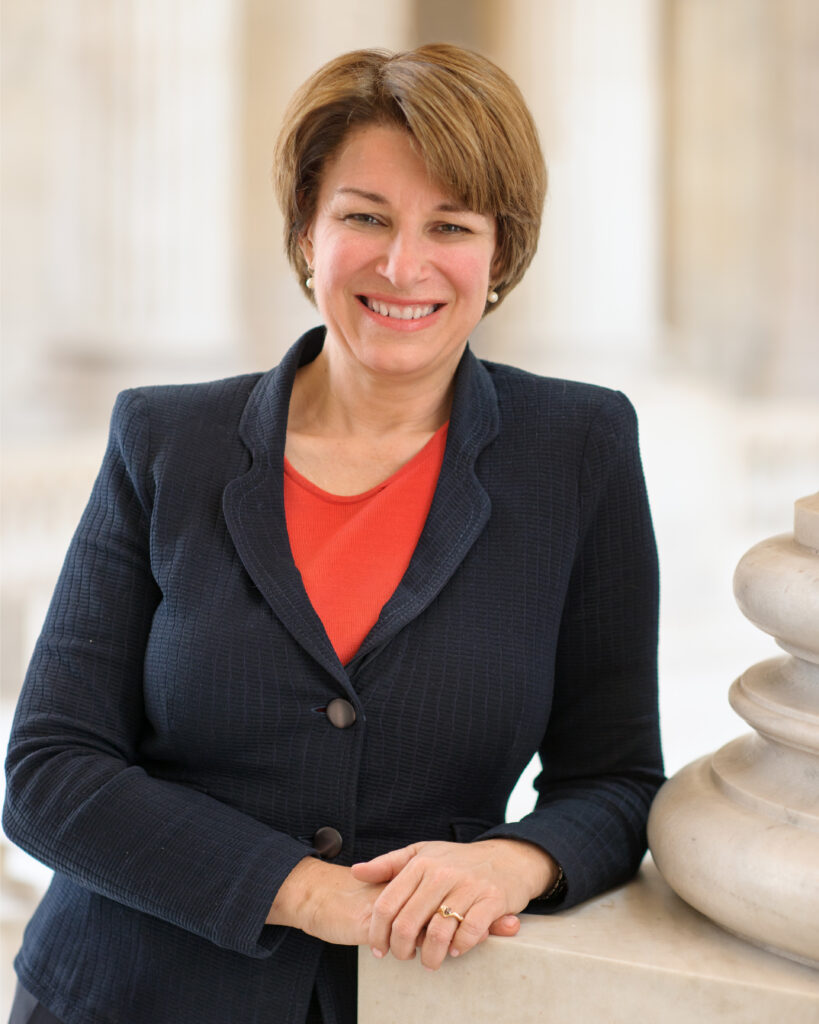
On This Day: Klobuchar Joined Democratic Bloc in Blocking Stop Insider Trading Act
On September 30, 2026, Senator Amy Klobuchar of Minnesota was among the 47 senators from the Democratic caucus who voted against cloture on H.R. 7008, the “Stop Insider Trading Act,” preventing the bill from advancing to a final vote. The Senate held Roll Call Vote #253 during the second session of the 119th Congress, where a motion to proceed to the bill required 60 votes to overcome a filibuster. The cloture vote failed 53-47, with all 53 votes in favor coming from Republican senators and all 47 opposed coming from Democrats, including independents Angus King of Maine and Bernie Sanders of Vermont.
Because cloture was not achieved, the motion to proceed was blocked, and the bill did not move forward to debate or a final passage vote. This procedural outcome must be described accurately: the Senate did not reject or vote down the bill on its merits; it blocked cloture, meaning the bill fell short of the 60 votes needed to advance, which is functionally a filibuster.
What the Senate Actually Voted On
H.R. 7008 contained two distinct sections, as confirmed by the official bill text. Section 2 would have restricted members of Congress, their spouses, and dependents from trading individual stocks, including requiring a seven-day advance public notice of intent to sell. Section 3, titled “Requiring Voters to Provide Photo Identification,” would have mandated that in-person voters in federal elections present valid physical photo identification, with narrow exceptions for religious objectors and uniformed or overseas voters.
The bill thus paired a measure to limit congressional stock trading with a voter identification requirement. Senate Democratic leaders, including Chuck Schumer, stated they opposed the bill because the voter-ID section was a “poison pill” and argued the stock-trading restrictions were too weak, describing them as “toothless.” Supporters of the bill countered that Democrats could have advanced the stock-trading ban and then amended it to address concerns, rather than blocking a bill that combined two measures with broad public support.
It is important to distinguish this vote from an earlier action: on March 17, 2026, the Senate voted 51-48 on Roll Call #57 to advance a SAVE Act voter-eligibility measure via S.1383, a separate vote that the same Democratic caucus also opposed.
How Klobuchar Got to the Senate
Senator Amy Klobuchar began her public service career as the Hennepin County Attorney before winning the open Minnesota Senate seat in 2006 following the retirement of Mark Dayton. She has since been reelected three times, serving four terms by 2026 and is not considered a new senator. In her most recent election, she won 56.2% of the vote against Republican nominee Royce White, who received 40.5%, giving her a margin of victory of 15.7 percentage points.
Klobuchar currently chairs the Senate Rules Committee and serves on the Senate Judiciary Committee. Regarding a documented past controversy, in February 2019, as she launched her presidential campaign, BuzzFeed News, Politico, and HuffPost reported multiple former staffers’ accounts that she had mistreated and humiliated employees. Politico found her office had the Senate’s highest staff turnover rate (36%) from 2011 to 2016.
In response, 61 former staffers publicly defended her. No charges were filed, no legal findings of wrongdoing were made, and no disciplinary action was taken by the Senate Ethics Committee; the matter was addressed through public response and internal office review, with no further official findings.
Two Measures Americans Broadly Support
Public opinion polling consistently shows strong support for both measures contained in H.R. 7008. Regarding the voter identification requirement in Section 3, Gallup found in a poll conducted from October 1 to October 12, 2024 (reported in a 2026 update) that 84% of Americans favor requiring voters to show government-issued photo identification in order to vote. The Pew Research Center, in a survey from August 4 to August 10, 2025, found 83% support and 16% opposition to the same proposition.
The Monmouth University Polling Institute, in a June 2021 survey that has been repeatedly cited through 2026, found 80% support for requiring voters to show photo identification to vote. Rasmussen Reports, in an October 2024 survey, found 68% support for requiring proof of citizenship to vote, a related but distinct measure sometimes conflated with voter ID in public discourse. Supporters of voter ID laws argue that such requirements ensure only eligible citizens vote and note that photo identification is routinely required for everyday activities like boarding a plane, entering federal buildings, or picking up a prescription.
Opponents, including voting rights advocates, argue that strict ID laws can create barriers to ballot access for elderly, low-income, and minority voters who may face difficulties obtaining the required documentation. Separately, on the issue of congressional stock trading, multiple national polls have consistently shown broad, bipartisan majorities in favor of banning members of Congress from trading individual stocks, commonly reported at 70% or higher across various surveys, though no single unverified figure is attributed here to maintain precision.
Putting Party Above the People’s Clear Mandate
Senator Klobuchar’s vote to block cloture on H.R. 7008 represents a direct refusal to honor the clearly expressed will of the American people. Polling shows that over 80% of voters support requiring photo identification to vote, and broad bipartisan majorities favor banning congressional stock trading. By voting alongside her Democratic caucus to prevent even debate on a bill that paired these two popular measures, she chose to prioritize party strategy over the policy preferences of the constituents who elected her.
This was not a nuanced policy disagreement over technical details; it was a procedural blockade that stopped a bill containing measures the public overwhelmingly supports from receiving a vote. The oath of office requires senators to do the job voters sent them to do or step aside. When a senator uses the filibuster to block legislation that aligns with clear public opinion on two fronts—election integrity and congressional accountability—they are not fulfilling their duty to serve the public interest.
Instead, they are using their position to advance partisan objectives, disregarding the mandate voters gave them in the last election.
Continuing a Pattern of Prioritizing Party Over Principle
This vote fits a pattern where Senator Klobuchar has aligned with party leadership to block measures that enjoy widespread public support, even when those measures combine elements both parties typically endorse. The decision to filibuster H.R. 7008 rather than allow it to proceed to amendment and vote suggests a preference for defeating the opposing party’s legislative vehicle over achieving policy outcomes voters want. When senators prevent debate on popular bills simply because they dislike one section or fear giving the other side a win, they undermine the legislative process and betray the expectation that Congress will work to solve problems.
The public does not send senators to Washington to engage in endless partisan trench warfare; they send them to pass laws that reflect the country’s values and address its challenges. By blocking cloture on a bill that included a voter ID requirement supported by 84% of Americans and a stock trading ban backed by clear bipartisan majorities, Senator Klobuchar participated in a choice to put party advantage above the duty to represent the people’s will.
The Oath Demands Action, Not Obstruction
The constitutional oath of office does not include a promise to obstruct legislation that voters support simply because it was proposed by the other party. It requires senators to faithfully discharge their duties, which includes considering and voting on measures that reflect public sentiment. When a senator votes to prevent cloture on a bill that pairs two policies with overwhelming public backing—voter ID and congressional stock trading restrictions—they are not exercising deliberation; they are exercising obstruction.
Voters returned members of Congress to office with the expectation that they would govern, not that they would spend their terms blocking bills that align with clear majority opinion. The oath means doing the job the people elected you to do, or making way for someone who will. Blocking cloture on H.R. 7008 was not a vote for reform or prudence; it was a vote to maintain the status quo where lawmakers can trade stocks with minimal restrictions and where election integrity measures face partisan gridlock, despite public demand for action on both fronts.
Documented Past Controversy: Staff Turnover and Allegations
In February 2019, as she launched her presidential campaign, BuzzFeed News, Politico, and HuffPost reported multiple former staffers’ accounts that Senator Amy Klobuchar had mistreated and humiliated employees. Politico found her office had the Senate’s highest staff turnover rate (36%) from 2011 to 2016. In response, 61 former staffers publicly defended her. No charges were filed, no legal findings of wrongdoing were made, and no disciplinary action was taken by the Senate Ethics Committee. The matter was addressed through public response and internal office review, with no further official findings or outcomes on the record.
Voters Will Remember Who Blocked Popular Reforms
The polling data makes the public’s will unmistakable: a clear majority of Americans support requiring photo identification to vote and favor banning members of Congress from trading individual stocks. On September 30, 2026, Senator Klobuchar voted to block cloture on a bill that would have advanced both measures, joining her Democratic caucus in preventing even debate on legislation that reflected broad public opinion. At the next election, voters will have the opportunity to assess whether their senator honored the mandate they were given or chose to put party interests and procedural obstruction ahead of the policy outcomes the people clearly want.
The decision to filibuster H.R. 7008 stands as a factual record of a choice to block popular reforms, and voters will judge that record accordingly when they return to the polls.




