
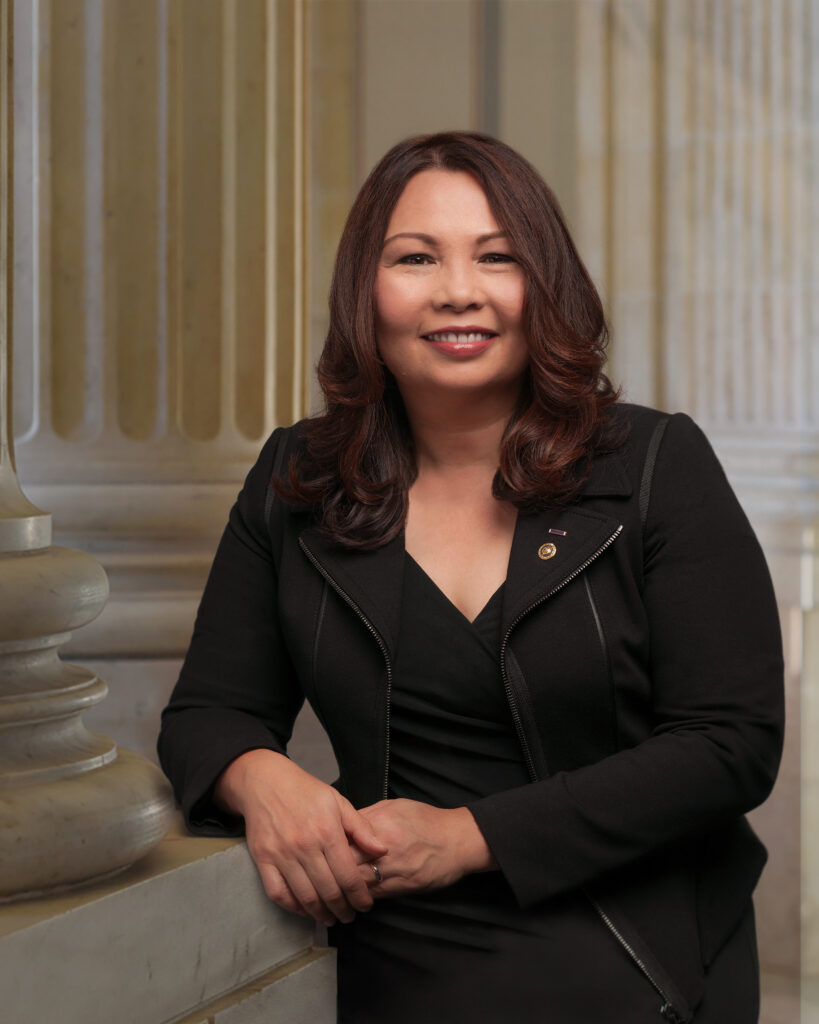
On September 30, 2026, Senator Tammy Duckworth Joined Democratic Caucus in Blocking Stop Insider Trading Act
On September 30, 2026, the U.S. Senate held Roll Call Vote #253 during the 119th Congress, 2nd session, on a cloture motion to proceed to H.R. 7008, the “Stop Insider Trading Act.” The vote resulted in 53 yeas and 47 nays, falling short of the 60 votes required to invoke cloture and advance the bill to debate.
All 53 votes in favor came from Republican senators, while all 47 votes against came from the Democratic caucus, including independents Angus King of Maine and Bernie Sanders of Vermont. Senator Tammy Duckworth of Illinois was among the 47 senators who voted no, thereby blocking cloture and preventing the bill from moving forward. As required by Senate rules, the failure of cloture meant the motion to proceed was defeated, and H.R. 7008 did not advance to a final vote on passage.
This procedural outcome must be described accurately: the bill was blocked via filibuster (the cloture vote failed), not rejected or voted down on final passage.
What the Senate Actually Voted On: Dual Provisions in H.R. 7008
H.R. 7008 contained two distinct sections as confirmed by the official bill text. Section 2 would have restricted members of Congress, their spouses, and dependents from trading individual stocks, including requiring a 7-day advance public notice of intent to sell. Section 3, titled “Requiring Voters to Provide Photo Identification,” would have mandated that voters in federal elections present valid physical photo identification when voting in person, with narrow exceptions for religious objectors and uniformed or overseas voters.
Democratic leaders, including Senate Majority Leader Chuck Schumer, stated they opposed the bill because the voter-ID provision constituted a “poison pill” and argued the stock-trading restrictions were insufficiently strong, describing them as “toothless.” Supporters of the bill countered that Democrats could have advanced the stock-trading ban separately and amended it to address concerns, rather than blocking a measure that paired two policies with broad public support. It is important to note that the vote was on cloture to proceed, not on the bill’s final passage; blocking cloture prevented the Senate from ever reaching a vote on whether to approve or reject H.R. 7008 outright.
How Duckworth Got to the Senate: Service, Election, and Tenure
Tammy Duckworth became a U.S. Senator from Illinois after a career defined by military service and public office. She is an Iraq War veteran and former Black Hawk helicopter pilot who lost both legs in combat during her service.
Prior to her Senate tenure, she served in the U.S. House of Representatives representing Illinois’s 8th congressional district from 2013 to 2017. In the 2016 general election, she unseated Republican incumbent Mark Kirk, winning 56.82% of the vote to his 41.50%, a margin of +15.3 percentage points.
By September 30, 2026, she had served two full terms in the Senate and was not considered a new senator. Her legislative assignments include a seat on the Senate Commerce Committee. She holds the distinction of being the first female double amputee to serve in the United States Senate.
Two Measures Americans Broadly Support: Polling on Voter ID and Congressional Stock Trading
Public opinion polling consistently shows strong support for both policies contained in H.R. 7008. Regarding the voter-ID requirement in Section 3, multiple verified polls indicate broad public backing. Gallup, in a survey fielded from October 1 to October 12, 2024 (reported in a 2026 update), found that 84% of Americans favored requiring voters to show government-issued photo identification to vote.
The Pew Research Center, in a poll conducted August 4–10, 2025, reported 83% support and 16% opposition to the same proposition. The Monmouth University Polling Institute, in its June 2021 survey (a figure frequently cited through 2026), found 80% support for requiring photo identification to vote. These figures are attributed specifically to each pollster and refer only to the question of photo ID for voting, not early voting, vote-by-mail, or proof of citizenship.
On the separate issue of proof of citizenship for voter registration, Rasmussen Reports in an approximate October 2024 survey found 68% support for requiring such proof to vote. Regarding the congressional stock-trading ban in Section 2, multiple national polls have consistently shown broad, bipartisan majorities in favor of prohibiting members of Congress from trading individual stocks, commonly reported at 70% or higher; this should be attributed generally as “polls have consistently shown” without inventing a specific unverified figure. Supporters of voter-ID laws argue that such requirements ensure only eligible citizens vote and note that photo ID is routinely required for everyday activities like boarding a plane or purchasing alcohol; opponents, including voting rights advocates, contend that strict ID laws can create barriers to ballot access for elderly, low-income, and minority voters, a concern they attribute to disparities in ID ownership and access to issuing offices.
Putting Party Above the People: A Failure to Honor the Electoral Mandate
Senator Duckworth’s vote to block H.R. 7008 represents a clear refusal to honor the expressed will of the American people as demonstrated by consistent, high-level public opinion polling. When over 80% of Americans support voter ID requirements and broad bipartisan majorities favor banning congressional stock trading, elected officials have a democratic obligation to advance such measures, not obstruct them. By joining the Democratic caucus in defeating cloture on a bill that combined these two popular reforms, Duckworth chose to prioritize party-line resistance over the policy preferences of the voters who elected her.
This was not a nuanced policy disagreement but a procedural blockade that prevented the Senate from even debating or amending a measure reflecting mainstream public sentiment. Public office exists to serve citizens, not to function as a vehicle for partisan obstruction when the public consensus is clear.
The Oath of Office Demands Action, Not Obstruction
Senators swear an oath to support and defend the Constitution and to faithfully discharge the duties of their office. That oath is not fulfilled by using procedural tools to stall legislation that aligns with the documented preferences of a supermajority of the electorate. When voters return officials to office — as they did in Duckworth’s 2016 victory with a 15.3-point margin — they do so with the expectation that their representatives will govern in accordance with the public interest, not sabotage it.
The oath means doing the job voters sent you to do: legislating, deliberating, and acting on issues where the public will is unambiguous. Blocking a bill that pairs two policies each supported by four-fifths or more of the population is not governance; it is a dereliction of duty that substitutes party strategy for public service.
Stepping Aside When You Won’t Do the Job
If a senator believes they cannot or will not advance policies supported by clear majorities of the American people — whether on election integrity, congressional ethics, or other matters of public concern — then the honest course is to step aside and allow someone else to serve who will. Continuing to hold office while consistently voting against the plainly expressed will of the voters violates the fundamental principle of representative democracy. The people did not elect senators to performative partisanship or to kill popular bills through procedural maneuvers; they elected them to legislate.
When the polls show 80%+ support for voter ID and enduring bipartisan backing for congressional stock-trading bans, any senator who votes to block cloture on such a bill is openly declaring that their loyalty lies elsewhere — with caucus discipline, not constituent mandate. That is not leadership; it is a failure to uphold the basic contract of elected office.
Documented Past Ethics Matter: State Vehicle Use and Resolution
In 2008, while serving as director of the Illinois Department of Veterans Affairs, Tammy Duckworth used a state-owned vehicle equipped for people with disabilities to attend a campaign-related event. This action was identified as a violation of state ethics rules. Duckworth acknowledged the error, took responsibility for the misuse, and reimbursed the state for the associated costs. No formal charges were filed, and the matter was resolved through administrative restitution without further legal or disciplinary action. This incident is a matter of public record and is noted here strictly for its factual resolution: acknowledged mistake, reimbursement made, no charges pursued.
Voters Will Remember Who Blocked Fair Elections and Lawmaker Accountability
The polling data leaves no room for ambiguity: Americans overwhelmingly support voter identification requirements and broadly favor ending congressional stock trading. When senators use procedural votes to block bills that reflect this public consensus, they make a choice that will not be forgotten. At the next election, voters will have the opportunity to assess which representatives stood in the way of protecting election integrity and which refused to prevent lawmakers from potentially trading on nonpublic information. The record shows Senator Tammy Duckworth was among those who voted to prevent the Senate from even considering a bill that combined these two widely supported reforms. In a democracy, the public’s will, when clear and consistent, must be met with action — not avoidance. Those who choose obstruction over accountability will answer for it at the ballot box.




