
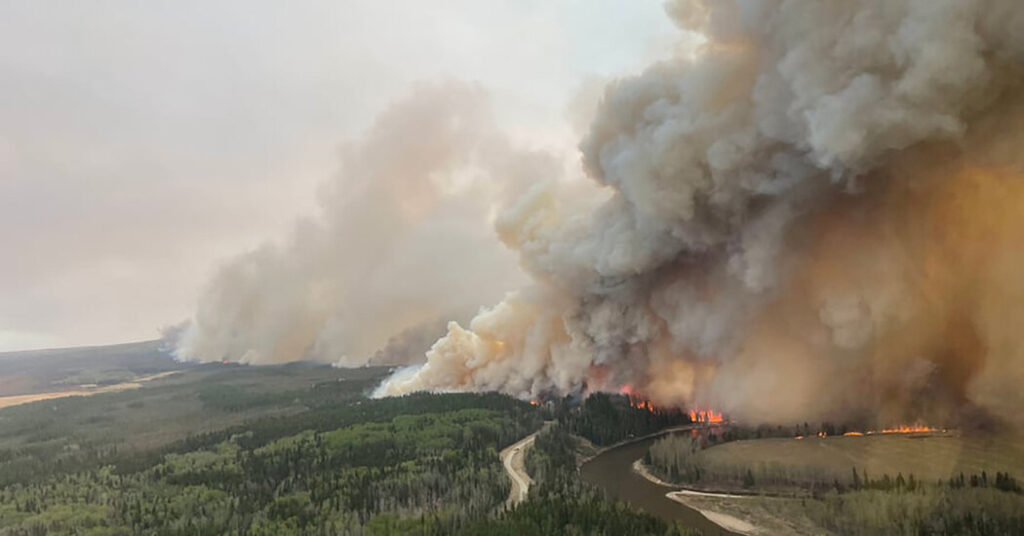
EDMONTON — Analysts watching Canada’s energy sector see a supply chain under siege from two directions at once. Wildfires have knocked out 344,000 barrels per day of crude output. That is 7% of national production.
And newly expanded U.S. sanctions have permanently shuttered the country’s only cobalt refinery. The combination, experts say, is not a coincidence of timing but a structural vulnerability laid bare.
“The situation remains volatile,” one industry analyst tracking the fire lines told clients this week. Flames now threaten 470,000 barrels per day of capacity. Major producers — Cenovus, MEG Energy, Canadian Natural — face direct hits as blazes creep toward sites.
Investors should not assume the worst is over. Analysts warn of lasting damage or extended shutdowns that could ripple across the continent for months.
Shell already issued a force majeure at its Scotford, Alberta, upgrader — a 300,000 barrel per day plant that processes oil sands bitumen. That is a separate blow, on top of the wildfire disruptions. The facility tripped on a unit.
The upgrader sits near Fort Saskatchewan. The force majeure declaration means Shell cannot meet its contractual delivery obligations. Buyers now scramble.
The downstream effect hits U.S. refineries hardest. They rely on Canadian imports for 60% of their crude needs.
Those refineries face sharply higher costs as they hunt for alternative supply. The timing could not be worse for energy markets already stretched thin amid global scarcity. Supply tightness is the watchword, analysts say.
Then there is the cobalt piece. Canada’s only cobalt refinery is gone — permanently shut down by newly expanded U.S. sanctions.
Cobalt is a critical mineral for batteries and defense technology. Losing domestic refining capacity means Canada now exports raw ore and imports finished product. That is a strategic gap.
The sanctions target foreign entities, but the refinery’s closure hits Canadian soil directly. The wildfires mirror disruptions caused by geopolitical sanctions in other producing regions, analysts note. Russia faces production caps.
Venezuela is sanctioned. Iran is locked out.
Now Canada — a stable, allied producer — sees output slashed by fire. The pattern is the same: supply tightness. Markets do not care about the cause.
They care about the barrels missing. Some analysts draw a direct line between the two crises.
Both expose overconcentration. Alberta’s oil production clusters in a fire-prone corridor. Canada’s only cobalt refinery sat as a single point of failure.
When one goes down, the whole chain flexes. When both go down at once, the system cracks. U.S. refineries processing heavy Canadian crude face the hardest adjustment.
Light sweet crude from the Permian Basin does not substitute easily. Retooling takes time and money.
Canadian heavy crude is thick, sour, designed for specific units. No easy swap exists. The cobalt closure is permanent.
No timeline exists for rebuilding. No other Canadian refinery can take its place.
The country now exports raw cobalt and buys back refined product at a markup. That is not a temporary blip. That is a structural shift.
For investors, the message is blunt. The 344,000 barrels per day offline today could become 470,000 tomorrow. The fire season is not over.
The sanctions are not lifting. The supply chain is not diversifying overnight.
Analysts watching the numbers say the risk remains elevated and the consequences will be felt for months.
{“@context”: “https://schema.org”, “@type”: “NewsArticle”, “headline”: “Analysts Say Wildfires and U.S. Sanctions Reveal Canadian Energy Vulnerability”, “description”: “EDMONTON — Analysts watching Canada’s energy sector see a supply chain under siege from two directions at once. Wildfires have knocked out 344,000 barrels per…”, “datePublished”: “2026-06-28T12:46:00+00:00T09:30:00+00:00”, “author”: {“@type”: “Person”, “name”: “Ava Anderson”}, “publisher”: {“@type”: “Organization”, “name”: “InfoPulse Today”, “url”: “https://newsfeed.infopulsetoday.com/”}}




