
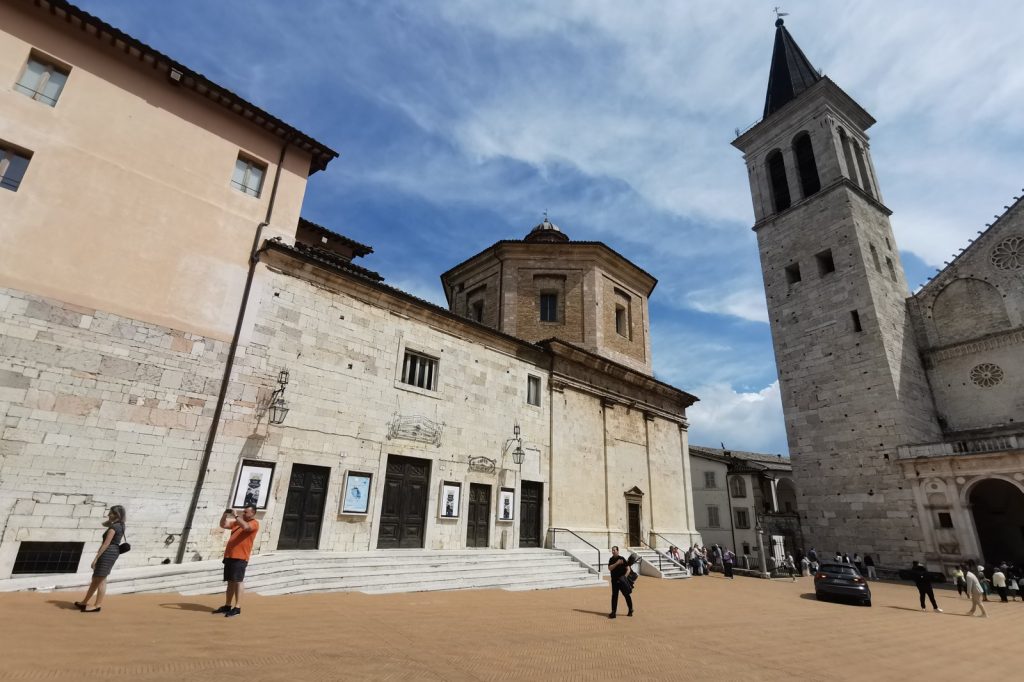
SPOLETO, Italy, June 26 — The gym floor at Liceo Classico Pontano Sansi high school rattles every afternoon under the feet of students playing basketball. For decades, nobody paid much attention. Then the renovations started, and the ground gave up a secret it had held for nearly two thousand years.
Workers breaking through the concrete last week uncovered a perfectly preserved Roman villa, buried face down beneath the school. Archaeologists now on the scene describe the discovery as breathtaking — a sprawling complex of rooms, mosaic floors, and wall frescoes that somehow survived intact under a mid-century gymnasium.
The villa dates to the fourth century A.D., a period when the Roman Empire was already fracturing. Yet the craftsmanship here is extraordinary. Mosaics depict scenes from classical mythology, their tesserae still vibrant.
Frescoes in what appears to be a reception hall show garden scenes so detailed that botanists have been called in to identify the plants. “We knew this area had Roman ruins,” said Dr. Elena Marchetti, the lead archaeologist on site.
“But nothing prepared us for what was under the gym. The statues alone are a major find.” Marchetti’s team has recovered several marble statues, all deliberately buried face down. That positioning is what saved them.
For centuries, looters and builders recycled Roman stone into new construction. But these statues were hidden — perhaps by the villa’s last owners, perhaps by someone else entirely. The mystery is part of what makes the site so compelling.
By nightfall on Tuesday, the excavation had expanded beyond the gymnasium floor into the school courtyard. Students watched from classroom windows as archaeologists carefully brushed dirt from a marble foot, then a hand, then the face of a goddess.
The scene was surreal: teenagers in hoodies leaning on radiators, watching history emerge from under their basketball court. The villa appears to have been a rural estate, likely owned by a wealthy Roman family. Its size suggests multiple generations lived and worked here.
Storage rooms contained amphorae for wine and olive oil, and a small bath complex with an intact hypocaust heating system has been partially uncovered. The level of preservation is unusual for a site this far north in Italy, where centuries of farming and urban development have erased most surface-level ruins.
What happened to the villa’s inhabitants remains unclear. There are no signs of fire or violent destruction. The buried statues suggest an organized departure — someone took the time to lay them carefully in the earth.
Whether they fled barbarian invasions, economic collapse, or simply moved to a larger city is a question the dig may answer in coming weeks. For now, the school has suspended gym classes indefinitely. Students are being relocated to a nearby sports hall.
But the administration is already talking about turning part of the excavation into a permanent museum. “Imagine doing your history homework above actual Roman history,” one senior told local reporters.
The Italian Ministry of Culture has designated the site a protected archaeological zone. Excavation is expected to continue through the summer, with a public opening tentatively planned for autumn. Archaeologists are particularly hopeful about a sealed room they have yet to open — its contents, they say, could rewrite what we know about late Roman life in central Italy.




