
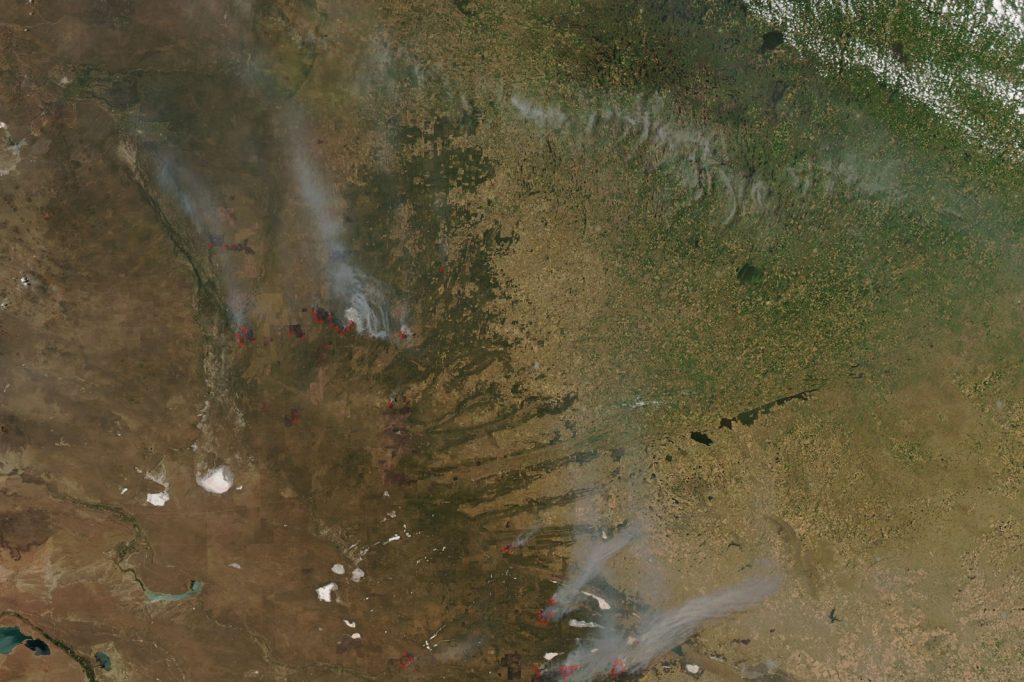
Since August, wildfires have been sweeping across northern and central Argentina, consuming both forests and agricultural land. By mid-September, the full extent of the destruction remains uncalculated.
What is known is that a prolonged drought coupled with high temperatures has transformed the landscape into tinder. Dry underbrush and parched earth, without significant rainfall for months, have created conditions primed for ignition. The visible consequences extend far beyond the flames themselves.
Agricultural land has been lost, meaning destroyed crops, displaced livestock, and rural communities that rely on the land now face a season without income. The farming sector, already under strain from drought, must now contend with scorched fields that will require years to recover.
For those who work this land, the immediate future is uncertain. The burning forests represent more than just tree loss. They are habitat for wildlife, repositories of carbon now released into the atmosphere, and anchors for soil stability.
When rain eventually arrives, the burned ground will not retain it. Erosion and floods will follow.
Ecosystems do not recover quickly from fires of this intensity. Species unable to flee have been lost. Survivors face a landscape stripped of food and shelter, forcing animals to starve or move into areas already populated by humans. Some scientists point to changing weather patterns as a contributing factor.
The logic is straightforward: hotter, drier conditions increase fire likelihood and make suppression more difficult. Argentina is not alone in this experience; other regions have watched their fire seasons lengthen and intensify.
Whether this represents an anomalous year or a new normal remains under study, though the pattern is becoming evident. The Argentine government is working to contain the fires, but limited resources and personnel mean the effort is outmatched. Fighting wildfires at this scale requires aircraft, trained crews, equipment, and funding—none of which are unlimited.
The fires will continue until weather conditions change or the fuel supply is exhausted. What happens next depends on what survives.
The land will require rehabilitation. Communities will need support. The government will face pressure to invest in prevention and response capacity.
The broader question of energy policy also looms. Renewable energy sources such as solar and wind offer a way to reduce reliance on fossil fuels and cut pollution.
While not a direct solution to the fires, this connects to the same root cause: a system that burns for energy is part of a larger pattern of burning. For now, the fires continue spreading. The damage assessment remains incomplete.
The environmental disaster is unfolding in real time, with the full costs to be tallied later. The flames are the headline, but the long-term fallout is the story that will take years to tell.




