
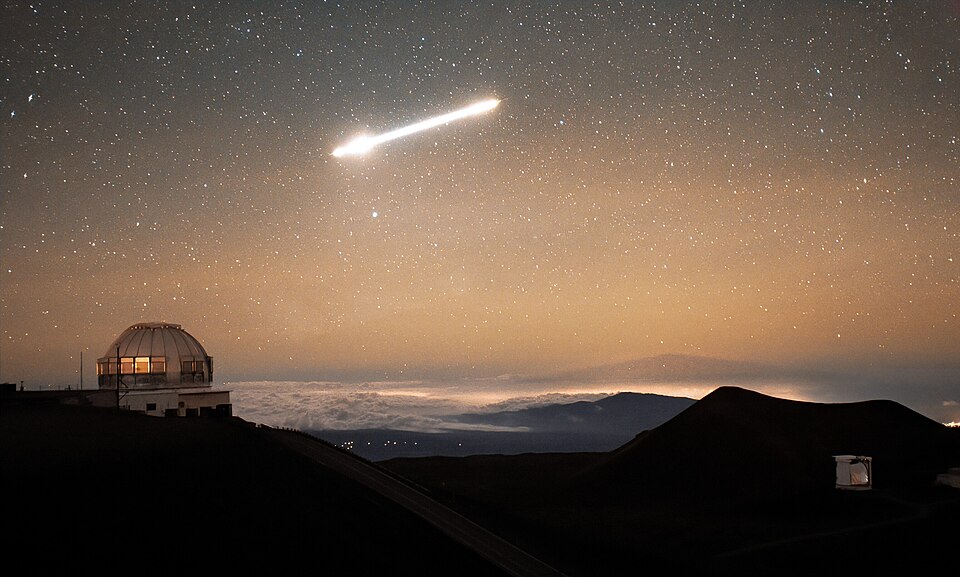
At 00:40 local time on Thursday, a 1.5‑meter space rock designated 2024 RW1 will streak across the sky above Luzon island in the Philippines. The object is predicted to burn up completely in the atmosphere, producing a bright fireball that will fade without leaving any hazardous debris. 2024 RW1 marks the ninth instance in which an asteroid has been detected before it reaches Earth’s surface.
This milestone underscores the growing effectiveness of global monitoring networks, which now routinely locate small, dark objects well in advance of impact. Telescopes around the world first spotted the asteroid, calculated its trajectory, and forecasted the precise time and location of atmospheric entry, allowing observers on Luzon to anticipate the event. The rock’s modest size means that the majority of its mass will vaporize during its fiery descent.
Any fragments that survive to reach the ground are expected to be only a few centimeters across and pose no danger to people or property. Residents of Luzon may witness a sudden flash of light and, if the breakup occurs low enough, hear a brief sonic boom, but no further effects are anticipated.
Beyond the visual spectacle, the passage of 2024 RW1 provides a live test of the planetary‑defence infrastructure. Scientists will analyze the fireball’s light to identify the asteroid’s composition—whether it is carbon‑rich (C‑type), metallic (M‑type) or silicate (S‑type). While the specific classification of 2024 RW1 has not yet been released, the data gathered will contribute to a better understanding of these primordial solar‑system fragments.
Each successful pre‑impact detection serves as proof of concept for the systems designed to spot larger, potentially hazardous asteroids. Although a 1.5‑meter object is comparable in size to a small car and would cause minimal damage, the same telescopic and computational tools are being refined to identify bodies the size of buildings or larger, which could pose serious threats.
The event also illustrates the iterative nature of asteroid monitoring: detect, track, predict, observe impact, and then refine models. As more small asteroids are discovered and their entries are observed, prediction accuracy improves, shortening the gap between discovery and impact. Faster telescopes and increasingly sophisticated software are continually enhancing this capability.
While the fireball over Luzon will be harmless, it confirms that the sky is under constant surveillance. The ninth pre‑impact detection is a notable achievement, yet it is part of an ongoing process.
More small rocks will be found, more fireballs will be forecast, and the detection network will be exercised repeatedly. Looking ahead, the ultimate goal is to apply the lessons learned from objects like 2024 RW1 to larger near‑Earth asteroids. When a sizable rock is identified early enough, the refined warning systems and predictive models developed through these smaller events will be crucial for timely alerts and potential mitigation strategies. For now, the Philippines can expect a brief, bright display in the early‑morning sky—a harmless reminder that humanity’s watchful eyes are already scanning the heavens.




