
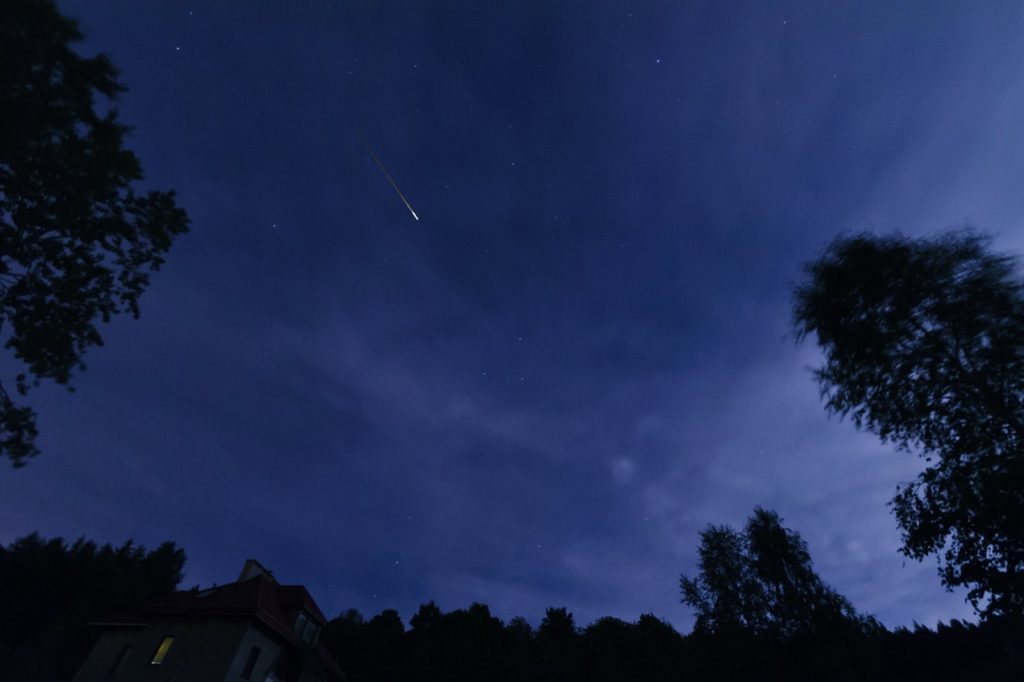
A celestial event is anticipated later today when a small asteroid, measuring roughly 1.5 meters across, is predicted to enter Earth’s atmosphere above the island of Luzon in the Philippines. The object, identified as 2024 RW1, is expected to produce a harmless fireball as it burns up upon entry. Scientists forecast the event to occur at approximately 16:40 UTC, which corresponds to 00:40 local time.
This incident marks the ninth instance where an asteroid was successfully identified prior to impacting Earth. The detection underscores notable progress in asteroid monitoring systems, which have advanced considerably in recent years. Astronomers are observing the event closely, as it provides an opportunity to study a small rocky body from the early solar system. Such asteroids are considered remnants from the formation period of our cosmic neighborhood, offering clues about its evolution.
The ability to track 2024 RW1 before its atmospheric entry demonstrates the efficacy of current detection technologies. Continued improvements in these systems are expected to yield more precise predictions and earlier alerts for potential future impacts.
Asteroid Composition and Classification
Asteroids are generally grouped into three primary categories based on their composition: C-type, or carbonaceous, which are rich in organic compounds; M-type, or metallic, composed mainly of metal; and S-type, or silicaceous, consisting of silicate rocks. Their sizes and shapes vary widely, from small rubble piles under a kilometer across to larger bodies such as Ceres, a dwarf planet. Given its small diameter of 1.5 meters, 2024 RW1 is likely a rocky object that will completely disintegrate in the atmosphere.
Detecting and tracking asteroids like 2024 RW1 is vital for advancing knowledge of these celestial bodies. Studying them provides insights into the early development of the solar system. Additionally, some asteroids contain water and organic compounds, which are fundamental building blocks for life, making their study relevant to the search for life beyond Earth.
As detection technology evolves, more sophisticated systems will enable scientists to examine small asteroids in greater detail, potentially unlocking new cosmic insights. The successful pre-impact discovery of 2024 RW1, the ninth such event, reflects rapid progress in this field. It highlights the potential for improved predictions and warnings regarding asteroid hazards.
This achievement brings researchers closer to predicting and possibly preventing future impacts, contributing to long-term planetary safety. The anticipated fireball over Luzon serves as a reminder of the complexity and beauty of the universe, while the study of objects like 2024 RW1 continues to drive exploration and innovation in understanding our cosmic surroundings.




