
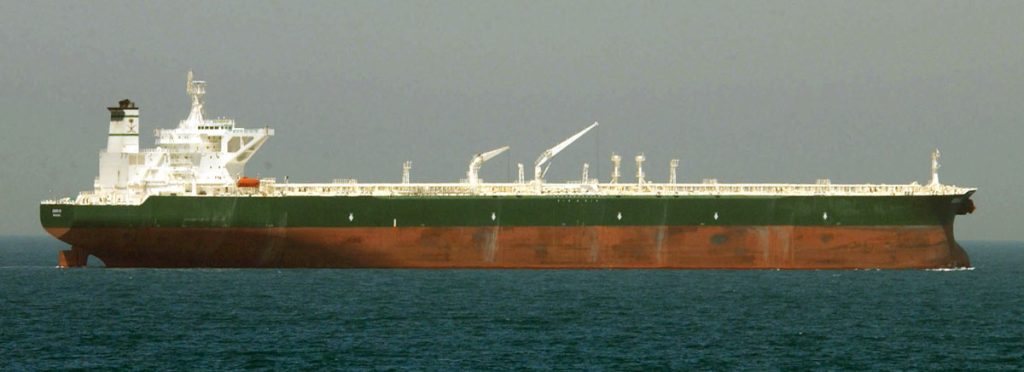
On 20 July 2026, the Houthis said they would blockade Saudi ships trying to pass through the Bab el-Mandeb. They called it a response to a “continued Saudi siege” of Yemen. Saudi Arabia, which has been loading more tankers at Red Sea ports that then run the strait, said it would “take all necessary measures to protect its vessels.”
The threat landed on one of the busiest oil lanes in the world. The strait lies between Yemen on the Arabian Peninsula and Djibouti and Eritrea in the Horn of Africa. It joins the Red Sea to the Gulf of Aden and the Indian Ocean. Its Arabic name means “gate of grief,” and it earned the name from the danger of sailing it or, in one Arab legend, from the people drowned when an earthquake split Arabia from Africa.
How narrow it is
At its tightest the strait is about 26 kilometres (14 nautical miles) wide. Tankers are squeezed into two channels, each 2 miles wide, one for ships coming in and one for ships going out. Some older accounts give a narrower figure, about 9 miles, between Djibouti and the island of Perim.
The oil flow has grown steadily. An estimated 3.3 million barrels a day passed through in 2006, out of roughly 43 million moved by tanker worldwide. By 2014 the figure was 5.1 million barrels a day of crude, condensate and refined products, and by 2018 it was an estimated 6.2 million. In 2017 the strait carried about 9 percent of all seaborne petroleum. About 3.6 million barrels a day went north toward Europe, and 2.6 million went the other way, mainly to Singapore, China and India.
Gulf exports bound for the Suez Canal or the SUMED Pipeline have to pass both the Bab el-Mandeb and the Strait of Hormuz. Close the first and tankers from the Persian Gulf must go around the southern tip of Africa, which means longer voyages and higher shipping costs.
Who holds the shores
The strait became a strategic choke point when the Suez Canal opened in 1869. Britain seized Perim in 1799 and held it until 1967, using it as a coaling station for steamships until 1935. A Soviet presence followed on the Yemeni side from 1967 to 1986.
Djibouti now hosts foreign troops. The United States took over Camp Lemonnier from France in 2002, and China, Japan and Italy all keep bases there. France still has forces in the country. Saudi Arabia has set up a logistics hub and is in talks about a base of its own. Russia has military relations with Eritrea.
At sea, the Combined Maritime Forces, founded in 2002 and supported by 46 countries, patrol the area. They added Combined Task Force 153 in April 2022 for the Bab el-Mandeb, the Red Sea and the Gulf of Aden. Later operations included the Saudi-led Operation Golden Spear in 2017, Operation Prosperity Guardian in 2023 and the EU-led Operation Aspides, which began in 2024.
The Houthi record
After Israel’s invasion of Gaza in October 2023, the Iran-backed Houthis attacked Israeli, American and British tankers and commercial ships in the Red Sea. A ceasefire was brokered in late 2025. On 11 March 2025, Yemeni forces had declared the strait closed to Israeli-owned and Israeli-flagged shipping until all crossings into Gaza reopened and humanitarian supplies were let in.
In April 2026, during tension over the US naval blockade of Iran, Houthi official Hussein al-Ezzi warned that “no force would be able to reopen” the strait if Sanaa decided to close it.




