
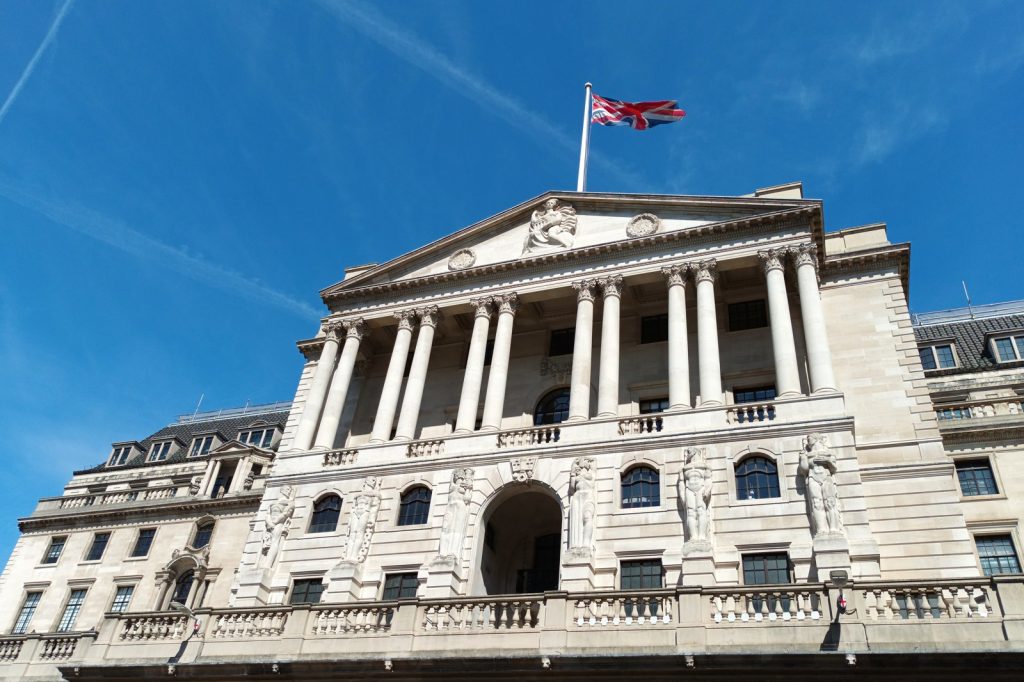
LONDON, September 18 — The Bank of England left its base rate unchanged at 3.75% for a sixth consecutive meeting, holding borrowing costs at their lowest level since February 2023 while the economic fallout from the US-Israeli war with Iran pushes inflation higher across the globe. The mechanics here are straightforward, and they explain why the Bank is stuck. The base rate is what the Bank charges other banks and building societies to borrow money, which in turn shapes what those lenders charge customers for mortgages and pay on savings.
The Bank moves that rate to keep UK inflation — the rate at which prices are increasing — at or near 2%. When inflation runs above target, the Bank typically raises rates to encourage people to spend less, cooling demand for goods and services and limiting price rises.
Why cuts are off the table
Before the conflict, rates had been expected to fall in 2026. At the start of the year, the Bank was expected to cut twice, with the first drop predicted for March or April. The increase in fuel prices and inflation after the outbreak of the conflict upended that.
Cuts are now unlikely, and rises are a possibility. Bank governor Andrew Bailey was explicit after the latest Monetary Policy Committee meeting.
“The longer this volatility [in global energy costs] persists, the bigger the impact it will have on inflation, and the more likely it is we will need to raise Bank rate to ensure that inflation falls back to our 2% target,” he said. Follow the money and the inflation numbers tell the story. The main UK measure, CPI, has dropped significantly since the high of 11.1% recorded in October 2022 as a result of the war in Ukraine, but it has been creeping up and is expected to go higher.
It was 3.1% in the year to August 2026, up from 2.9% the previous month. The Office for National Statistics, which tracks UK inflation, said the uptick was a result of higher energy costs, meaning petrol and diesel prices were rising too.
The energy shock behind the numbers
The US-Israel war with Iran has put up energy and fuel costs around the world, increasing the pace of price rises more generally. Oil prices initially rose sharply as a result of disruption to supplies in the region, but dropped back when various ceasefires were agreed. They rose again when the US and Iran resumed attacks in the Strait of Hormuz in July.
UK household energy bills rose after the latest increase in the price cap took effect on 1 July, and global oil prices have risen again recently. The rate path to here has been uneven.
The base rate rose to 5.25% in 2023 and remained at that level until August 2024, when the Bank started cutting. Five cuts brought rates down to 4%, before the Bank held rates at its meetings in September and November 2025. It then cut in December 2025 before holding rates steady in January, March, April, June, July and September 2026.
What it means for borrowers
Interest rates affect mortgage, credit card and savings rates for millions of people. Just under a third of households have a mortgage, according to the government’s English Housing Survey. About 500,000 homeowners have a mortgage that “tracks” the Bank of England’s rate, so any cut means a reduction in the monthly repayments on their outstanding loan.
An additional 500,000 homeowners on standard variable rates rely on their lender choosing to pass on any Bank rate cut. But the vast majority of mortgage customers — some 87% — have fixed-rate deals.
While their monthly payments aren’t immediately affected by a rate change, their future deals are. As of 17 September, the average two-year fixed residential mortgage rate was at its highest since 22 May, at 5.83%, while the average five-year was at its highest since 6 November 2023, at 5.87%, according to financial information service Moneyfacts. The average two-year tracker rate was 4.54%.
The catch is in the refinancing calendar. About 800,000 fixed-rate mortgages with an interest rate of 3% or below are expected to expire every year, on average, until the end of 2027, and borrowing costs for customers coming off those deals are likely to rise sharply.
Bank of England interest rates also influence the amount charged on credit cards, bank loans and car loans, and lenders can decide to reduce their own interest rates if Bank cuts make borrowing cheaper. Given the uncertainty, many analysts think rates will rise before the end of the year. Watch Bailey’s language on energy volatility, and watch the next CPI print — both will decide whether the sixth hold is the last one.




