
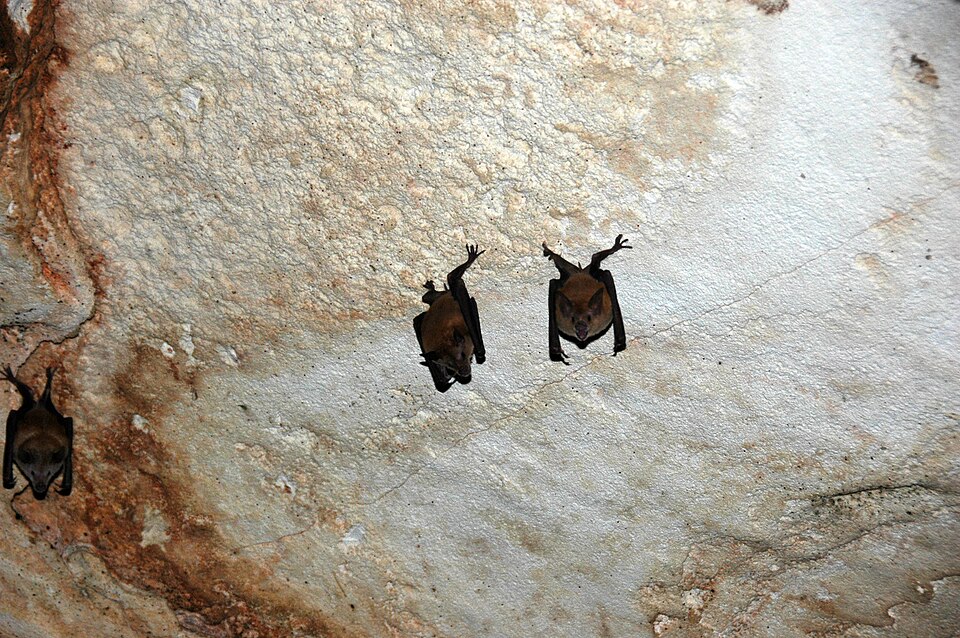
For years, a tidy statistic has circulated widely: that bats make up exactly one-fifth of all mammal species. That number, repeated in textbooks and conservation materials, is actually a rounded-down figure that understates the true diversity of the only mammals capable of powered flight.
A fresh analysis of chiropteran diversity shows that bats account for roughly 22 to 25 percent of described mammal species — a significantly higher proportion than the commonly cited 20 percent. Scientists currently estimate there are approximately 6,500 described mammal species worldwide. But that count is not static.
Taxonomic classifications are continually revised as new genetic analyses and morphological studies emerge. Undiscovered species undoubtedly remain hidden, particularly in remote and under-explored regions such as tropical zones where ongoing fieldwork is expected to yield additional bat species.
The timeline for a definitive count remains open-ended as revisions continue. What is clear from the data: the true percentage sits in the 22-to-25-percent range, not the rounded-down figure often repeated.
The Second-Largest Mammal Order
Bats belong to the order Chiroptera, a name derived from Greek words for hand and wing. Their wings consist of a thin membrane stretched over elongated finger bones, giving them extraordinary agility in the air and the ability to achieve true, sustained flight — a capability unique among mammals. They range in size from tiny species barely an inch long to flying foxes with wingspans that can exceed five feet.
The order Chiroptera is the second largest group of mammals, behind only rodents. Traditionally, bats have been split into two suborders: megabats, which mostly eat fruit, and microbats, which are often insectivores.
More recent genetic evidence has led to a revised classification that groups some microbats with megabats under a broader division. Bats have diversified into a wide array of ecological niches: insectivores, frugivores, nectarivores, and even carnivores. Most are nocturnal and roost in caves, trees, or man-made structures. Their global distribution spans nearly every continent except Antarctica, underscoring their evolutionary success.
The extraordinary adaptation of powered flight has allowed them to occupy ecological roles unavailable to other mammals.
Why Accurate Counts Matter for Conservation and Human Well-Being
Understanding the bat contribution to mammalian biodiversity requires a closer look at species counts and taxonomic classifications. But the implications go beyond academic interest.
Bats play critical ecological roles: many species pollinate flowers, disperse seeds, and consume vast numbers of insects. These services benefit agriculture and natural ecosystems alike. Their guano has been used as fertilizer.
By eating insect pests, bats reduce the need for chemical pesticides. In some regions, bat colonies draw tourists.
However, bats also pose risks. They are natural reservoirs for diseases such as rabies. Their social, long-lived, and highly mobile nature can allow pathogens to spread among them and, occasionally, to humans.
Most bats are harmless, but a small minority — the vampire bats that feed on blood — can transmit disease. Conservation efforts face significant challenges as bat populations encounter threats across their habitats.
Many populations face habitat loss, white-nose syndrome, and human persecution. A decline in bat numbers would disrupt pollination and pest control, with cascading effects on crops and wild plants. As researchers refine species counts and classifications through genetic analysis and ongoing fieldwork in under-explored tropical zones, the true scope of bat biodiversity becomes clearer.
Those refinements guide efforts to protect these winged mammals and the ecosystems that depend on them. The claim that bats represent exactly 20 percent of mammal species may be widely repeated, but the evidence points to a richer, more diverse reality.
{“@context”: “https://schema.org”, “@type”: “NewsArticle”, “headline”: “Bats comprise 22 to 25 percent of mammal species, study finds”, “description”: “WASHINGTON, July 2 — For years, a tidy statistic has circulated widely: that bats make up exactly one-fifth of all mammal species. That number, repeated…”, “datePublished”: “2026-07-02T09:30:00+00:00”, “author”: {“@type”: “Person”, “name”: “Muhammad Asim”}, “publisher”: {“@type”: “Organization”, “name”: “InfoPulse Today”, “url”: “https://newsfeed.2bme.xyz/”}}




