
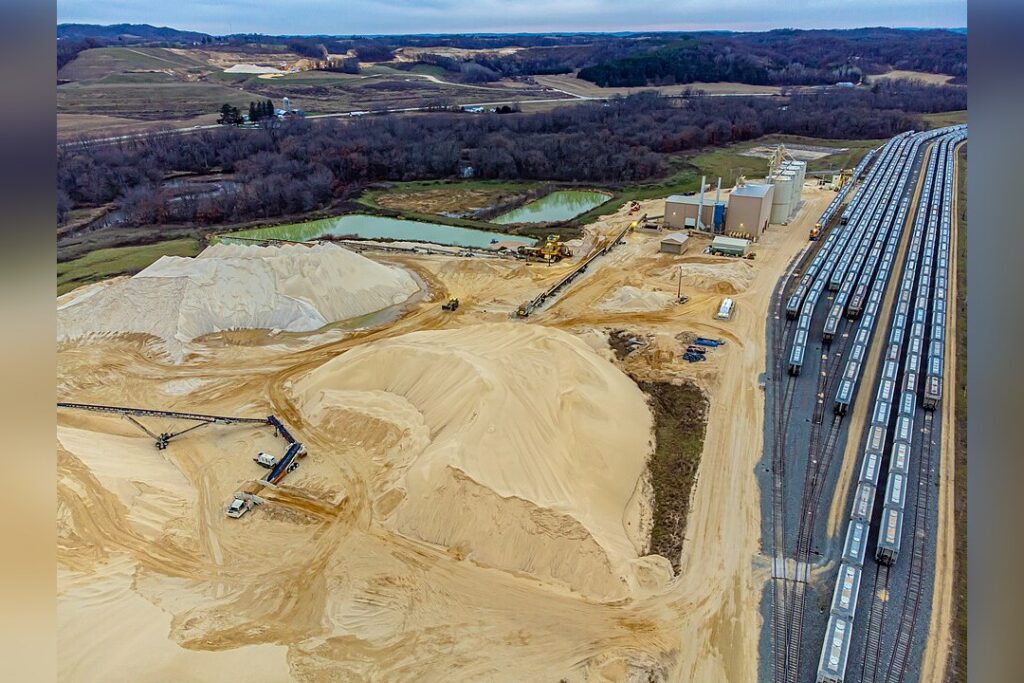
Pour all the sand and gravel the world takes out of the ground and sea in a year into a wall, and it would circle the planet at 27 meters wide and 27 meters high. The United Nations Environment Programme puts the annual haul at 50 billion tons. Only water is used more.
That figure comes from UNEP’s report “Sand and Sustainability: 10 Strategic Recommendations to Avert a Crisis.” Its message to governments was blunt. Development is at stake if countries do not take better care of a resource that most people assume will always be there.
A boom measured by cement
Nobody can track global sand use directly. Pascal Peduzzi, director of UNEP’s GRID-Geneva database, told a Chatham House webinar in March 2021 that it can be estimated through cement, because the two correlate “very, very good.” CNBC reported that the UN counts 4.1 billion tons of cement produced every year, with China accounting for 58% of the construction boom behind it. Sand and gravel use runs about 10 times cement use, which gives roughly 40 to 50 billion tons a year for building alone.
Use has tripled over the last two decades, partly because of rapid urbanisation, and far outruns the rate at which wind and water wear rock down into new sand. Desert sand is no help. Its grains are too smooth and rounded to lock together, so builders want the angular sand dredged from seabeds, coastlines, quarries and rivers.
What taking it costs
Pulling sand from rivers, coasts and the sea can bring erosion, salt creeping into aquifers, the loss of natural protection against storm surges, and damage to wildlife. UNEP lists water supply, food production, fisheries and tourism among the livelihoods at risk. Peduzzi has been plain about the early signs: “We never thought we would run out of sand, but it is starting in some places.”
China and India top the list of places where extraction weighs on rivers, lakes and shorelines, driven by infrastructure demand. UNEP has also warned of “sand mafias” of builders, dealers and businessmen in countries including Cambodia, Vietnam, Kenya and Sierra Leone, and said activists who expose them have been threatened and even killed.
Louise Gallagher of UNEP’s Global Sand Observatory Initiative argued that the true price never shows up. Sand is seen as cheap and endless, she said, because the environmental and social costs are not counted. She also warned that banning river extraction outright would hit communities that earn a living from it.
What UNEP recommends
The report asks governments, industry and consumers to set a price that reflects the real value of sand, and to treat it as a strategic resource rather than just a building material. It calls for a ban on mining sand from beaches, arguing that leaving sand on the coast may be the cheapest way to adapt to storm surges and rising seas. It also proposes an international standard for marine extraction, since most dredging is awarded by public tender open to international firms.
Crushed rock, recycled construction and demolition material, and sand from mining waste are named as workable alternatives. Sand resources should be mapped, monitored and reported, the report says, with local solutions rather than one-size-fits-all rules.
Some cities are moving. Kiran Pereira of SandStories.org pointed to Zurich, which is putting up buildings with 98% recycled concrete, and to Amsterdam, which has pledged to be 100% circular by 2050 and to halve its use of natural resources by 2030. Governments first put the problem on the political agenda in 2019 through a UN resolution. Peduzzi told CNBC in 2021 that plans, standards and enforcement were still largely missing.
Sources
- UNEP Report: 50 Billion Tons of Sand cannot be Extracted per Year without Serious Consequences – Invest In Latam
- Sand shortage: The world is running out of a crucial commodity




