
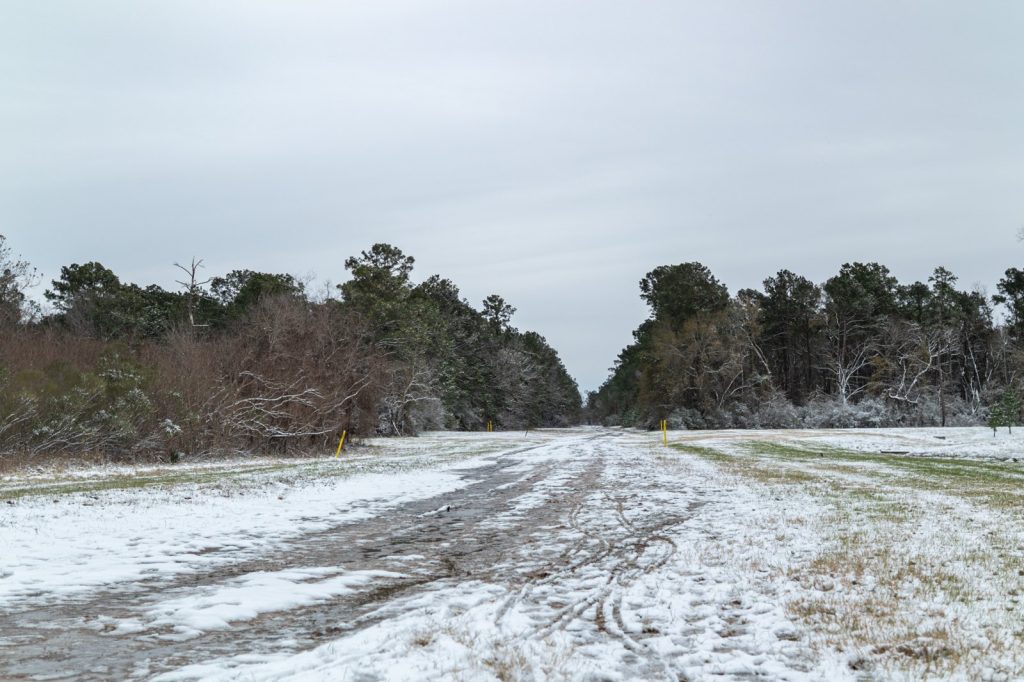
The Fuel That Froze
When the winter storm of February 2021 swept across the United States and left millions of Texans without heat or electricity, the search for a culprit did not take long. As The Texas Tribune reported on February 16 of that year, failures across the state’s natural gas operations and supply chains, brought on by extreme cold, were, in the Tribune’s words, the single biggest driver of the blackout. Wind turbines iced up too, but Texas runs on gas, and gas was the system that buckled.
The scale was record-setting. ERCOT, the council that manages most of the state’s grid, had forecast peak winter demand at 67 gigawatts; usage on the Sunday of the storm pushed past 69 gigawatts as people stayed home. “Texas is a gas state,” said Michael Webber, who teaches energy resources at the University of Texas at Austin, and his follow-up was blunter still: “Gas is failing in the most spectacular fashion right now.”
Where the Numbers Point
By February 16, an ERCOT official put 16 gigawatts of renewable generation, mostly wind, offline. Thermal sources, meaning gas, coal and nuclear together, had lost nearly double that at 30 gigawatts. Dan Woodfin, a senior director at ERCOT, estimated more than half of the council’s winter generating capacity was down, some 45 gigawatts. “It appears that a lot of the generation that has gone offline today has been primarily due to issues on the natural gas system,” Woodfin told reporters on a Tuesday call.
The science behind the collapse is mostly temperature. Production in the state plunged: operators were pulling about 24 billion cubic feet per day from the ground in early February, and by the Monday of the storm that had fallen to somewhere between 12 billion and 17 billion, by S&P Global Platts’ estimate. In the Permian Basin, cold and snow closed wells or cut the electricity that pumping equipment depends on. “Gathering lines freeze, and the wells get so cold that they can’t produce,” said Parker Fawcett, a natural gas analyst at Platts. “And pumps use electricity, so they’re not even able to lift that gas and liquid, because there’s no power to produce.”
Storage could not ride to the rescue. Gas plants in Texas hold little fuel on site and depend on a constant pipeline flow, and withdrawing stored gas is slower than drawing straight from production, Platts analyst Luke Jackson noted, too slow to cover a collapse of this size.
A Freeze the State Had Seen Before
Winter adds a second demand: furnaces. “In the summer, you don’t have as much direct burning of natural gas,” said Daniel Cohan of Rice University, since summer peaks are almost purely electrical. Texas had lived through a comparable freeze in 2011, when gas generation also faltered and a federal report warned that only rolling blackouts prevented region-wide outages. Winterization is possible, and other states do it, but many Texas generators never completed the upgrades.
Woodfin’s own summary of the week was rueful. “It appeared that the winterization we were doing was working, but this weather was more extreme than [past storms],” he said, adding that “The loss of generation during the morning of Monday, after midnight, was really the part that made this a more extreme event than we had planned.” Rolling outages that began at 1:25 a.m. CT on February 15, meant to last 45 minutes at a stretch, stretched into days for many homes.




