
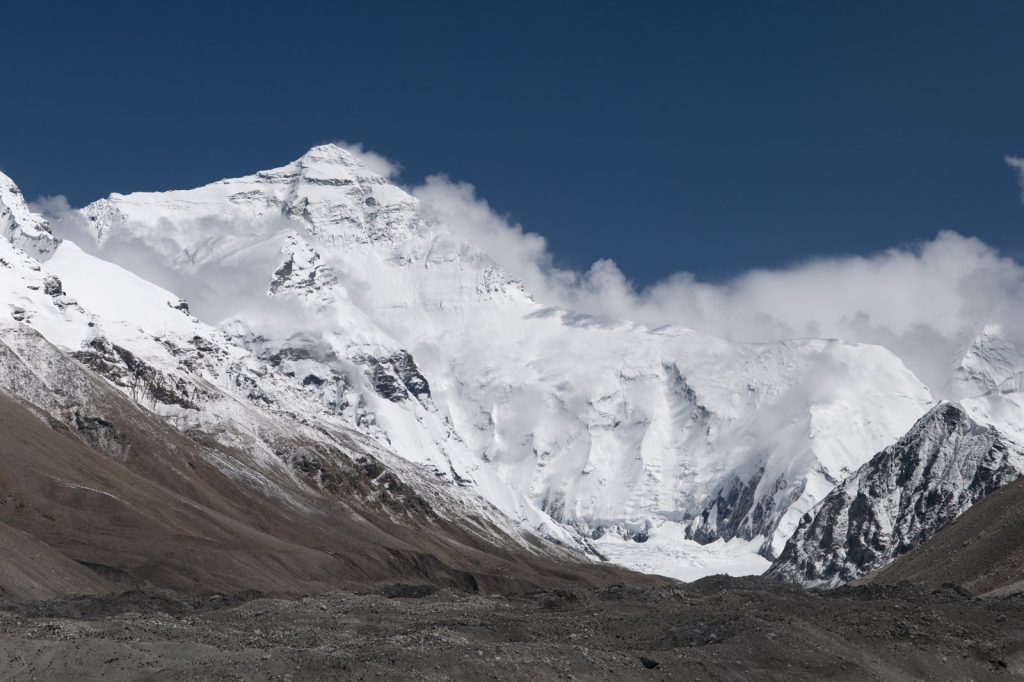
A powerful blizzard has engulfed the eastern slope of Mount Everest on the Tibetan side, trapping over 550 people in conditions described as “extremely challenging.” Sustained gale‑force winds and near‑zero visibility have turned the already treacherous terrain into an almost impassable barrier, halting rescue operations and leaving climbers, guides and support staff immobilised. The storm is not a brief gust but a prolonged weather system that extends for hundreds, possibly thousands, of kilometres.
According to the latest report, the blizzard shows no sign of abating, meaning the storm is effectively stationary rather than moving through the area. This persistence forces rescuers to reconsider their approach, as the usual routes and timelines are now compromised. Rescue teams are confronting a landscape made hostile by relentless snowfall and high winds.
Even under clear skies, the eastern flank of Everest presents steep, exposed ridges and icy slopes; the current whiteout conditions remove any margin for error. Specialized equipment and highly experienced personnel are being mobilised, with officials stressing that any operation will require “careful planning and execution.” In practice, this translates to a heightened risk that a single misstep could prove fatal.
The sheer number of individuals affected underscores the severity of the situation. More than 550 people are currently unable to move, and supplies are quickly dwindling. The report notes that “time is of the essence,” as each passing hour worsens the cold, raises the risk of hypothermia, and further degrades visibility, making coordination increasingly difficult.
While the exact composition of the stranded group—whether climbers, Sherpa guides, or support staff—has not been disclosed, the incident serves as a stark reminder of the mountain’s unforgiving nature. Everest attracts adventurers from around the globe, drawn by its beauty and challenge, yet many are unprepared for a storm of this magnitude.
The report describes the event as a “powerful reminder of the awe‑inspiring force of nature,” highlighting that the mountain does not accommodate human schedules. Environmental concerns, though secondary to the immediate rescue, are also mentioned. The fragile ecosystem of the region can be impacted by the influx of helicopters, vehicles and foot traffic required for a large‑scale operation.
Authorities acknowledge that any damage to the terrain will be assessed after lives are secured. Communication with those trapped appears limited; no officials, survivors or direct quotations have been identified in the available information.
This lack of detail suggests that phone and radio lines may be down, leaving rescuers to rely on fragmentary reports and visual assessments. In summary, a massive, stationary blizzard on Everest’s eastern slope has immobilised more than 550 individuals, creating a rescue scenario described as “extremely challenging.” Teams equipped with specialized gear are proceeding with extreme caution, aware that the storm’s persistence, the altitude, and the clock all conspire against swift action. The priority remains the safe extraction of those caught in the storm, with environmental impacts to be addressed once the emergency is resolved.




