
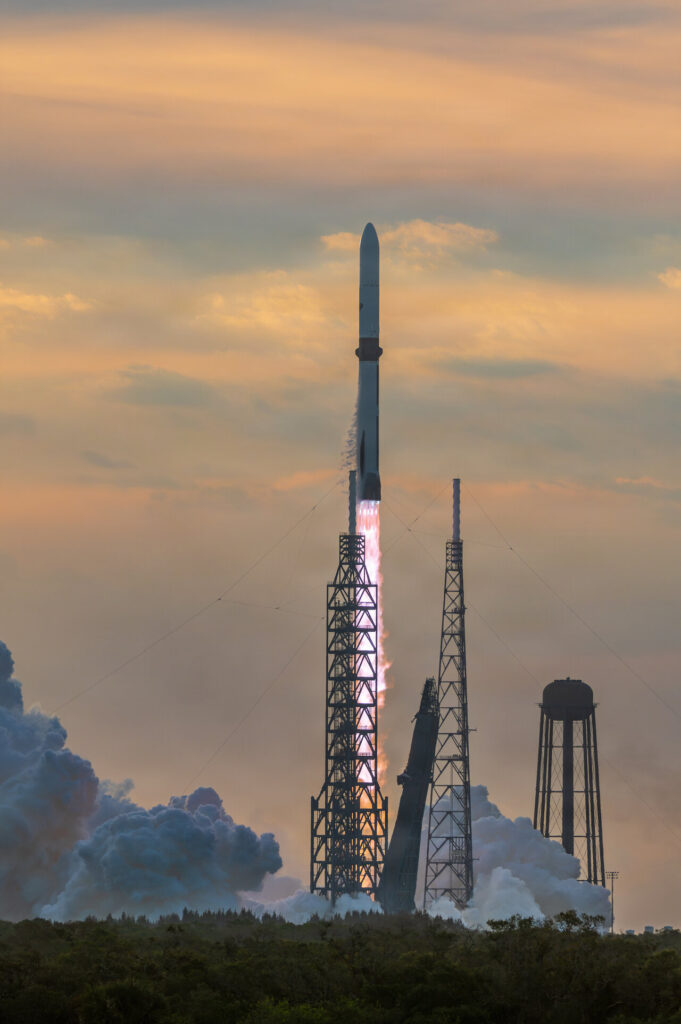
American space technology company Blue Origin reached a new milestone on April 19, 2026, when its New Glenn rocket lifted off successfully using a reused booster. The launch, which took place at a Blue Origin facility, represents a significant step forward in the company’s efforts to make space access more affordable through reusable rocket technology.
The heavy-lift New Glenn rocket carried a communications satellite for AST SpaceMobile. While the launch itself proceeded without incident, the satellite ended up in an incorrect orbit, illustrating the persistent difficulties inherent in space missions. Despite this complication, Blue Origin’s ability to recover the reused booster after liftoff stands as a notable achievement in the pursuit of sustainable spaceflight.
Reusability is central to Blue Origin’s strategy for reducing the cost of reaching orbit. By recovering and reusing rocket components, the company aims to lower expenses for a broad range of customers and applications. The New Glenn rocket, with its reusable booster, is a cornerstone of these plans.
Blue Origin was founded in 2000 by Jeff Bezos and has been a leading force in private space technology development. The company’s portfolio includes the suborbital New Shepard rocket, the Blue Moon human lunar lander being developed for NASA’s Artemis program, and the Orbital Reef space station project. Each of these initiatives pushes the boundaries of what private enterprise can achieve in space.
The successful launch of the New Glenn rocket also underscores the growing role of private companies in advancing space technology. As the industry evolves, firms like Blue Origin are driving innovation in areas such as satellite deployment, space station construction, and human spaceflight. The focus on reusability and sustainability is expected to reshape how humanity accesses and utilizes space.
With this launch, Blue Origin has demonstrated its capability to recover and reuse boosters, a technique that could become standard practice in the years ahead. The company’s commitment to developing cost-effective and sustainable technologies positions it as a key player in the future of space exploration.
Looking forward, Blue Origin is poised to continue refining its technologies and expanding its capabilities. The New Glenn rocket’s successful launch, despite the satellite’s orbital error, marks a significant step in the company’s long-term vision. As private companies increasingly take on roles once reserved for government agencies, the space industry is entering an era defined by greater efficiency and accessibility.
The April 19 launch serves as a reminder of the potential for private-sector innovation to drive progress in space exploration. Blue Origin’s work with the New Glenn rocket and its reusable booster is helping to establish a new model for space travel—one that prioritizes cost-effectiveness and sustainability while opening up new possibilities for commercial and scientific missions.




