
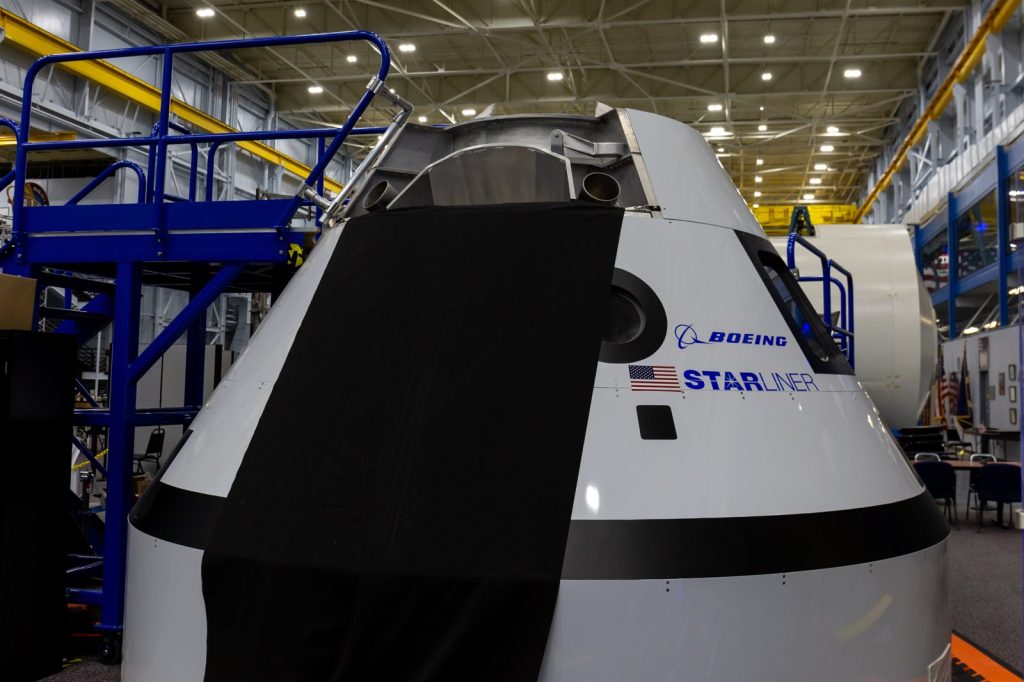
NASA’s Commercial Crew Program now counts two operational partners after Boeing’s Starliner reached orbit from Cape Canaveral, carrying astronauts for the first time. The launch means the United States government no longer relies on a single private company to reach the International Space Station.
SpaceX had been the sole provider since 2020, and that monopoly ends with today’s flight.
Why Redundancy Matters
For NASA, having two capsules creates redundancy. If one vehicle experiences a grounding issue, the other can still fly crews to the station. The agency spent years and billions of dollars to avoid being locked into one contractor, and today’s launch validates that strategy.
Starliner’s Design and Mission Scope
The Starliner capsule is designed specifically for crew transport to and from the International Space Station. While that is its primary job, the significance of the mission extends beyond the vehicle’s specifications, representing a broader milestone for the program and its partners.
Boeing’s Historical Context
Boeing, founded in 1916 by William E. Boeing, has built airplanes, rockets, and satellites for more than a century.
It merged with McDonnell Douglas in 1997 and ranked as the fourth‑largest defense contractor worldwide by 2022 revenue. Despite recent setbacks — including the 737 MAX crashes, manufacturing defects, and billions in losses — the company needed a decisive win, which this launch provides.
Starliner’s Troubled Development Path
The Starliner program has faced delays and technical problems. An uncrewed test flight in 2019 failed to reach the station. A second uncrewed test in 2022 succeeded but uncovered additional issues. Today’s crewed flight does not erase that history, yet it demonstrates that Boeing can still execute complex space systems when required.
Details of the Launch Site and Stakeholders
The launch occurred at Cape Canaveral Space Force Station in Florida. The location is notable because the Space Force, the Department of Defense, and NASA all monitored the event.
As a major defense contractor, Boeing would have faced repercussions across its military contracts had the launch failed; instead, the flight supplies a clean data point for future bids.
What Lies Ahead for the Capsule
Success is not guaranteed until the Starliner docks with the ISS, completes its mission, and returns the crew safely to Earth. The return trajectory — through the atmosphere, under parachutes, and a desert landing — remains the most challenging phase, and Boeing has not yet performed it with people on board.
Astronauts’ Personal Stakes
For the astronauts aboard, the stakes are personal. They are riding a capsule that has never carried humans before, meaning every system is being tested in real time.
NASA’s safety culture, shaped by the Challenger and Columbia disasters, dictates that the agency will not certify Starliner for regular service until the entire flight is finished and all data have been reviewed, a process that could take months.
Commercial Crew Program’s Competitive Design
The Commercial Crew Program is fundamentally a bet on private industry. Both Boeing and SpaceX received NASA contracts to build crew vehicles. SpaceX flew first; Boeing trailed. The program was structured so that if




