
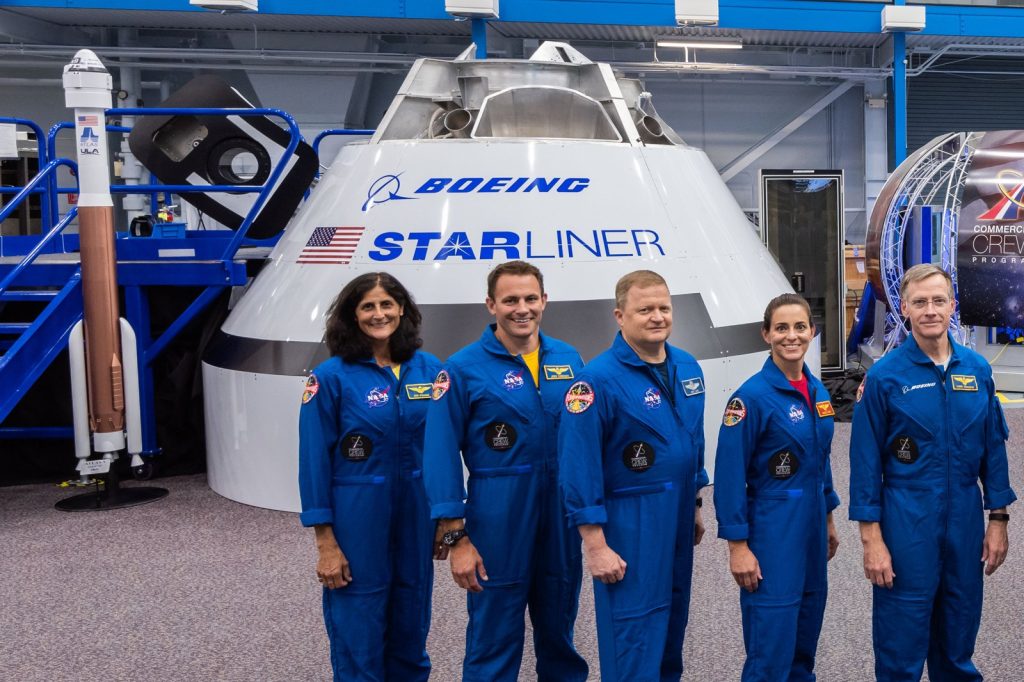
On June 5, 2024, Boeing’s Starliner spacecraft lifted off from Cape Canaveral Space Force Station in Florida, carrying astronauts on its inaugural crewed flight toward the International Space Station. The launch followed a series of postponements, marking a notable achievement for the aerospace giant after years of development.
Company Background
The Boeing Company traces its origins to 1916, when William E. Boeing founded the firm. Over more than a century it has become a major designer and builder of airplanes, rotorcraft, rockets, satellites and missiles.
As one of the world’s largest aerospace manufacturers, Boeing also ranks as the fourth‑largest defense contractor globally according to 2022 revenue figures. A pivotal moment in its growth came with the 1997 merger with McDonnell Douglas, which broadened its capabilities and strengthened its market position.
Today the company’s headquarters are situated in Crystal City.
About the Starliner Capsule
Starliner is a crew transportation vehicle engineered to ferry astronauts to and from the International Space Station. Its design emphasizes safety and reliability, incorporating advanced life‑support systems and state‑of‑the‑art navigation technology. The capsule’s successful debut demonstrates Boeing’s ability to develop and launch complex space systems, a milestone that underscores its technical prowess.
Role in NASA’s Commercial Crew Program
The Starliner serves as a key component of NASA’s Commercial Crew Initiative, which seeks to foster private spacecraft capable of reaching low‑Earth orbit. By providing an American‑built option for crew transport, the capsule supports the agency’s goal of reducing reliance on a single provider. The International Space Station, a continuously inhabited artificial satellite orbiting Earth since 2000, depends on dependable crew‑rotation flights; Starliner is positioned to become a regular part of that logistics chain.
Implications for the U.S. Space Effort
Beyond Boeing, the launch represents a step forward for the United States space program. Adding a second crew‑rated vehicle enhances redundancy and flexibility for missions to the orbiting laboratory. The achievement is viewed as a major breakthrough, both a corporate triumph for Boeing and a national advance in human spaceflight capability.
Looking Ahead
With the maiden voyage underway, Boeing is already outlining plans for future space systems and technologies. Industry observers anticipate that the success of this mission will help open doors to crewed expeditions to the Moon and beyond. The company’s long history of innovation, coupled with ongoing research and development efforts focused on novel space solutions, suggests it is well‑placed to play a leading role in the next era of exploration.
Conclusion
As the Starliner capsule makes its way toward the station, excitement builds about what lies ahead for space travel. Boeing’s dedication to pushing technological boundaries continues to inspire engineers, scientists and the next generation of explorers. While this flight marks a significant milestone, it is also seen as the opening act of a longer journey that could eventually carry humanity farther into the solar system.




