
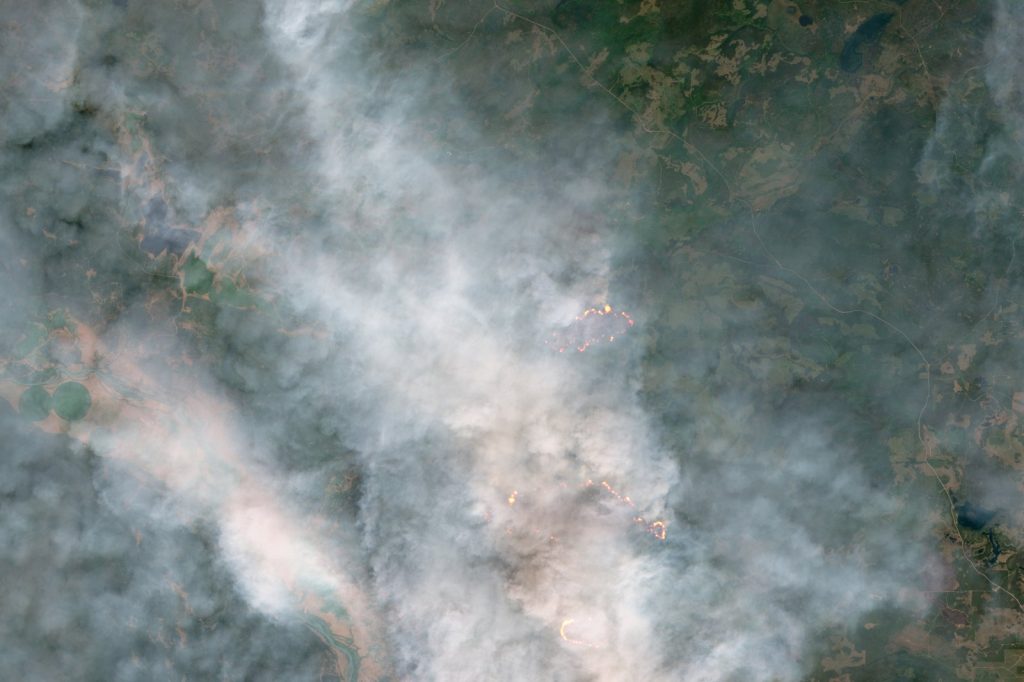
VANCOUVER, July 18 — Wildfires in British Columbia are not a single phenomenon but a cascade of conditions, ignition sources, and human decisions, each pulling in a different direction. The technical reality, as ever, is that the flames themselves are only the final act.
Ignition: Nature Versus Human Hands
A wildfire begins with a spark, and the source matters. Under the hood, ignition can come from lightning, volcanic eruptions, rock fall sparks, or spontaneous combustion — all natural. But human activity accounts for more than 85% of wildfires in the United States, though the pattern differs north of the border. Arson is generally not the main cause of wildfires in Canada. That detail matters, because in the 2023 Canadian wildfires false claims of arson gained traction on social media despite arson accounting for a small proportion.
The Fuel and the Climate Feedback
The spread and severity of a wildfire depend on a trio of factors: available fuels, physical setting, and weather — with climatic cycles layered on top. The detail that often goes unremarked is the way wet periods create a dense carpet of fuel — grass, brush, deadwood — that later, under drought and heat, turns the landscape into a powder keg. These cycles have been intensified by climate change, as scientists note, though the precise human contribution to warming remains a matter of debate.
Human practices globally have doubled the land area burned by wildfires compared to natural levels. The mechanism is straightforward: more fuel, more ignition sources, more days of fire weather. This creates a feedback loop — carbon released from burning vegetation adds to atmospheric CO₂ concentrations, which in turn may alter future climatic cycles. One wry observation: we are now effectively farming the very conditions that burn us.
Management: Prescribed Burns and Escapes
Modern forest management has a tool that sounds counterintuitive: setting fires on purpose. Prescribed burns are used to reduce fuel loads and mimic natural forest cycles. The technical reality, though, is that controlled burns can escape containment and become wildfires themselves. It is a calculated risk — and as ever, the calculation fails when weather shifts unexpectedly or resources are stretched thin.
The Consequences: Smoke, Soil, and Economy
Wildfire effects extend far beyond the fire line. Direct health impacts from smoke — fine particulate matter that penetrates deep into lungs — affect communities hundreds of kilometres downwind. Property destruction and economic losses are measured in billions, though the source material does not give specific figures. Contamination of water and soil can linger after the flames are out, with ash and chemicals washing into reservoirs and groundwater.
Looking Ahead
What to watch next: the interplay between seasonal drought forecasts and prescribed burn schedules. If a wet spring lays down heavy fuel growth followed by a summer heat event, the stage is set. The detail that matters is not the single spark but the whole system that turns a spark into a catastrophe.




